
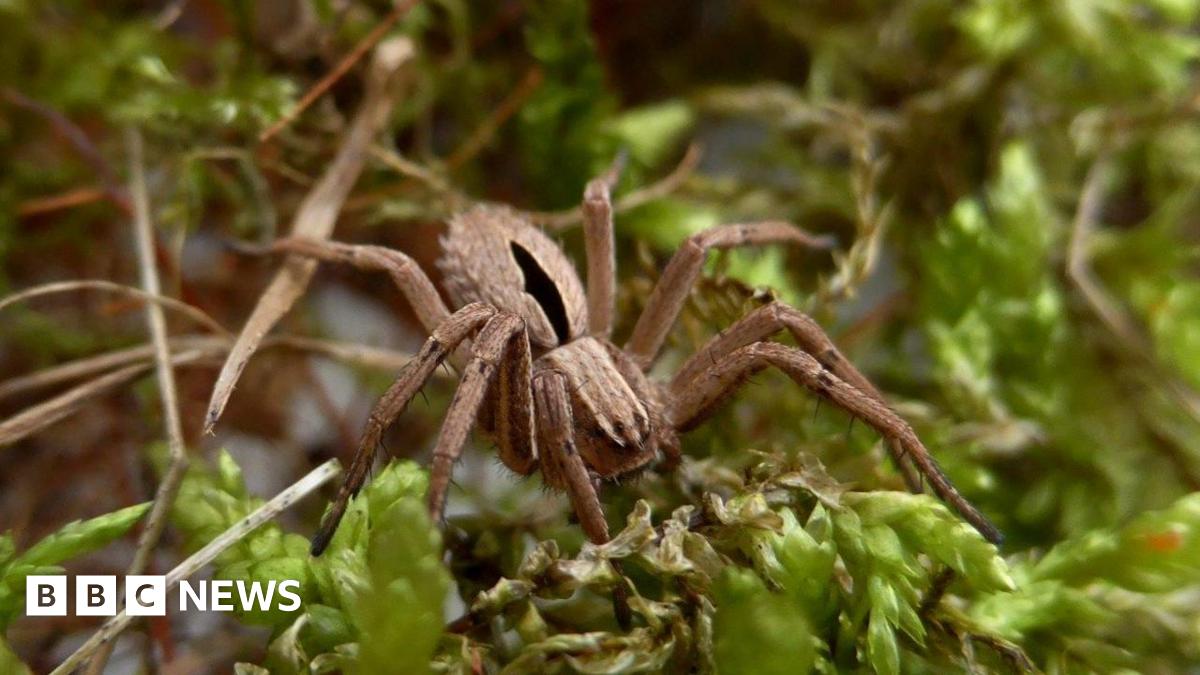
The charity said future plans included genetic analysis to trace the spider’s origins and surveys of nearby heathlands in Sherwood Forest to find potential new sites.
Surveys are also due to be carried out at Ashdown Forest in Sussex, where the spider was last recorded in 1969, to find a possible hidden or missed population.
Gareth Jones, lead ranger at Clumber Park, said the funding would allow the project to move “from discovery to recovery”.
“By understanding what this species needs, we can create the right conditions for it to grow and thrive. Not just here, but potentially beyond Clumber,” he said.
Jones added that spiders play a “vital ecological role” as natural pest controllers and help maintain balanced ecosystems.
Dr Helen Smith, from the British Arachnological Society, said: “We have too many critically endangered species in Britain but the future of this smart little spider, apparently restricted to a tiny pocket of heathland in Clumber Park, could not be more precarious.
“This support gives us renewed hope of finding ways to secure its future, not just at Clumber but more widely on heathland in Nottinghamshire and further afield.”