
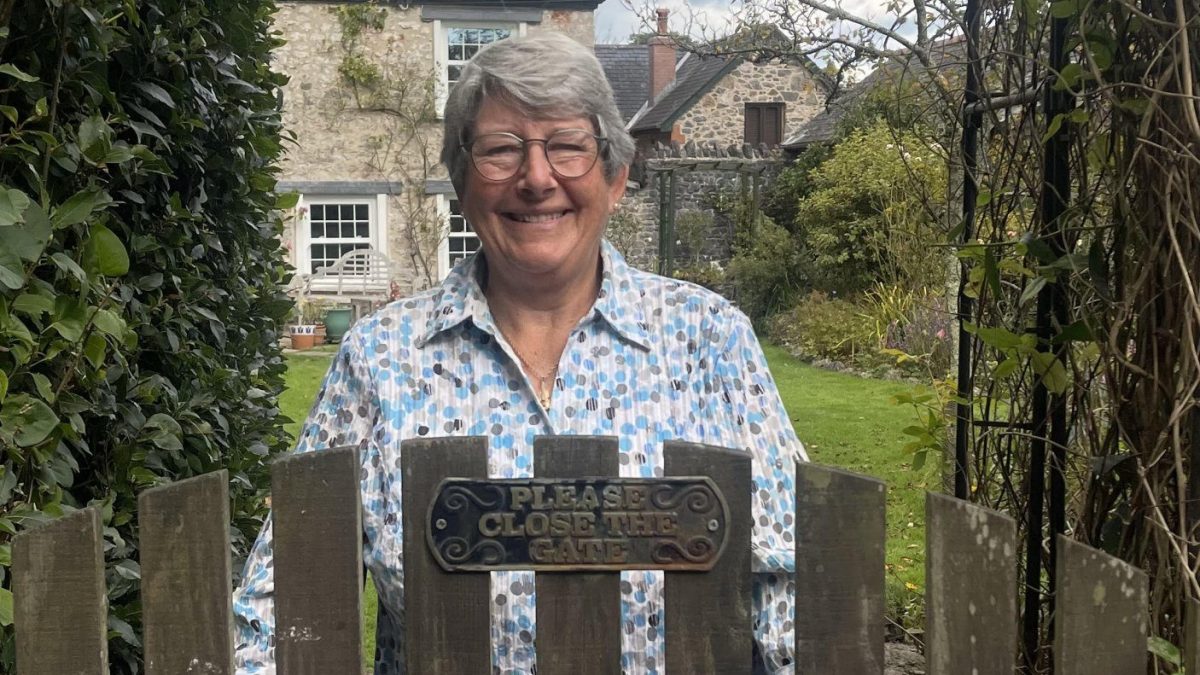
As a child, I dreamed of retirement. School was often annoying and time-consuming, and it was clear my granny was having a much better time than I was. She was always off to Florence with her history class, while my class was off to measure the velocity of the local river, again. She spent time life drawing, seeing her friends during weekdays – not just weekends! – and she could stay up late to read her book (with a little tumbler of whisky, which I thought was very chic).
The fact I was willing to trade my happy childhood for her retirement showed that she was making her stage of life look pretty good. Yet, of course, as an adult, I know retirement isn’t a nirvana. After a lifetime of hard work, it is seen as a well-earned relief from all that – and it often is. But it can be psychologically difficult, too.
Professor Doreen Rosenthal and Professor Susan Moore are social researchers, retired academics and co-authors of The Psychology of Retirement. “You may be more relaxed, and your life may slow down”, they say, “loss of work-related stress may be a great relief and good for your health, but losing the daily structure and your work relationships can also be stressful and harmful to your health. In fact, retirement is ranked 10th on the list of life’s most stressful events.”
While retirement often improves wellbeing for some, roughly 47 per cent of studies into mental health and retirement report a negative impact on life satisfaction. Nearly a third (32 per cent) of 50-70 year-olds retired earlier than they hoped, and according to latest ONS figures, among those aged 50-59 who have left the workforce, 72 per cent would consider returning to work, often citing a need for financial security and purpose.
So, how can people give themselves the best chance of a good retirement? And what does a good retirement look like? I spoke to three people who say they have found purpose and pleasure in retirement, about the challenges they overcame to feel positive in this new stage of their life. Here’s what they said.
New FeatureIn ShortQuick Stories. Same trusted journalism.
The first person I asked was 73-year-old retiree Martin Delgado, who is also my dad. I thought he’d be useful, because he was keen to retire from his role as a reporter on a national newspaper in London, but also worried about what might happen to him when he stopped.
“It was a Sunday newspaper, which meant my working week had a particular rhythm — Sunday and Monday were my days off,” he says. “Tuesday was a tense day because of the need to come up with ideas for the Tuesday morning editorial meeting, then things would get steadily more intense as we neared the long 12 to 14 hour shift on Saturday when the paper was largely written and edited.
“There were also short-notice demands to travel, which I found increasingly stress-inducing. Although I still love newspapers, it was probably not the job best suited to my temperament. I entered my 60s and I began to plan the timing — and method — of my escape.
“I had gone through a sort of ’temporary’ retirement in my late 40s when my wife was offered a two-year posting to Tokyo. I resigned from my job in London and we went to Japan with our two children, then aged three and 10. Although it was a fascinating experience, my mental health took a nosedive when we returned to London because I didn’t have a job and I thought I would never find one and I was diagnosed with severe depression.”
“That experience made me very nervous when it came to planning my departure from the world of work many years later. I was 64 when I left the Sunday newspaper where I had worked for 15 years and I felt a sense of relief on my last day. But I also felt ‘guilty’ about the fact that I was not yet at the state retirement age so I foolishly moved to a different job — not in journalism, but one involving research and writing — thinking that would tide me over for a couple of years.
“That turned out to be a misjudgment. The new job was much more demanding than I had expected, I left after three months and suffered another bout of depression, though not as severe as before.” So when my dad did properly retire at the age of 64, he knew he’d done the right thing. “It seemed odd at first, not having deadlines and the daily commute, but I soon realised that my new existence suited me.”
Volunteer – but make time for hobbies
“One of the first things I did was to enroll as a volunteer with the NHS,” says Martin. “I work exclusively with psychiatric patients on closed wards at a big NHS mental health trust in London. Ten years later, I’m still there. I get sent on training courses, attend seminars with NHS nurses and clinicians and feel I am doing a useful job which brings real benefits to patients at the lowest point in their lives.
“Although I have several close friends, I’m not someone who needs company all the time. I’m happy on my own and enjoy solo camping trips, bike rides and hikes. Retirement means I have more time to read, not rushing through a book as I used to when I was working, but reading slowly and carefully.
I have been learning Polish for many years (although my Polish wife speaks perfect English) and am now at a level where I can read Polish literature in the original.
“I started running around 25 years ago and although at the age of 73 my timings are getting slower, I try to keep going and go out two or three mornings a week. It’s good for my mental health but I know I’ll have to stop one day, so I also take other low-impact forms of exercise such as cycling and outdoor swimming.
“I have two adult children, and the arrival of our first grandchild nearly two years ago has changed my life completely — entirely for good. I spend as much time with our grandson as I can and having him around has had a huge emotional impact on me.
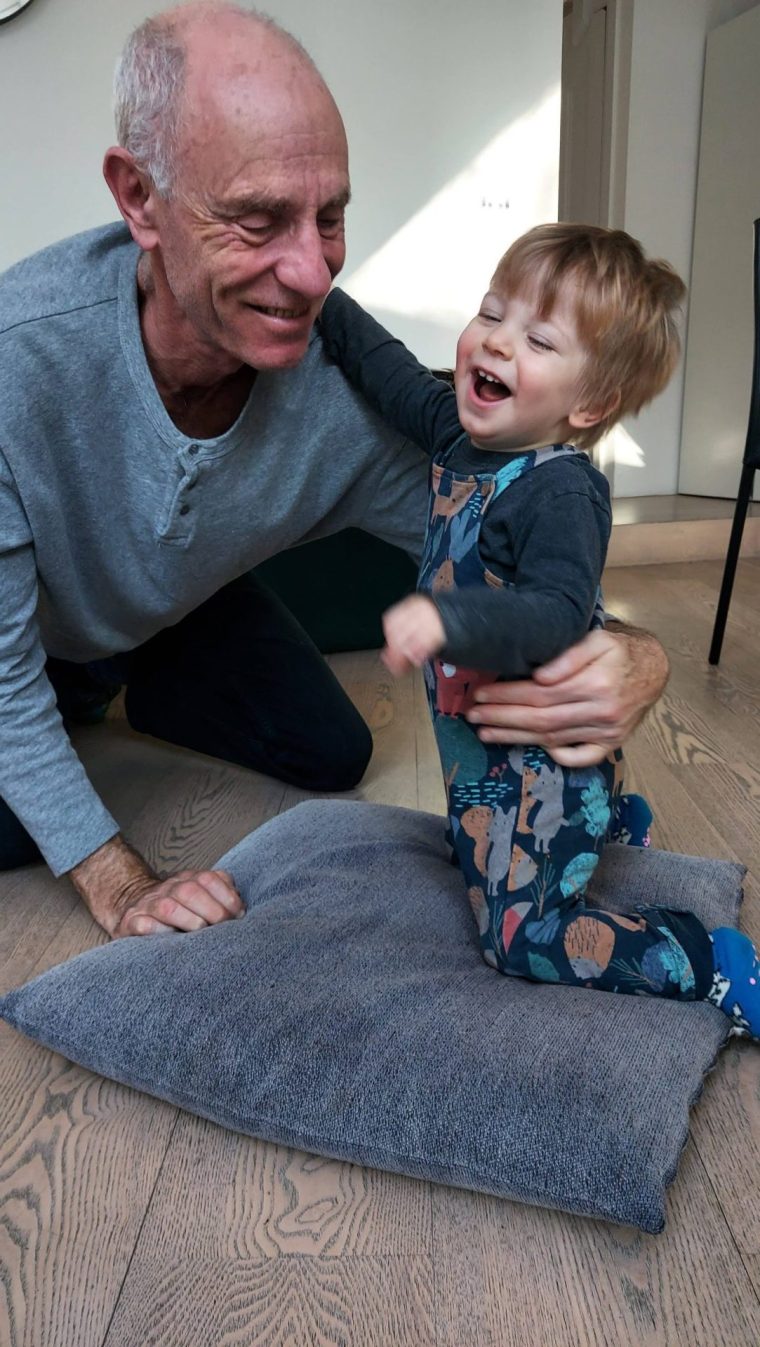 My dad, Martin, and his grandson in 2025. “[He] has changed my life completely – entirely for the good.”
“The last few years have been among the happiest I can remember. But I know that other people experience retirement very differently and it’s difficult to give advice because it depends on health, relationships, family and financial circumstances and so on. I am fortunate in that we have a small mortgage, and as well as the state pension, I have a modest income from a workplace pension. My wife is also still working.
“Some weeks I have a lot going on and I’m OK with that. But if I wake up one morning and realise that I have no commitments that day, that doesn’t bother me at all. I love the flexibility that retirement offers. I might be lying on the sofa at 10am, reading a book, before popping out for a coffee and a bit of shopping, followed by some piano practice. My time is my own and that makes me very content.”
Retirement doesn’t have to be all or nothing
For Toni Del Mar, 75, one of the things that has made her retirement a happy one, is spending more, spontaneous time with friends in her Devon village. She was for 35 years the violin and string ensemble tutor at Morley College, and was also an Alexander Technique teacher – a method which improves posture and movement. For years, she drove between Devon and London for different jobs – as well as bringing up her two children – her diary was always full of commitments. Since stopping work, she no longer wears her watch every day.
“I have a very close network of friends, and they also stopped working, so they’ll turn up at the garden gate and pop in for a coffee, without us having planned it. I can stay in bed till 11 in the morning and be up all night watching something on TV or knitting.”
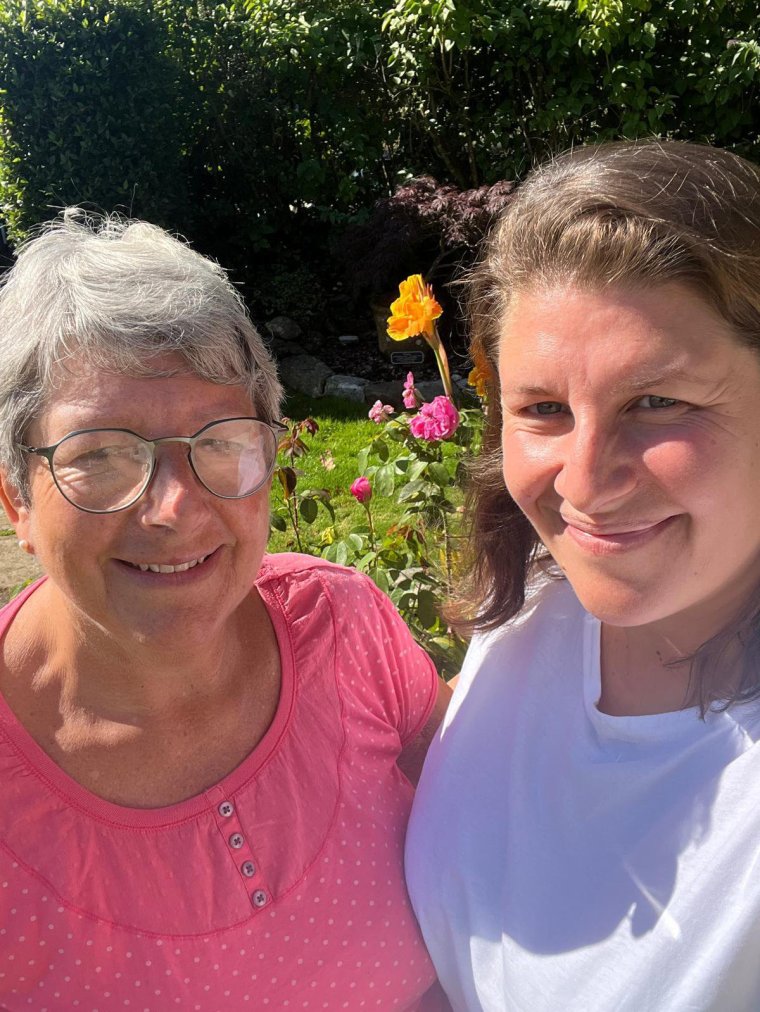 Toni, with her daughter. For years, she drove between London and Devon, doing different, busy jobs with lots of time pressure
At the same time, she can only enjoy the gift of unstructured time because she has things she has to do. “I’m not very good at self-motivating,” she says, so running her home as a B&B is useful for forcing her to clean and prepare things for her guests. “I need stimulus, and when guests come, they give me that.”
Toni only began the B&B because she was struggling to pay the bills, after her teaching roles stopped. At first, she put her house on the market, but then her son suggested she try to find a way to make the house make money, rather than leave the home she so loved. That’s how the B&B was born.
Toni’s main advice for new retirees is to keep in contact with friends, and the community. “It’s easy to feel that it’s too much effort, or you don’t want to impose, but it’s important to have a good relationship with your friends, to ring people up and ask them out for a walk. Your friendships might be your most important things – your support to talk to when you’re lonely, your support when you’re depressed, your support to giggle with and have fun with.”
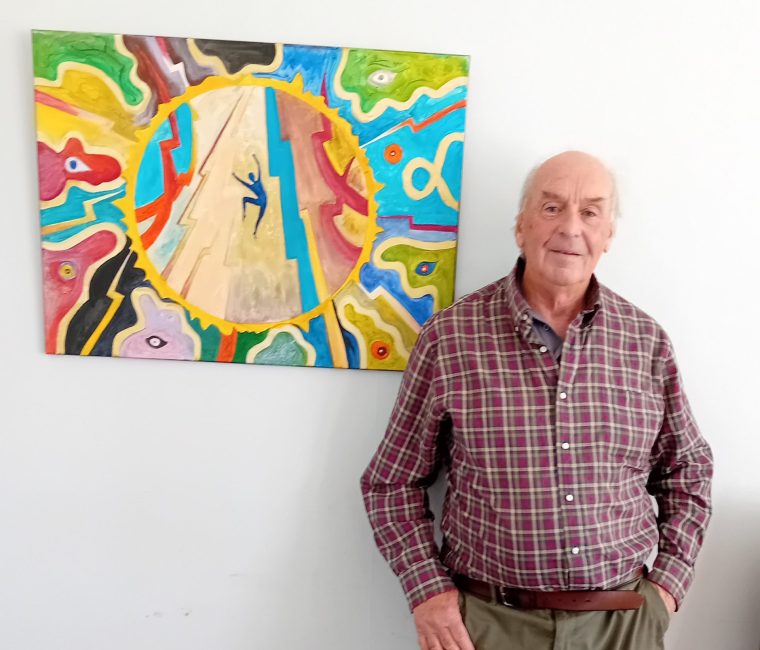 Simon McEwan discovered painting after he retired. It lifted him out of depression and has been ‘a rebirth’, he says
If you’re stuggling with retirement, there is hope
For some people, it can take time to become comfortable with retirement. Simon McEwan had a 43-year journalism career, and worked as the editor of a national magazine for smallholders for more than a decade. “That was very fulfilling, and I was good at the job,” he says. “By this time I had moved to live in a community co-operative at a former manor house with six acres of land in Devon, where we try to be self-sufficient. So the job was a perfect fit.”
At 68, Simon handed in his notice. “Retirement turned out to be the biggest challenge of my life. I was totally unprepared for what happened. Almost immediately I plunged into a serious depression which lasted several years. I felt lost without the daily structure, routine and stimulation. There was a lack of direction and purpose …. of meaning, even. I realised to what extent we can be defined by what we do. I now realise I should have eased out of work gradually, and gone part-time initially. I should have planned more carefully.”
Now, things are much better. “I have built up a routine, involving some exercise, mindfulness meditation and periods of outside work. That all helps. My partner and I walk our spaniel. She and my fellow communards have been a great help. I joined a friendly mental health walking group.
“But the biggest breakthrough has felt almost miraculous: I have found painting. I seem to have morphed into an artist! That creative process feels wonderful and exciting. Now, my paintings hang all around the house. I even had an exhibition last year. On reflection, it seems like my retirement journey involved a sort of death… and rebirth”.
How to stay connected, according to science
Daisy Fancourt is Professor of Psychobiology and Epidemiology at University College London, and author of Art Cure.
Retirement can present both an opportunity and a challenge for people – lots more free time, but a change in pace, social network and sometimes a loss of purpose.
Often, people experience the best transition when they start planning several years in advance, starting to join community groups or take up new hobbies that can then bridge them into retirement. It takes time to identify activities that people really enjoy, and time to build up sufficient levels of interest and skill that people get maximum fulfilment from the activity.
Arts engagement is an activity that can provide a new sense of purpose and meaning, alternative identities tied to creative engagement, and organic opportunities for forming new social bonds.
It can help to balance arts activities that are for us (e.g. joining book groups or booking tickets to arts events) with activities that help us contribute to the wellbeing of others. For example, volunteering to help run community arts groups, or providing arts for others such as giving pro bono performances in care homes or making crafts to gift to others.