
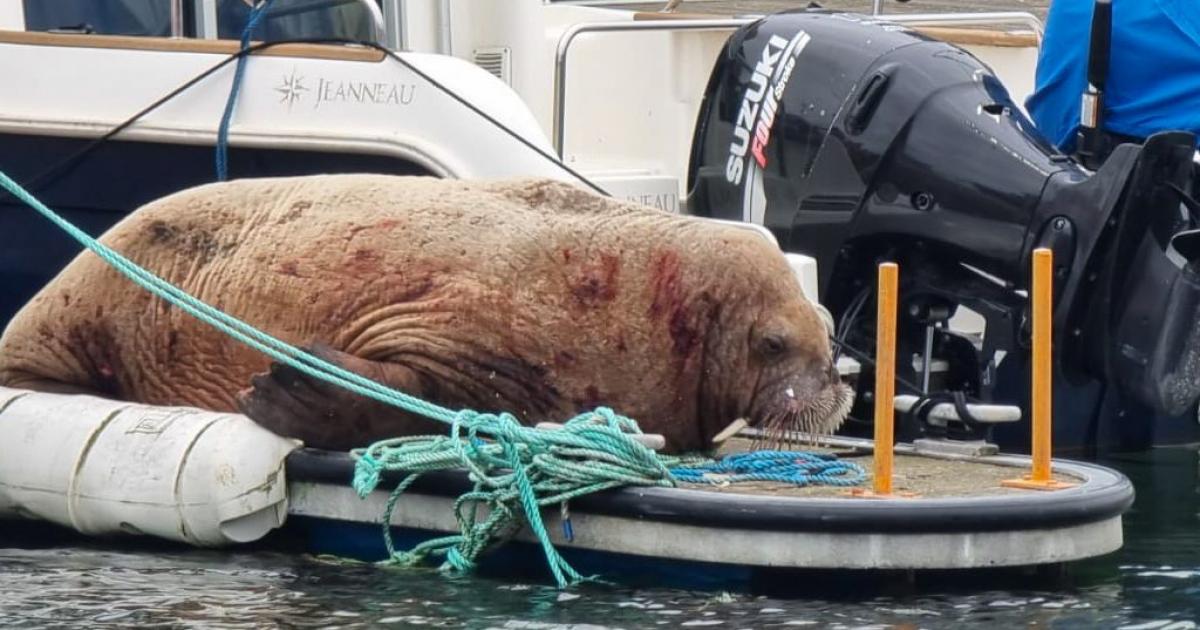
The group warned that crowds attempting to see the marine mammal could lead to it becoming distressed. The walrus is likely a young animal which needs time to rest and recuperate.
Walruses are occasional visitors to UK waters, with BDMLR saying sightings are increasing due to climate change in the Arctic.
The juvenile animal was spotted at a jetty in the north-east on Tuesday and is thought to be the same walrus seen on the Isle of Stronsay last Friday.
Walrus, seen here with the late cameraman Doug Allan, are Arctic animals (Image: NQ)
BDMLR said it is awaiting photo identification to confirm the animal’s identity.
The group said in a statement: “As with previous Arctic visitors, this is likely a young animal travelling in unfamiliar waters. These animals rely heavily on undisturbed rest to conserve energy during long journeys.
“Unfortunately, past incidents have shown that even with management in place, disturbance can and does still occur.
“Crowds, noise, drones and attempts to get closer for photos can cause the animals significant stress, sometimes forcing them back into the water prematurely or preventing them from resting altogether.”
Read More:
BDMLR added that walruses are protected by law from disturbance.
Animal rescuers advised people to keep at least 100 metres away from the Arctic animal on land, at sea and in the air, including by drone.
Walrus watchers should also stay quiet and avoid sudden movements, keep dogs on leads and avoid getting between the animal and the sea.
They also urged people not to publicise the location to prevent crowds and other potential disturbance.
BDMLR said: “We urge the public to help by giving this animal the space needed to rest, recuperate its energy, and continue its journey safely when ready.
“If disturbance is witnessed, it should be reported to Police Scotland via 999 (ongoing incidents) or 101 (non-urgent).”