
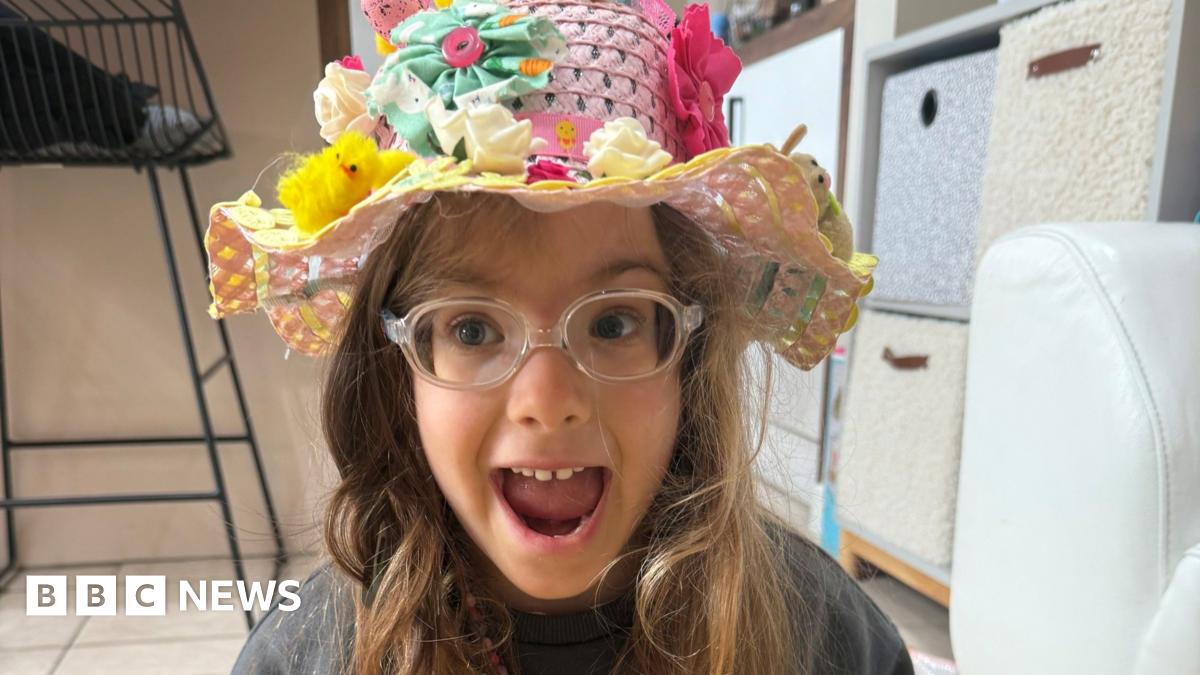
GOSH said the treatment had been the first of its kind for one of the genetic causes of LCA, with Saffie having one procedure on one eye in April 2025 and the other in September.
The one-off therapy contains a healthy copy of the gene, which is injected directly into each eye.
From the age of two, Saffie has worn glasses after being told she was short-sighted. At five, she was diagnosed with LCA when her parents noticed she was struggling to see in the dark.
Babies and children with the condition have low vision in daylight and no vision in low light – and can lose their sight completely in adulthood.
“Saffie’s diagnosis came as a huge shock to us as we’d never heard of the condition or knew me and her dad Tam were carriers,” Lisa said.
“It was such a rollercoaster of a journey, but we were so relieved and grateful when we heard there was a treatment available on the NHS.”
She added: “Having the gene treatment has been life-changing, it’s like someone waved a magic wand and restored her sight in the dark.
“She’s thriving and you wouldn’t know she had the condition just by looking at her. The results have been incredible.”
Saffie’s peripheral sight in the daylight has also improved.