
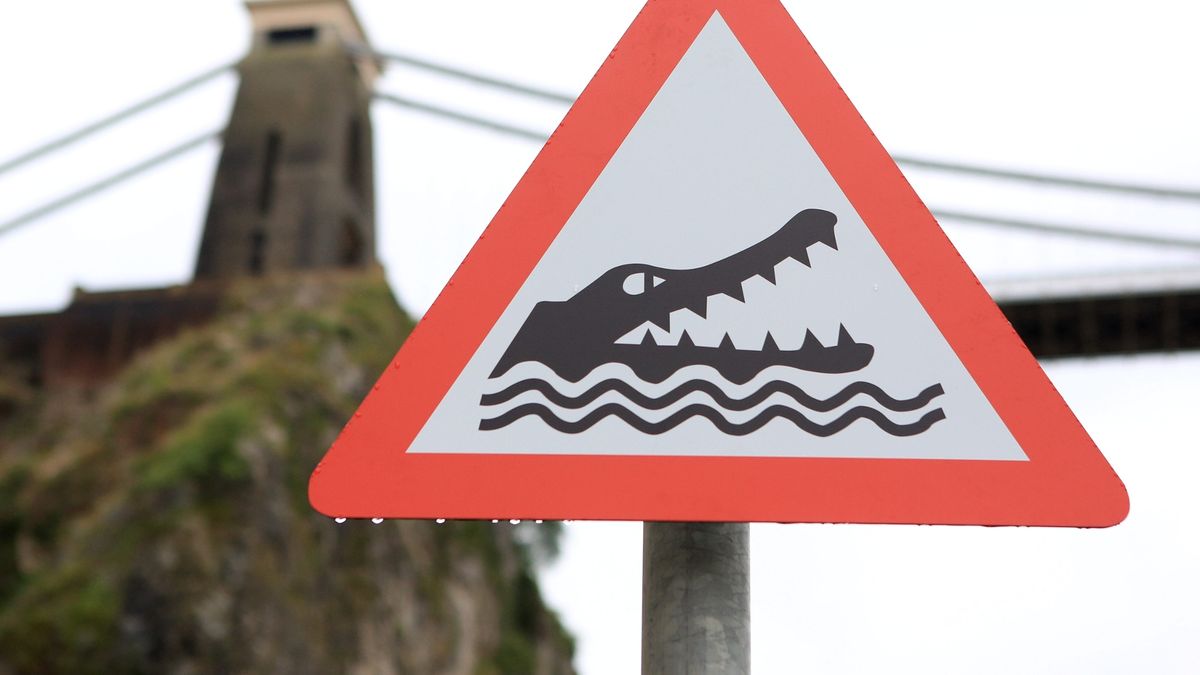
For the past 12 years, Bristol has been gripped by tales of an elusive legend – the Bristol Crocodile. Scotland has Nessie, Puerto Rico has the chupacabra. We have an escaped crocodile which may or may not be a log.
In 2014, bus driver Jolyon Rea alerted police after spotting the cryptid in the River Avon. Police said they could not find a crocodile, but almost a decade later Rea stood by what he saw: “Logs don’t swim. Logs don’t wiggle”.
Disturbingly, the ‘log’ appeared to be swimming against the tide, which logs should not do. “I know what I saw,” he said at the time.
If it had just been the one sighting we might have been able to put the urban legend to bed. But it wasn’t just one sighting: more followed, with one close encounter reported as recently as January of this year.
Jimmy Edge, 42, was near St Philip’s Footbridge when he had quite the fright: “Me and my colleague Marcus were going to get a breakfast sandwich and were in a bit of a rush to get to the shop and back in time for a meeting. And I thought ‘what the hell is that in the water’?
“I took a few photos and a video – and I’ve seen crocodiles in real life before – and from where I was standing it looked exactly like a crocodile, with the head and nose sort of sticking up out of the water.”
I found myself drawn to this rumoured reptile. I wanted to believe he could be real: partly because finding him would serve a valuable public interest, and partly because it would be really cool.
People don’t have a lot to believe in nowadays. Maybe they could have the Bristol Crocodile, if he exists.
Local zoo keepers weigh in
Approached for comment, a representative for the Bristol Zoo Project said: “I can confirm that we did not have any escaped crocodiles in that time frame [2014 to 2026]. Sorry – but it wasn’t us!”
A spokesperson for Wessex Water, which provided maps of the city’s sewer system for our investigation, added: “In case you were wondering, we have no record of any crocodiles in our sewerage network!”.
Is a conspiracy afoot? We’ve all made mistakes at work. We all know what it’s like to lose track of a 500kg semiaquatic apex predator. We all have off days.
As for Wessex Water, well, I don’t know how I’d respond to finding a crocodile in a sewer either. I’d probably just pretend I didn’t see that, for an easier life.
I couldn’t just take their word for it. I must go hunting for this crocodile myself.
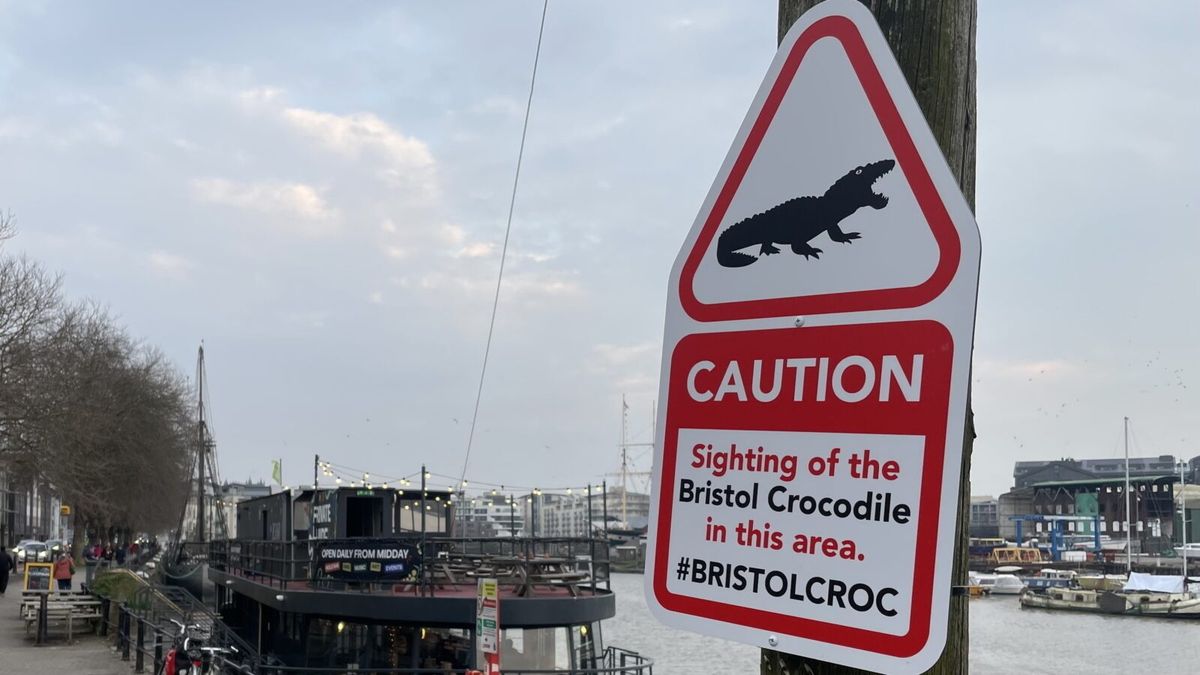
Approach the river at your peril…(Image: Martin Booth / SWNS)
Hunting the croc
It was a beautiful day in Bristol when I set off on this little safari tour. I knew I’d need bait if I could hope to find this scaly fiend. In the wild, crocodiles mostly eat fish, birds, frogs, and snakes. The really bougie ones eat venison and wild boar.
In captivity, they often make do with chicken, so I head off to Miss Millie’s for some of their finest deep fried nuggets. Of course, crocodiles are famously picky eaters, so I have to sample the bait to make sure it’s up to snuff. I quickly run out of bait.
I stalk the River Avon looking for anything scaly or bumpy. I don’t see a lot. Mostly, I see hundreds and hundreds of Bristolians enjoying the beautiful spring weather: a crocodile would almost certainly be spotted if it ever emerged in broad daylight. Hmm…
Teleporting crocodiles, nocturnal habits, and other problems
Okay, here’s a problem. The crocodile has allegedly been spotted at St Philip’s Footbridge, Bedminster Bridge, Harbourside, Eastville Park, and Clevedon.
Now to be fair, crocodiles can travel up to 30 miles in a day if need be. St Philip’s Footbridge is about 15 miles away from Clevedon, so the croc could feasibly travel between the two. It’s no more unreasonable than all the Bristolians who commute into London everyday.
But how the hell is it getting to Eastville Park? Eastville Park is not on the River Avon. To get from St Philip’s Footbridge to the park, this ballistic water chicken would have to emerge from the river, waddle through Cabot Circus, traverse the M32 (tricky enough as a human!), and continue on to the River Frome.
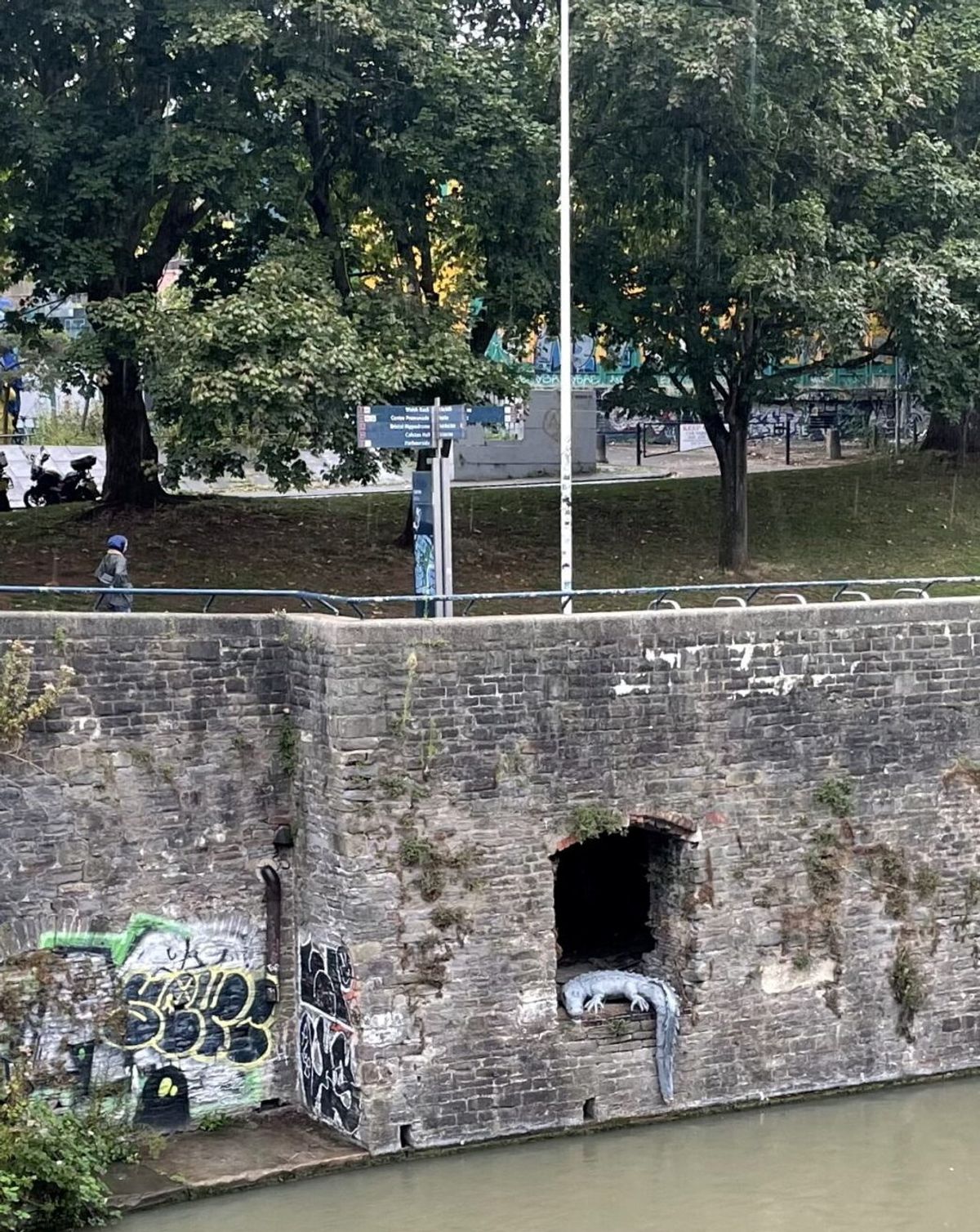
A sculpture honouring Bristol’s very own cryptid(Image: Martin Booth / SWNS)
Half a million people live in Bristol and nine million tourists visit annually. There is no way that big honking lizard caught a bus to Stapleton Road with no-one noticing. Even in the middle of the night, there’s clubbers.
Crestfallen, I requested a map of the city’s sewer system from Wessex Water. Could the croc have avoided detection that way? But no. The sewer system is impressive, but the croc would still have had to have gone above ground for some of its journey.
Worse yet, in my research I found another problem with the alleged sightings: they all took place in the harsh light of day. But crocodiles, alas, are mostly nocturnal.
As the evidence piled up, I found myself forced to face a unpalatable truth – the crocodile obviously has some kind of cloaking device that helps it avoid detection. Perhaps mutated by all the pollution in the water or perhaps an abandoned experiment of the Ministry of Defence, the Bristol Crocodile has clearly developed the ability to remain invisible when convenient.
It’s the only rational explanation.