
Even more damningly, President Macron of France has accused Donald Trump of “hollowing out” Nato by repeatedly undermining the alliance in public.
Trump likes to call Nato a “paper tiger”. He’s threatened to leave the defence alliance on a number of occasions, recently posting on social media that he had always considered Nato to be a “one-way street”.
“We will protect them, but they will do nothing for us,” he has written.
These public displays of disunity are corrosive and potentially deeply damaging in defence terms for Europe.
Countries in the east of the continent feel threatened by an expansionist Russia. Its war economy is being buoyed by cash Moscow is hoovering up as a result of being able to export oil at a high price worldwide now, thanks to the energy crisis provoked by Iran’s effective blockade of the Strait of Hormuz – and the US counter-blockade.
Traditionally an arch trans-Atlanticist, Prime Minister Donald Tusk of Poland openly questioned this week whether the US would actually come to its allies’ aid militarily in case of an attack, as envisaged in Article 5 of Nato’s founding treaty.
Nato reckons Russia would be ready to attack a Nato nation in three years’ time. The Dutch military intelligence service MIVD noted this week that in its assessment, after the war against Ukraine ends, Moscow would be ready to initiate a regional conflict against Nato within the year.
“The Russian objective of such a conflict would not be to defeat Nato militarily, but to politically divide Nato through limited territorial gains. If necessary, under the threat of nuclear armament,” said MIVD in its annual report.
Tiny, high defence-spending EU and Nato member Estonia, which neighbours and fears Russia, experienced a slap in the face by the US this week regarding defence capabilities. Because of its own needs in the war with Iran, the Pentagon told Estonia it would have to delay delivery of six units of a high-tech weapons system (the High Mobility Artillery Rocket System) that Estonia had contracted to buy from the US government. The US Embassy in Tallinn had called the purchase “one of the most significant capability upgrades in Estonian military history.” Estonia is now left feeling exposed.
This despite Estonia, along with its neighbouring Baltic States ostensibly being in President Trump’s “good books”.
Late last year, US defence secretary Pete Hegseth seemed to suggest the Trump administration was essentially dividing up its allies into “good guys” and “bad guys”.
In his address to the Reagan National Defense Forum on 6 December, Hegseth said:
“Model allies that step up like Israel, South Korea, Poland, increasingly Germany, the Baltics and others will receive our special favor. Allies that do not, allies that still fail to do their part for collective defence will face consequences.”
“The President is obviously upset by Europeans that failed to fully support the US war in Iran. But punitive measures like removing force posture in Spain seem over-reactive in light of the fact that Allies were never asked to assist the US and Trump has frequently denied that the US actually needed European support,” former US ambassador to Nato and President of Clarion Strategies Julianne Smith told me.
“Furthermore, in a moment when the transatlantic relationship is still reeling from a stated US policy to “get” Greenland (a territory belonging to Nato ally, Denmark), pursuing these types of punitive measures could very well issue another devastating blow to the relationship and cast a long, dark shadow over the upcoming Nato summit in July.”
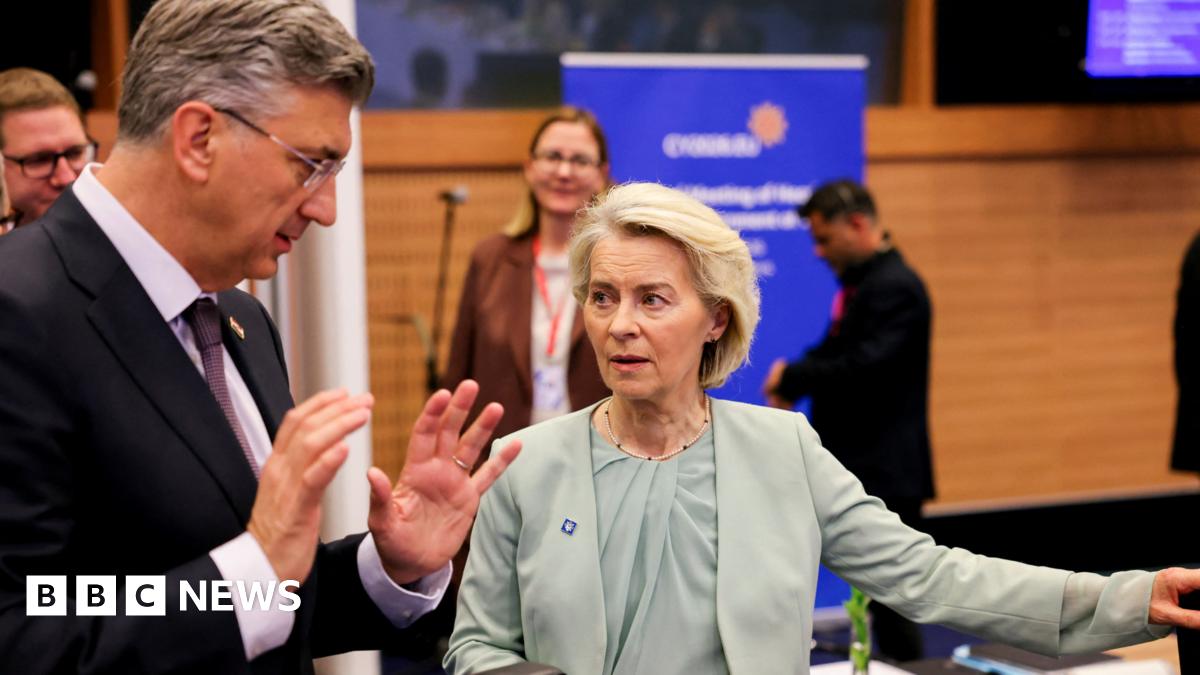
At the EU summit in Cyprus this week, leaders were sufficiently spooked as to want to explore a once little-known clause of the EU treaty – the mutual defence article 42.7. Could it be used if Nato’s Article 5 proved to be redundant, at least as long as Donald Trump is president, some leaders wondered?