
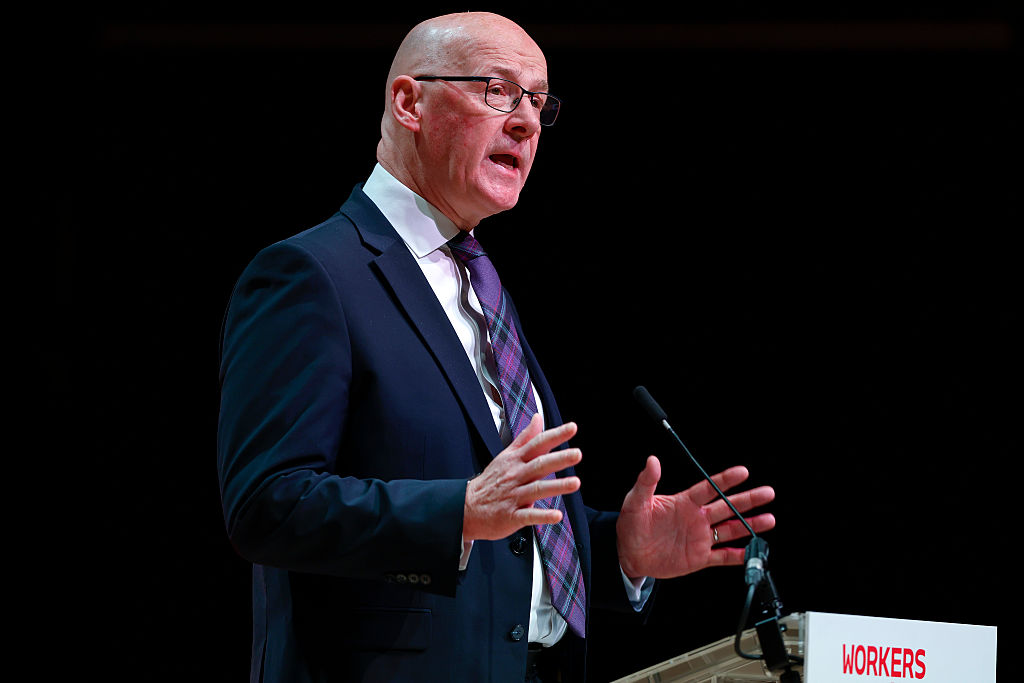
Sixty-one years old, bald and bespectacled, with the inoffensive bearing of a mid-level German administrator, Swinney is an unlikely nationalist savior. He is a ranking member of Scotland’s devolutionary elites; a career politician who has raised income taxes, junked landmark election pledges, and cut college funding. He has none of Salmond’s strategic brilliance and even less of Sturgeon’s celebrity appeal.
Sixty-one years old, bald and bespectacled, with the inoffensive bearing of a mid-level German administrator, Swinney is an unlikely nationalist savior.
Logically, he should be despised by the Scottish electorate. But he isn’t. Instead, the SNP leader enjoys a modest approval rating of plus 1 percent and remains more popular than any of his potential rivals for the position of first minister. Why?
Explanations vary. One theory is that, following the chaotic departures of Sturgeon and Yousaf, the rancid fallout from Salmond’s resignation, and the Covid-era splintering of the independence movement through social media, Swinney has reimposed discipline on the SNP, ruthlessly ditching the party’s most controversial policy proposals and streamlining its pitch to the Scottish public.
Another is that Swinney radiates stability at a time of rampant populist angst. According to Ipsos MORI, Scottish voters view Swinney as the Holyrood leader who “most understands the problems facing Scotland,” who is “most in touch with ordinary people.” and who is “most honest” — remarkable feedback for a politician with nearly twenty years of incumbency under his belt.
Latter-day Blairism remains central to Swinney’s politics. In recent months, he has worked with global fossil fuel firms to attack Labour’s Energy Profits Levy, a windfall tax on the returns of oil and gas companies operating in the North Sea. As part of a broader drive to slash Scotland’s budget deficit, he has also proposed cutting up to twenty thousand public sector jobs over the next five years if reelected.
Such policies are typical of Swinney’s enduring neoliberal instincts. However, Swinney 2.0 has shrewdly sought to deepen, rather than dilute, the SNP’s center-left identity. Like Sturgeon, he cites the “eradication” of child poverty as his defining mission. Like Salmond, he casts the SNP as an anti-imperial party, opposed on principle to nuclear weapons and critical of Western support for the “genocidal” Israeli state.
As the election nears, Swinney, ever the pragmatist, has sought to amplify the SNP’s redistributive credentials. At the party’s manifesto launch in Glasgow on April 16, he announced plans to cap the cost of essential food items ahead of the anticipated inflationary impact of the Iran war. He also promised to expand state-funded childcare support and to pilot an Irish-style minimum income for artists.
These ideas echo the populist achievements of his predecessors: the scrapping of drug prescription charges and university tuition fees under Salmond, and the creation of an incipient Scottish social security system under Sturgeon.