
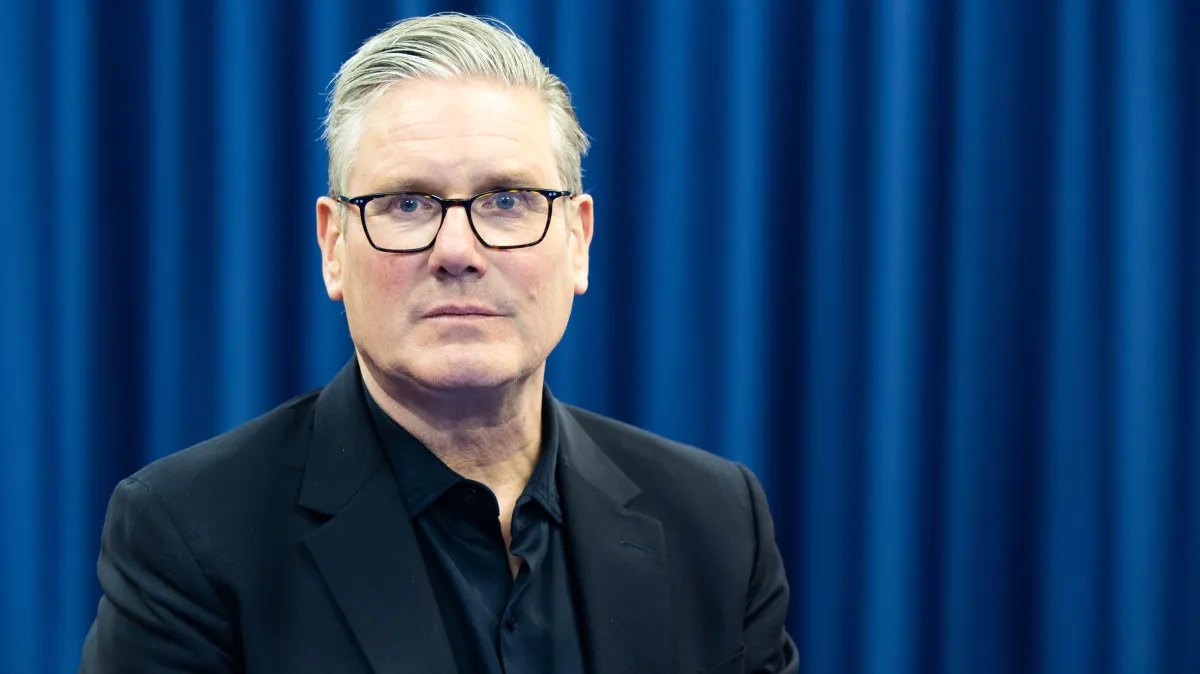
Sometimes in life it’s easier to be honest to a child. In a science class at the Newcastle United Foundation on Thursday, a girl from year 8 has a question for Sir Keir Starmer: “Is it fun being prime minister?”
“I wouldn’t say it’s fun all the time,” Starmer acknowledges, prodding at a toy robot.
The job of prime minister can’t have been much fun at all in recent days, as the interminable Lord Mandelson scandal appears to drag Starmer’s premiership down the plughole. Cabinet ministers plot in private and are lukewarm in public. Rumours swirl that this time it really is imminent. “It’s over,” say the anonymous government sources.
Is it really over, I ask the prime minister, when we sit down for an interview on the train from Newcastle to London. “No.” So, in the time-honoured Labour phrase, he is going on? “Of course. We didn’t wait 14 years to get elected, we didn’t change the Labour Party, we didn’t do all that it entailed to win the election and the mandate for change, not to deliver on it.”
And he plans to fight the next election? “Yes.”
Yet many in his party no longer think this is a viable proposition; the country has made up its mind on Starmer and he can’t win. “I think we can,” he says. “I think it’s going to be a very important general election. It’s likely to be Labour versus Reform. An election where the defining question is, what is it to be British? An election where what I would call patriotic values of tolerance, decency, live and let live, diversity, are under challenge like we’ve never seen before.”
As the chorus of Labour discontent grew louder last week, I spent a couple of days on the road with Starmer. I found a prime minister doggedly compartmentalising and stubbornly determined to continue in the job. He was cordial and focused despite the noise, but did seem frustrated on occasion. Is it all getting to him, I wondered. “You can’t be in politics, you can’t be the prime minister, if you let these things get to you,” he insists.
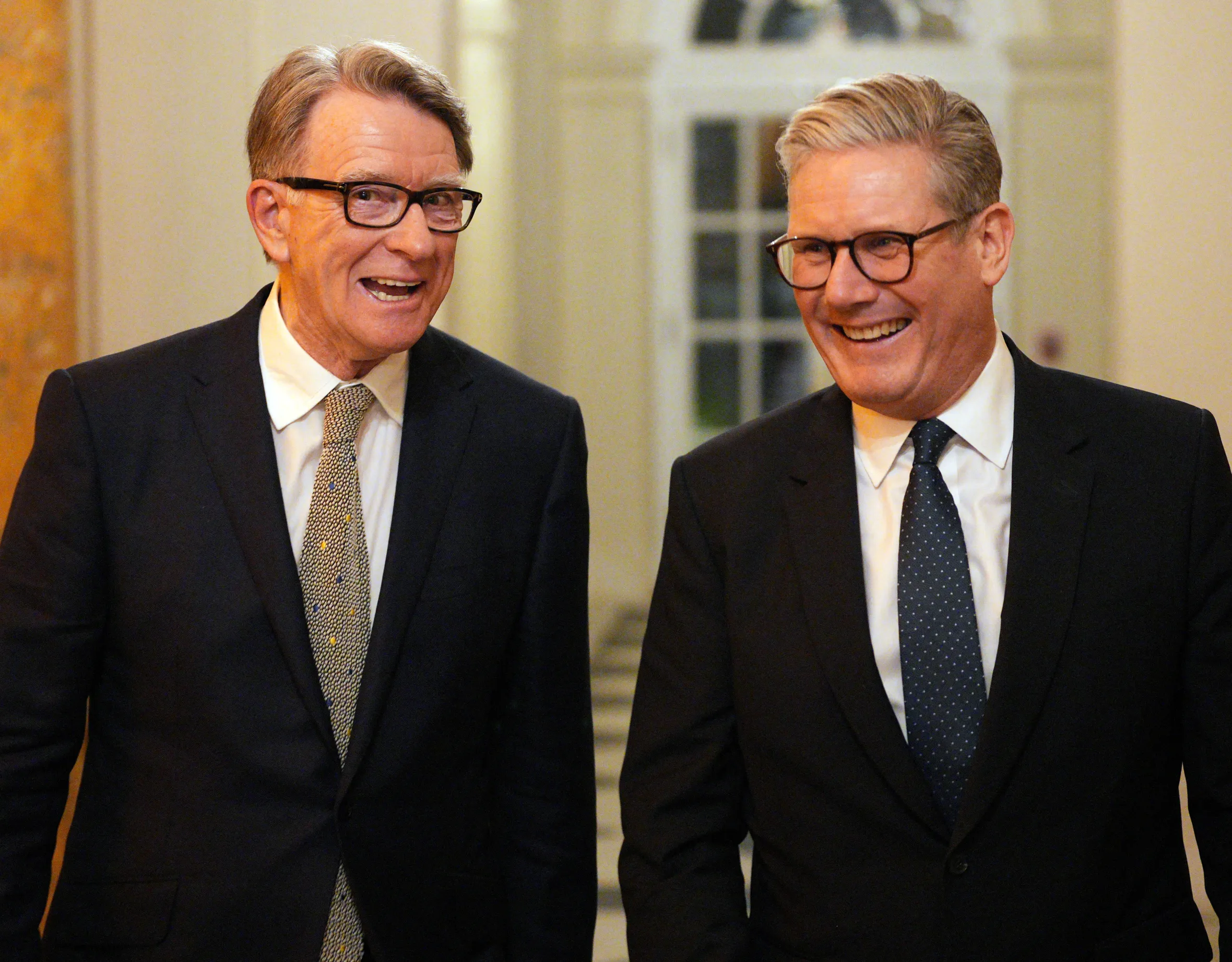 Starmer with Lord Mandelson at the British ambassador’s residence in Washington in February 2025 Carl Court/REUTERS
Starmer was keen to discuss the existential questions facing a world in turmoil. But first we had to address his own existential questions.
How does he explain the collapse of party discipline and faith in his future? “In politics, you get this sort of thing all of the time,” he says. “There is always talk. What you never hear from are all the people who are supportive, loyal and just want to get on with the job. And that is the vast majority of people in the parliamentary Labour Party. They’re pleased to be in power. They’ve waited a long time to be in power. And they just want to get on with their job. They don’t make a lot of noise about it. They don’t talk to journalists about it. It’s really important that is reflected in these debates.”
A cabinet minister told me last week that Starmer enjoys the parts of the job he’s good at and this is true. When he’s on the road, questioning submariners about the nuclear deterrent or hobnobbing with President Macron, the prime minister seems energised and engaged.
But at the centre, the nexus of Whitehall, Westminster and Fleet Street where the hard transactional business of politics is done, it often feels as though his premiership is being eaten alive, piece by stuttering piece.
Starmer acknowledges the Mandelson appointment was a mistake that needs looking at, but he is also deeply frustrated by Westminster’s obsession with it. He views a political-media class that only wants to talk about vetting forms and not about the Strait of Hormuz as fundamentally unserious. “I understand why there are questions,” he says. “I’ve answered I don’t know how many of them. But at the same time, I’ve got a huge amount of work to do on the war on two fronts.”
He does have a point here, but it is a limited one: if you can’t command the centre, then you can’t govern effectively.
There are also still some unanswered questions. One is around the word “pressure”. At prime minister’s questions on Wednesday, Starmer suggested that “no pressure whatsoever” was applied to Sir Olly Robbins, permanent secretary at the Foreign Office, in relation to the Mandelson appointment.
Kemi Badenoch and the Tories view this as a gotcha, because in his testimony to the Commons foreign affairs select committee last week, Robbins spoke extensively about the “constant pressure” he was under from Starmer’s Downing Street.
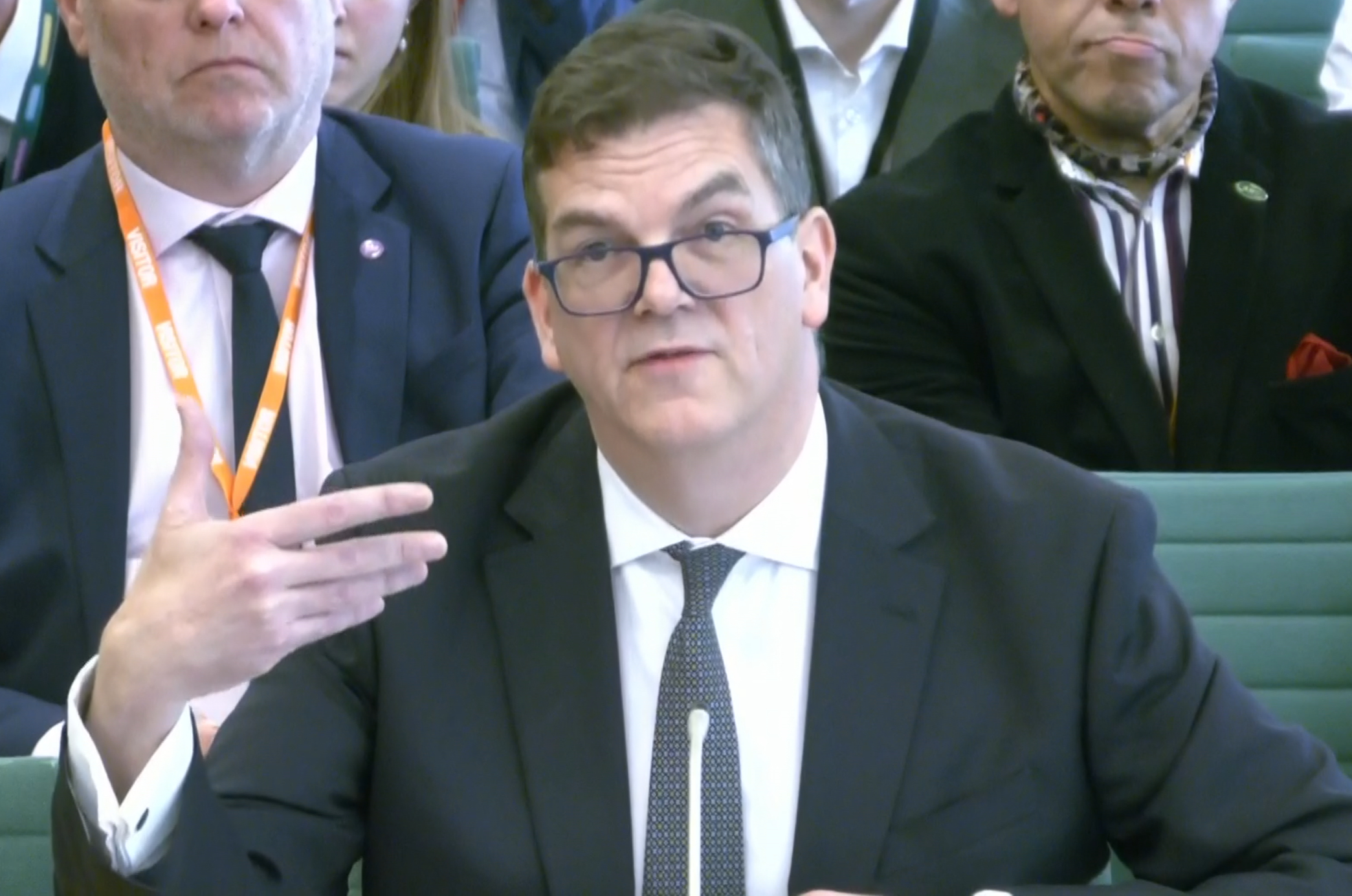 Sir Olly Robbins at the foreign affairs committee on Tuesday House of Commons/UK Parliament/PA
Badenoch is calling for a sleaze inquiry, arguing that Starmer misled the House when he said “due process” was followed over Mandelson. This would come via a referral to the privileges committee, the body that sat in judgment on Boris Johnson’s premiership. (Starmer, of course, played the role of prosecutor with relish then.)
Now that he’s the one under attack, how does he explain the apparent discrepancy over the pressure applied to Robbins? “There are different types of pressure,” he says. “There’s pressure, ‘Can we get this done quickly,’ which is not an unusual pressure. That is the everyday pressure of government.”
He says he was talking about something different in the House. “There is a separate pressure which is: was there a pressure on him, essentially, to disregard the security vetting element and give clearance? [Robbins] was really clear in his mind that wasn’t pressure that was put on him. And he also goes on to say that none of this impacted his decision.”
During his testimony, Robbins managed to convince much of Westminster that he is more sinned against than sinning, insisting that he never saw the now infamous form stating that Mandelson had failed vetting. Instead, he claimed he was only given oral advice that it was a “borderline” case.
Does Starmer regret sacking Robbins so quickly? “Olly’s had a distinguished record and I completely acknowledge that,” he says. “[But] when there’s a double red flag not to give clearance and [showing] high concern, then I’m sorry. I’m sorry. But I do not accept the argument that that is something which should not be told to the prime minister.”
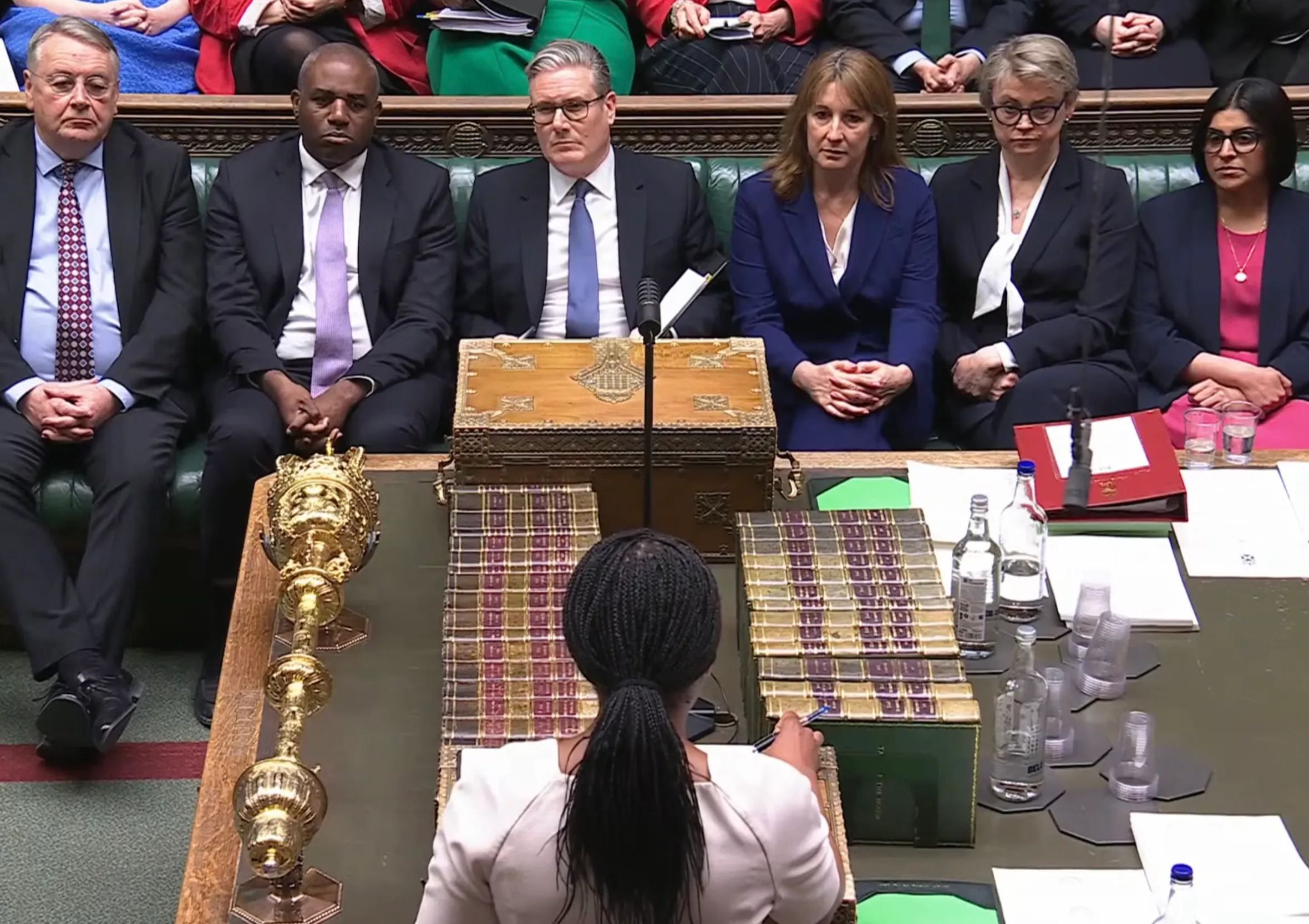 Starmer facing Kemi Badenoch at prime minister’s questionsHouse of Commons/UK Parliament/PA
But Robbins insists he didn’t see that form? Starmer doesn’t appear to be buying this. “I can’t give evidence for Olly. All I can be is clear that as prime minister, that information should have been with me. And not just at the time of the appointment, but later. I was going out saying that [Mandelson’s] clearance has been given. I’m afraid not bringing that to my attention, it’s not a small matter. It’s a fundamental matter.”
When I first interviewed Starmer, before the 2024 election, he told me that he was “like a magnet” for fine details. This was part of the election pitch: Starmer was a details guy, a process maven. So what went wrong with Mandelson? At this he bristles. “What do you mean by that?”
I mean why wasn’t he more curious about whether the Prince of Darkness was going to pass the stringent vetting process for our most sensitive diplomatic position? “When I’m told there’s security clearance, should I go back and quiz officials and say, ‘Are you telling me the truth?’”
Well he might have asked Mandelson about it all. The pair reportedly didn’t even speak before the appointment. “I have known Peter for years.” He sighs heavily. “Honestly, I mean, I get information from officials. If I questioned every bit of information put in front of me I would never get anything done. The number of decisions that have to be made each day is huge.”
Starmer is frustrated because he believes the work he is doing on Iran and Ukraine, as well as shoring up the domestic economy, is essential. “This is the urgent issue of our time,” he says. “It really is the urgent issue of our time. This is going to reshape our country.”
He insists this is not about a flailing prime minister finding refuge in foreign affairs. From petrol to fertiliser to food, supply chains are under intense stress. Russia is a constant menace. And Iran may well be sponsoring a spate of proxy attacks against Jewish targets in London. “The conflict with Iran has not just been fought out in Iran,” he says. “There are increasingly the use of proxies in this country. Of course there’s lots of discussion in parliament about who’s up, who’s down and all the rest of it. But this is the serious work of being the prime minister.”
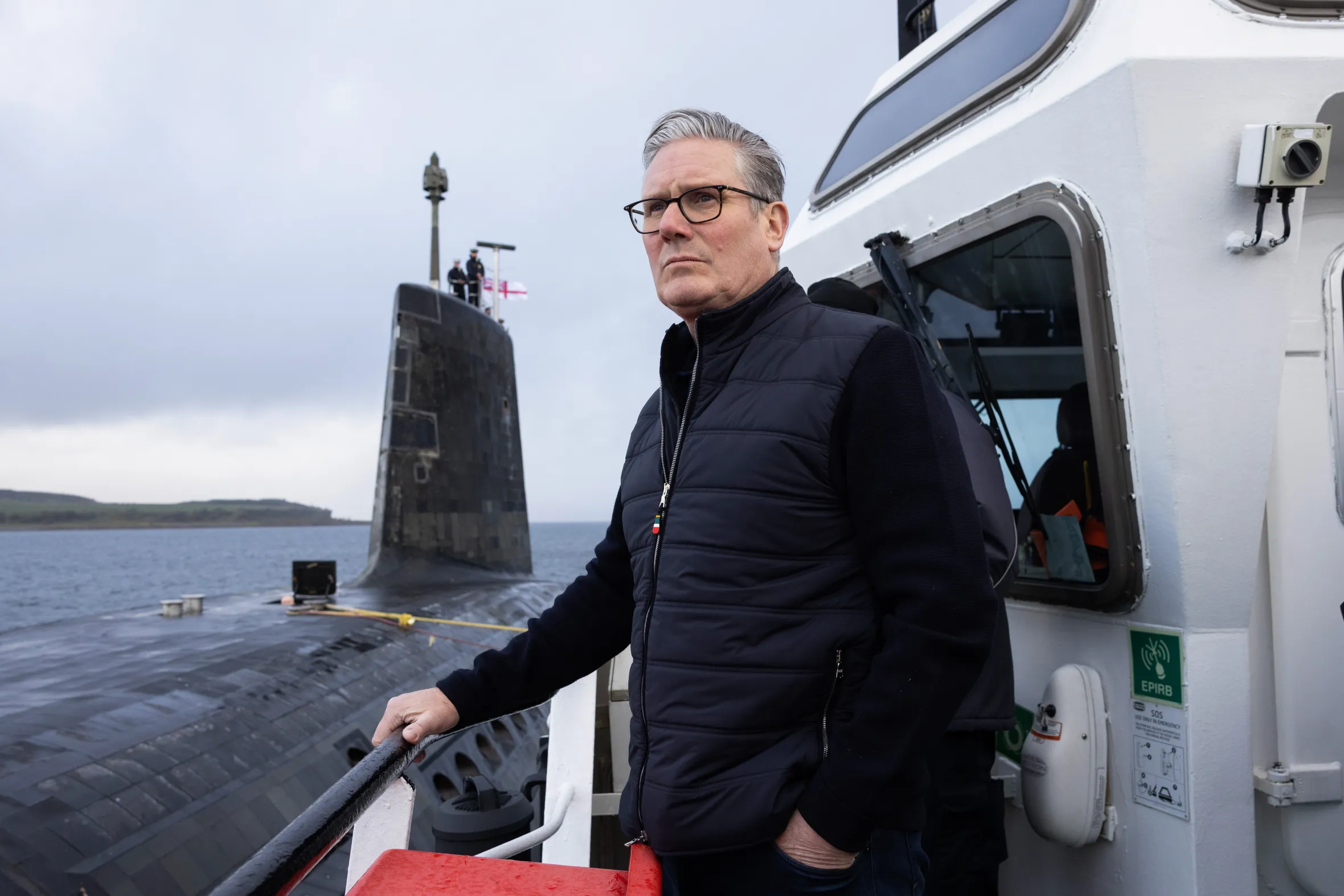 Starmer visits a Vanguard-class submarine after it completed the UK’s latest nuclear deterrent patrol Simon Dawson/No 10
Again, he’s not wrong, but as a raison d’être it is very defensive. Britain needs a government that is more than just the national “maintenance department”, as Wes Streeting put it recently. Which means Starmer must be able to command his majority in parliament and drive through a clear policy agenda. This is proving difficult.
On energy, for example, the chancellor, Rachel Reeves, wants to unlock “tens of millions of barrels” of North Sea oil and gas. But the energy secretary, Ed Miliband, thinks that if we drill “to the last drop” this will set a dangerous global precedent that could lead to “climate disaster”.
So what’s the strategy? We still don’t know. “Obviously there are decisions to be made on the two licences,” says Starmer. “But the argument about whether we should be drilling every last drop, to me, completely misses the point. All the time we’re on the international fossil fuel market, then families up and down the country will have their bills affected. This is about taking back control. We have to have energy independence.”
Then you have defence. This month, the former Labour defence secretary and co-author of the strategic defence review, Lord Robertson of Port Ellen, launched a blistering attack on the “corrosive complacency” of Starmer’s failure to sign off the defence investment plan, which will pay for the upgrades our military needs.
The Treasury and Ministry of Defence are rowing over the cost. Why can’t the prime minister force it through? Starmer says he wants to ensure Britain gets value for money. “We will have to spend more, there’s no doubt about that,” he says. “We did a line-by-line scrub of defence spending to make sure that we could ensure every penny that we do spend … is properly spent. I’m not prepared to spend more on defence unless it’s properly spent. We just need to work that through and get it right.”
In another broadside, Robertson declared that our reliance on the US was “no longer tenable”. Does Starmer agree? “On the defence and security side, we and Europe have become over-reliant. That is not an argument for severing the link. It is not an argument for any pulling away of the very important UK-US relationship. It is an argument for a stronger Europe.”
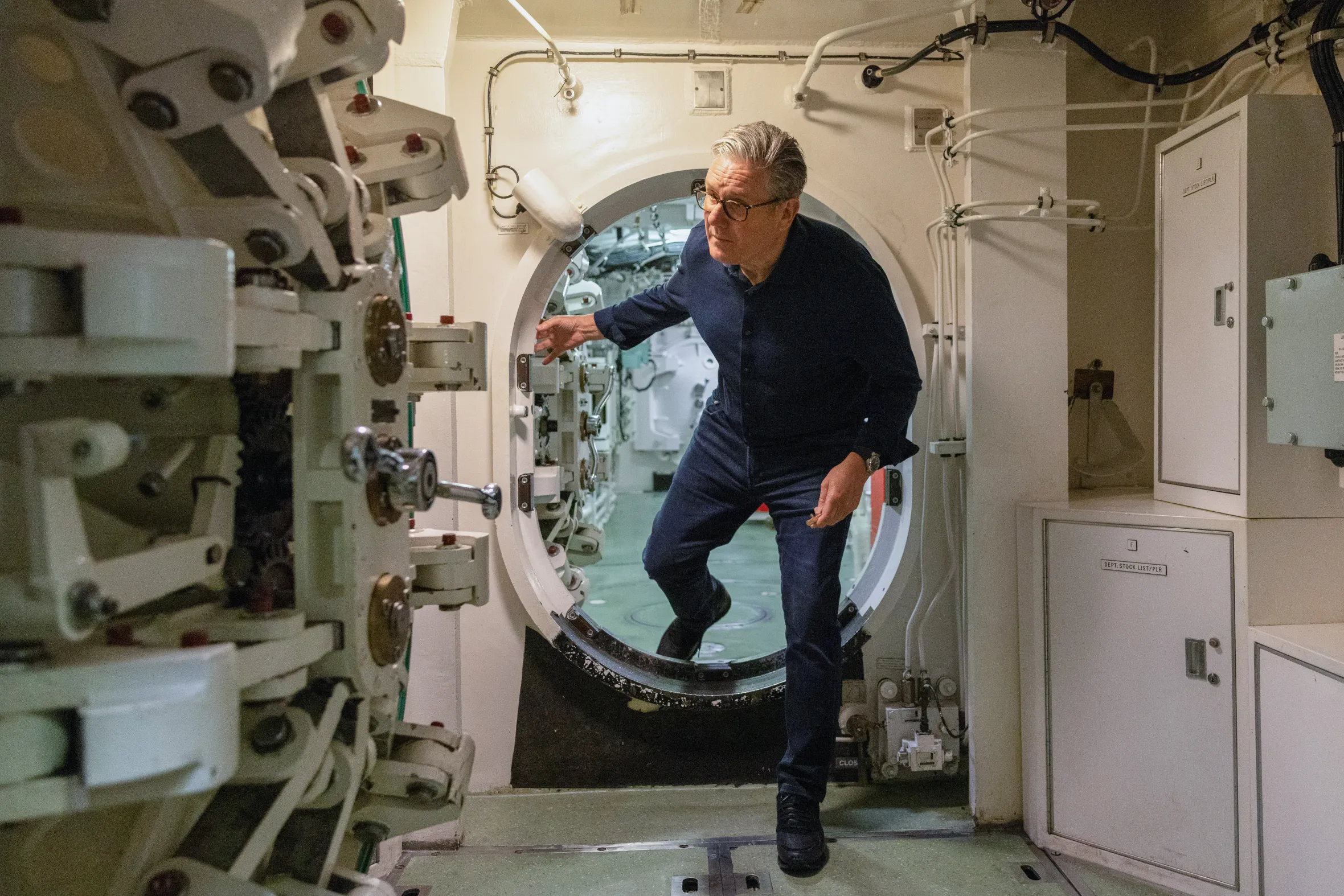 Starmer on his visit to a Vanguard class submarine Simon Dawson/No 10 Downing Street
Might that mean exploring a fully independent nuclear deterrent, separate from the Americans? “You have to understand how intertwined our defence security and intelligence is with the Americans,” he says. “It’s a little naive to think we can just flick a switch and all that changes.” Intriguingly though, he is thinking more about an Anglo-French nuclear partnership. “We’ve been talking to the French about nuclear capability,” he says. “That’s not an either/or. It’s a question of whether there’s an opportunity to have more capability. That’s very early stages.”
In the meantime, he has to deal with President Trump. Clearly relations are bumpier than they were. There have, I’m told, been some quite bizarre moments in recent weeks. “Look, of course there are challenges there,” Starmer told me last weekend. “It ebbs and flows. But we talk very readily, including I think twice in the last week or so. And it’s important that we do that.”
And so this is Starmer’s pitch. A serious man for serious times. A bulwark against divisive threats both foreign and domestic. A quiet (often very quiet) majority inside Labour that does want him to get on with the job. “That is where the vast majority of the party is,” he insists.
Will enough of his own ministers be convinced? We will likely have a chance to find out on May 8, the morning after Labour gets a shellacking in the local elections. This, Starmer acknowledges, is going to be a “challenging” moment. Emotions will run high.
In the meantime, the venom will keep coming. It’s not often in the press that you read of the prime minister being described as a “shitweasel”, as happened last week. It is true that Starmer can sometimes be high-handed and priggish and that some who work for him leave feeling alienated and undervalued. Robbins is now in this well-populated camp.
Yet there is a sincere and considerate man in there too, someone who really does care about the people he governs. Last Thursday, towards the end of a long day, a long week, he added a stop in Kenton, northwest London, to his schedule. There, he sat patiently with distraught congregants as they described the attempted firebombing of their synagogue. “That’s not the Britain I want,” he assured them. Keir Starmer still believes in his party and his country. At present though, the feeling is not entirely mutual.