
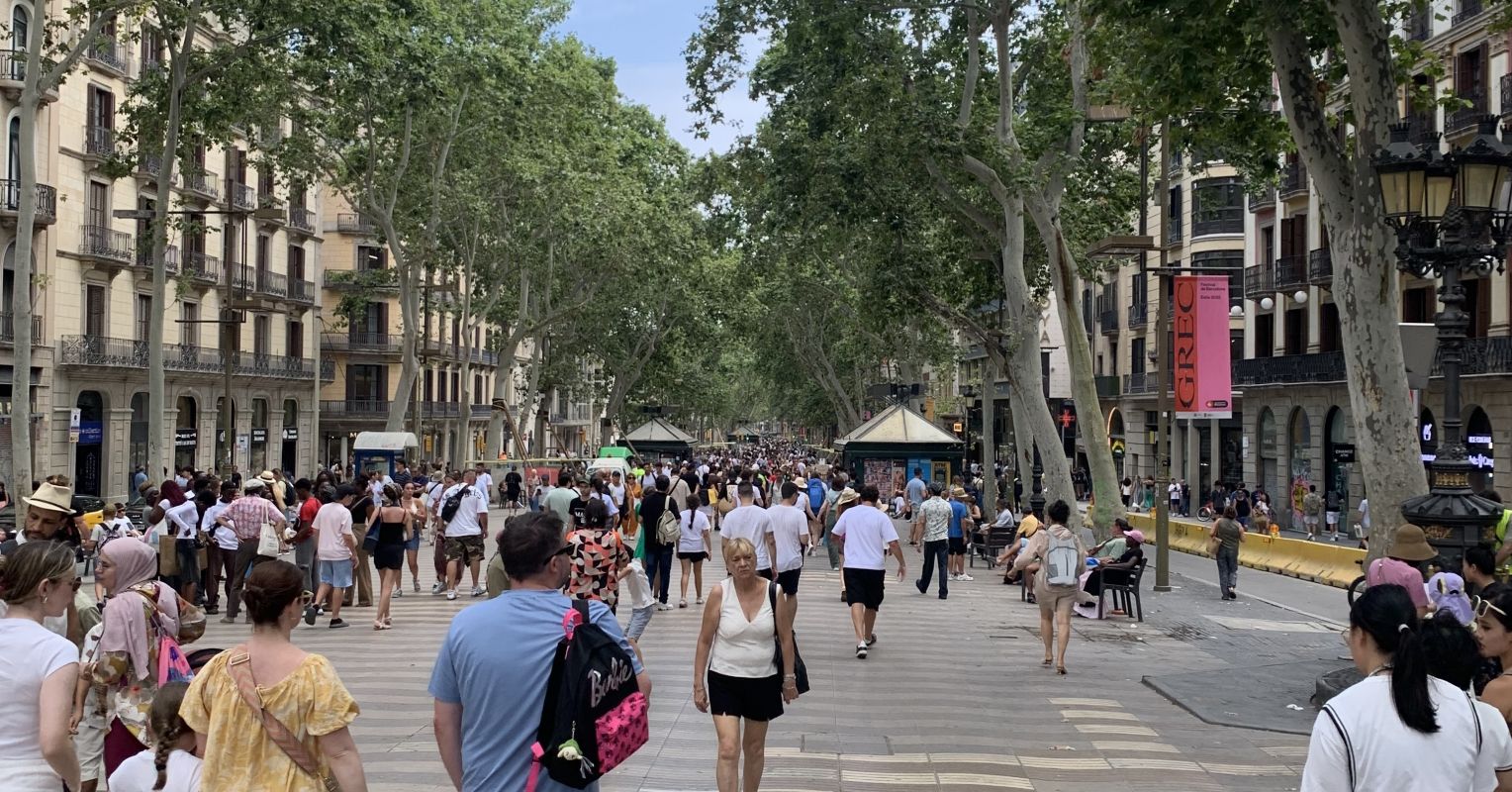
Many people know the feeling: the world seems unstable, decisions feel distant, and other groups appear to threaten what matters most. News about war, economic insecurity, climate change, migration debates, or political conflict can create constant pressure. Democracy may then begin to feel less like a shared project and more like a battlefield.
Democracy Requires Psychological Regulation
Democracy asks a great deal of people. It asks them to tolerate disagreement, accept uncertainty, listen to those who think differently, and live with the fact that no group can fully control the future. It asks people to argue without dehumanizing and to share public space with others whose values or experiences differ from their own.
These capacities do not arise simply because a constitution exists. They depend on psychological regulation.
When people feel safe, connected, respected, capable, and hopeful, they can better tolerate complexity. They can pause before reacting, distinguish disagreement from threat, and remain open to negotiation. But when people feel chronically unsafe, excluded, powerless, humiliated, or without a meaningful future, democratic life begins to erode.
The theory of universal psychological needs proposes that human functioning depends on six core psychological needs: safety, belonging, autonomy, competence, dignity, and meaning. These needs are not luxuries. They are foundations of psychological stability. They also do not operate in isolation: the erosion of one need often accelerates the erosion of others. When met, they help people regulate stress, relate to others, and act with agency. When frustrated, people may become more vulnerable to fear, resentment, withdrawal, rigid thinking, or radical promises of certainty.
This does not mean that political problems can be reduced to psychology. Inequality, discrimination, institutional failure, misinformation, and injustice are real structural problems. But psychology helps explain why these conditions affect people so deeply. They shape opinions and perceptions, emotions, identity, trust, and the capacity to remain engaged.
Six Core Needs That Shape Democratic Life
The first need is safety. People need a basic sense that their world is not completely unpredictable. When safety is threatened for long periods—through economic insecurity, war, social instability, discrimination, or constant crisis—the mind becomes more vigilant. Ambiguity feels less like an ordinary part of life and more like danger. In such states, people may become more receptive to simple explanations, strong boundaries, and clear enemies. Democracy, however, requires the ability to live with uncertainty without turning every difference into a threat.
The second need is belonging. Humans need to feel part of a social world. Democracies require more than isolated individuals with rights; they require people who feel that they belong to a shared civic “we.” When people feel unseen, abandoned, or symbolically excluded, they may seek substitute forms of belonging. Radical groups, conspiracy communities, and authoritarian movements can offer identity, recognition, loyalty, and a clear distinction between “us” and “them.” The need for belonging is not the problem. The problem begins when belonging is built through contempt for others.
The third need is autonomy. In psychological terms, autonomy does not mean selfish independence. It means experiencing oneself as a person with voice, choice, and agency. In democratic life, autonomy means that people do not experience themselves merely as objects of anonymous forces—political, economic, or technological—but as subjects who can participate, speak, decide, and influence. When elections, institutions, or public decisions feel “out of their hands anyway,” civic agency begins to weaken. Authoritarian politics can transform this loss of voice into the promise of restored control.
The fourth need is competence. People need to feel that they can understand situations and act effectively within them. Democracy requires more than the formal right to participate; it requires the belief that participation matters. If people repeatedly experience that their efforts lead nowhere, that institutions do not respond, or that public life is too complex to understand, they may withdraw or become cynical. Competence is also socially produced. Schools, workplaces, media, and public institutions can strengthen people’s sense of efficacy—or deepen the feeling that they cannot make a difference.
Psychology Essential Reads
The fifth need is dignity. Political debates often focus on interests, power, and resources. But people also need to feel that they count as persons. They need recognition. When public discourse becomes mocking, contemptuous, or dehumanizing—as often happens in comment sections, talk shows, or social media—it does more than damage civility. It attacks dignity. People who feel humiliated rarely respond with calm reflection. They may withdraw, harden, become ashamed, or strike back. A democracy can survive passionate conflict. It cannot easily survive the normalization of humiliation.
The sixth need is meaning. People need to locate their lives within a larger story. They need some sense that the future is not only a sequence of threats, losses, and crises. Antonovsky’s concept of the sense of coherence is helpful here: people cope better when life feels at least partly understandable, manageable, and meaningful. Democracies become fragile when collective future images disappear. If people no longer believe that a shared future can be shaped, nostalgia, resentment, and fantasies of a purified past or simple renewal become more attractive.
Protecting the Psychological Foundations of Democracy
Seen through this lens, democratic resilience is not only a legal or institutional achievement. It is also a psychological and social achievement. It is built in families, classrooms, workplaces, media spaces, public debates, and political institutions. It grows where people experience safety without rigidity, belonging without exclusion, autonomy without abandonment, competence without contempt, dignity without humiliation, and meaning without rigid certainty.
Democracy needs institutions. But it also needs people who are psychologically able to live with freedom, difference, and uncertainty.
That ability is not merely private. It is something societies can either protect or undermine. Strengthening democracy means protecting these needs in everyday life: in families, schools, workplaces, communities, and public conversations.