
(Credits: Far Out / Pete Best)
Sat 25 April 2026 13:00, UK
There’s an old expression in American sports for when a player loses his spot on a team to someone who winds up becoming a legend called being “Wally Pipped”, a reference to the New York Yankees’ first baseman Wally Pipp, who had to sit out a game with a headache one day in 1925, enabling a young Lou Gehrig to take his place.
From there, the golden age of the Yankees began, with Gehrig becoming a daily fixture in the lineup alongside Babe Ruth, while Pipp was axed from the team, relegated to a historical footnote. A century later, Pipp is still used as an example for athletes of why it’s important to play every game, lest someone younger and more talented step in and render you instantly obsolete. In reality, though, the actual Wally Pipp never looked at his own career arc as some sort of Shakespearean tragedy.
Prior to losing his job, he’d already enjoyed a very productive and successful 12-year career as a professional baseball player, leading the league in home runs twice, and he’d also secured enough unique experiences and amusing anecdotes to last a lifetime, allowing him to regale future generations with his tales of being a ballplayer in the ’20s, particularly the ones involving the larger-than-life folk hero Babe Ruth, whom he had known long before he was a legend. Because people remembered Pipp as “the man Gehrig replaced”, his name never faded into obscurity either, and an enthusiastic audience was always available to him.
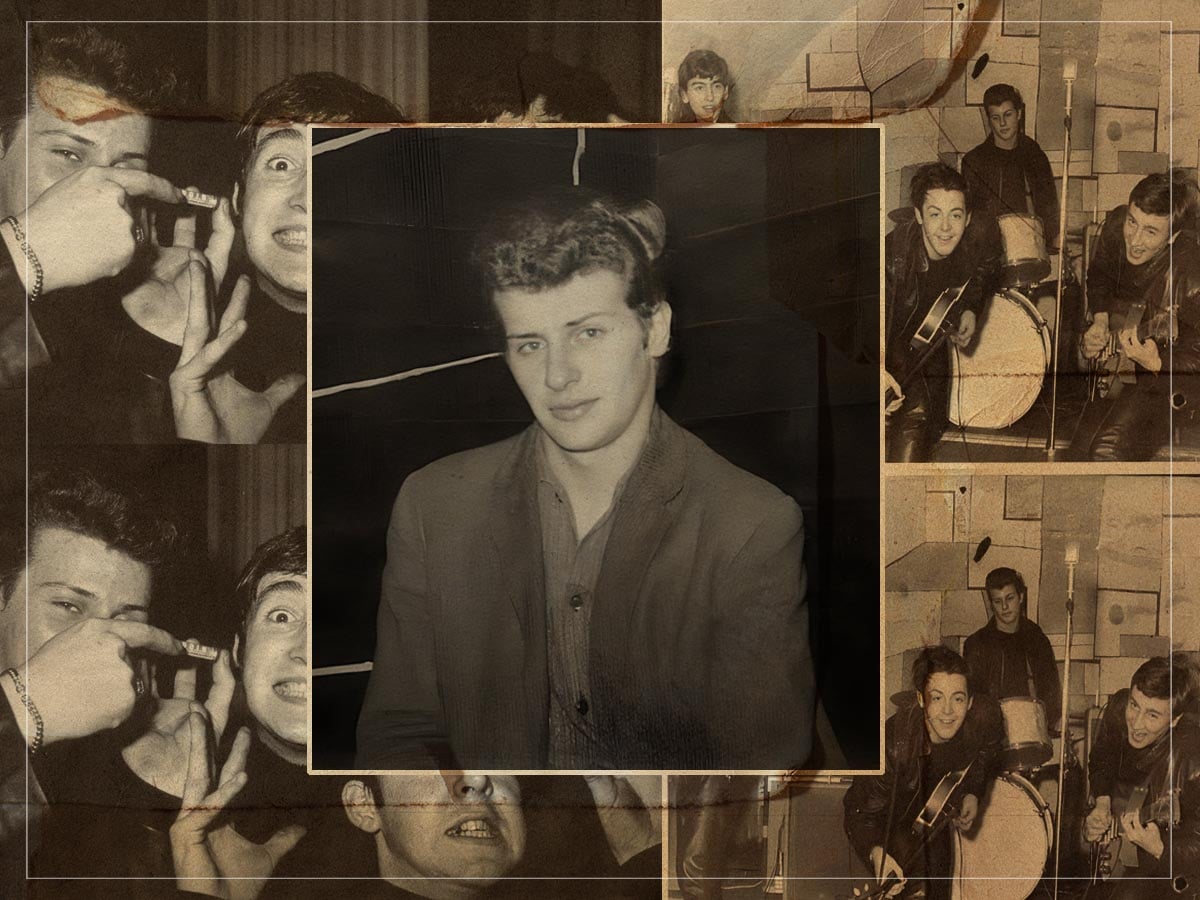
This is all a very long-winded way of explaining that the story of ‘the fifth Beatle’, Pete Best, is far from unique in popular culture. Anywhere you see stardom, inevitably, there are people who contributed to it without getting their own flowers, where the lucky ones, really, are the footnote figures who were part of stories so big and so impactful that even their relatively small roles in them have become magnified to the point of household name recognition. The poster boy for that phenomenon, certainly, is Randolph Peter Best, the Beatles’ drummer from 1960 to 1962.
The story of Best’s unceremonious sacking and the swapping in of Ringo Starr in August of ‘62 was a well known, real-time drama in Liverpool, but by the time global audiences started hearing about it a few years later, Best was already recast not just as a spurned percussionist, but as the Wally Pipp of rock and roll, described in one 1968 newspaper column in America as “the washed out Beatle—glumly slicing bread in a Liverpool bakery for $43.20 a week”.
 (Credits: Far Out / Alamy / Liverpool Beatles Museum)
Best, who was still just 27 years old at that point, had done what a lot of people would do in his situation, which is try to take advantage of a once-in-a-lifetime brush with megastardom. While he might have briefly wound up in a bakery job, he’d also filed a lawsuit against his ex-bandmates in 1965 after they’d slagged him off in a Playboy magazine interview, suggesting Best had been a pill popper who intentionally made himself ill, requiring Ringo to be on call as a replacement drummer. Best sued for defamation of character and settled out of court for an undisclosed amount.
“The money is not enough to change my life overnight,” he told the Courier-Post of Camden, New Jersey, in 1968, “One day, I may change jobs or invest some of it. Maybe start a small business. But you won’t see me buying ocean-going yachts or going to live in Bermuda.”
Best was immediately a highly relatable and sympathetic character, whether you were a Beatles fan or not. The story behind his removal from the band, which circulated more widely after the publication of Hunter Davies’ authorised Beatles biography in 1968, would put even the staunchest John or Paul devotee in Pete’s corner, as it depicted John Lennon, Paul McCartney, and George Harrison as cowardly bullies, plotting to jettison Best behind his back, but ultimately sending out Brian Epstein to do the deed while they hid in the shadows.
“Brian looked very shaky,” Best recalled of the moment in Davies’ book, “not his usual happy self… He said, ‘I’ve got some bad news for you. The boys want you out and Ringo in’.”
“It was a complete bombshell. I was stunned. I couldn’t say anything for two minutes.”
Pete Best
Best was born in 1941 in Chennai, India, then known as Madras under British control. Since his biological father was killed during World War II, he ultimately resettled in Liverpool with his mother Mona and her new Scouse partner, a boxer and sports promoter named Johnny Best. A famous story in Liverpool lore is that Mona Best wagered the value of all her jewellery on a 33-1 racehorse ridden by Lester Piggott, which won the Epsom Derby in 1954 and supposedly funded the Best family’s large Victorian house. This is probably hogwash, but stories like that tend to sprout up around people of influence, and Mona Best was definitely that. When Pete was still a teenager, she turned the cellar of their house into the Casbah Coffee Club and started hosting local bands, including a skiffle outfit known as The Quarrymen, while her son became the drummer for the club’s house band, The Black Jacks.
In the summer of 1960, as the new Beatles, with George Harrison and Stuart Sutcliffe in tow, prepared to head to Hamburg, a drummer was needed in short order. According to John Lennon, “the only reason [Pete Best] got in the group in the first place was because the only way we could get to Hamburg was we had to have a drummer. We knew of this guy. He was living in his mother’s house that had a club in it, and he had a drum kit, so we dragged him, auditioned him, and he could keep one beat going for long enough so we took him to Germany.”
By most accounts, Best was a pretty solid drummer, and he had to be in order to keep The Beatles on track during those legendary sets in Hamburg, often being the only one not under the influence of one drug or another, and it’s important to remember that he was only 19 when he joined the band and 21 when he left, so his experience as a rock drummer wasn’t exactly vast.
Much has been said about the true reasons for Best’s dismissal in 1962, and again, it helps to consider that everyone in the band was 22 or younger. These were kids trying to form a crew, for lack of a better term, and musical talent was only one slice of the pie. Best was a reliable player, and he had the looks of a viable rock star, maybe more so than the rest of them, in fact. But over the course of two years, he wasn’t meshing with the others off-stage, and when you have ambitions of touring the world, bad vibes weren’t going to be as tolerable as they might be during a single residency or a shorter UK jaunt.
 (Credits: Far Out / YouTube Still)
Best took part in a recording session with the band when they auditioned for Decca Records early in 1962, but he’d be gone by the time The Beatles released their debut single, ‘Love Me Do’, for EMI later that year. Session drummer Andy White plays on that recording, but Ringo had already been hired as Best’s permanent replacement.
Unsurprisingly, probably out of a combination of shame for how they’d fired him and bitterness for being sued by him, the other Beatles didn’t tend to speak about Pete Best with a great deal of affection. There were rumours that they’d bumped him out of the band out of jealousy because of his good looks, but that only inspired Lennon to express his version of the truth in harsher tones. “We were pretty sick of Pete Best,” he said in one interview, “because he was a lousy drummer, you know? He never improved, and there was always this myth being built up over the years that he was great and Paul was jealous of him because he was pretty and all that crap.”
For years, he struggled immensely with the fallout from his firing. Thousands of drummers had been kicked out of thousands of bands in the ‘60s, but he was the only one who’d become legitimately famous for it. While he drummed in other groups for a couple of years, he eventually carried on with his life, starting a family in Liverpool and working for 20 years in the civil service, poetically helping other fired workers find new jobs through an employment office in the city. His stated philosophy up into the 1980s was to mostly try and leave the past in the past, but this gradually changed in the second half of his life, as he began playing music again with his own band and taking part in Beatles conventions and other nostalgia-centric projects.
The release of the Beatles Anthology in 1995, and its inclusion of Best-era demo recordings, finally entitled Pete to a substantial payday, reportedly in the multiple millions, and while he has never fully shed some of the bad blood from that one day in August 1962, his story would be hard for anyone to call a ‘hard luck’ one. Like Wally Pipp once did, the now 84-year-old Best has spent decades as an unofficial ambassador for a cherished moment in history, sharing stories of his memories of The Beatles, as he knew them, and what it was like to be part of a tsunami when it was still just a ripple in the water.
“In hindsight, this was my karma,” Best told the Associated Press in 2006, “I still have my health. I have a beautiful wife, a family, a band. I’m the happy one, no matter what happened”.
ADD AS A PREFERRED SOURCE ON GOOGLE  The Far Out Beatles Newsletter
All the latest stories about The Beatles from the independent voice of culture.
Straight to your inbox.