
With the US-Israeli war on Iran plunging the world into what the IEA chief has called the “largest energy crisis we have ever faced”, governments are scrambling for solutions.

ADVERTISEMENT
ADVERTISEMENT
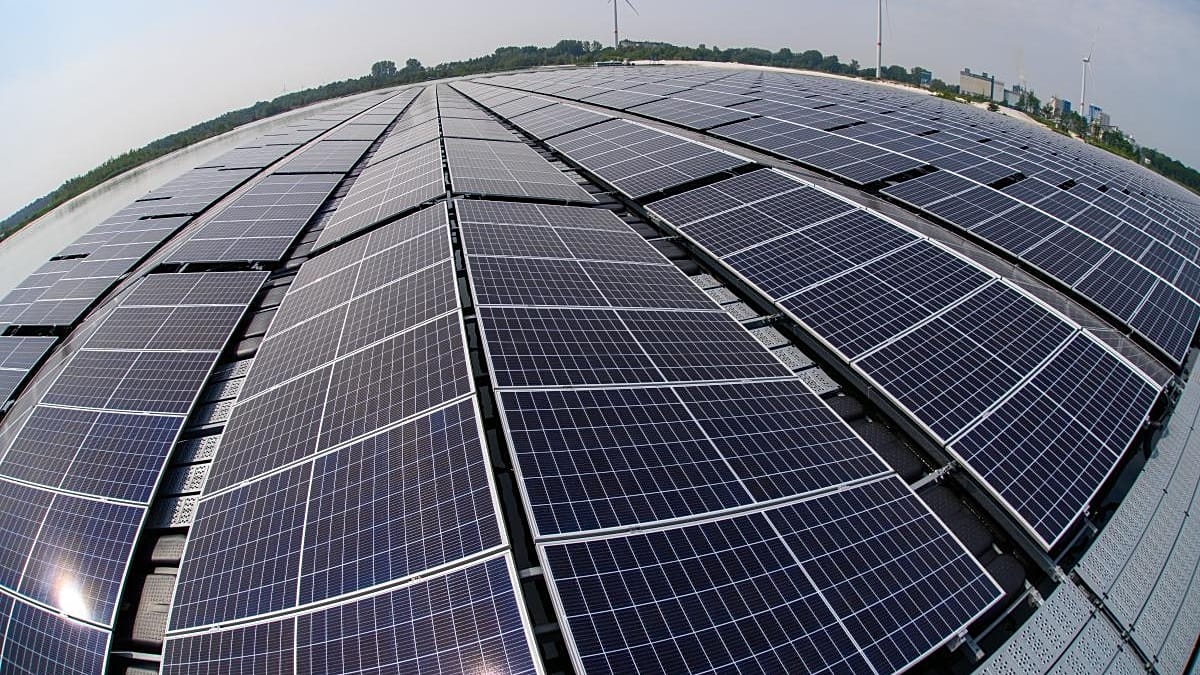
Happily, some of Europe’s biggest economies are clear that renewables are the most reliable and cheapest way to insulate against energy shocks while also hitting emission reduction targets.
Iran’s blockade of the Strait of Hormuz and numerous assaults on energy infrastructure in the Middle East have led to the “biggest energy security threat in history”, according to Dr Fatih Birol, executive director of the International Energy Agency (IEA).
Relying on imported oil and gas has already cost the EU €24bn on top of what they would already have planned to spend. Without renewables, this bill would be even higher.
Solar power has saved Europe more than €100 million a day since the war began and renewables overall are a huge part of keeping electricity bills down. Thanks to more renewable power coming online, electricity prices were an average of 24.2 per cent lower between 2023 and 2025 period across 19 countries.
After recovering from the initial shock of the war, governments started advising citizens and businesses to save energy wherever possible. Driving in fuel efficient ways, working from home and even making your own energy at home have all been recommended.
But the clean energy transition depends far more on government policies than individuals’ actions.
Here we take a look at how Spain, France and Portugal have responded to the fossil fuel crisis.
Spain doubles down on its renewables efforts
Spain has been widely celebrated for its investment in renewables – and it’s paid off in spades during the energy crisis.
Between 2019 and 2026 the country doubled its solar and capacity making it 40 GW – more than any other EU country except Germany, whose power market is twice the size of Spain’s. This foresight has meant that Spaniards’ electricity bills have remained some of the lowest in Europe, despite the war on Iran severely disrupting energy supplies.
It has doubled down on its renewables efforts since the Iran war broke out. In a Royal Decree published on 20 March, Spain announced measures to accelerate electrification, the roll-out of renewables and storage. These include removing red tape, improving grid infrastructure so that renewable energy is not wasted, making it more difficult to build data centres that are not proven to be sustainable and facilitating more energy communities.
France bans gas boilers in new buildings
France is making a push for electrification, promising €10 billion of state support to switch to electricity from oil and gas and their derivative fuels, as reported by Reuters.
Heat pumps are also part of the plan, with the installation of an extra million a year, and gas boilers will be banned in newly constructed buildings starting in 2027.
“Today 60 per cent of our energy consumption comes from these imported fossil fuels, though our domestically produced power is three times cheaper,” Prime Minister Sebastien Lecornu said while announcing the new policies. “As long as we depend on oil and gas, we will continue to pay the price of other people’s wars, which unfortunately will continue and will impoverish us,” he added.
Portugal promises a price cap
Rising household bills have been a worldwide concern since the US-Israeli attacks on Iran led to the closure of the Hormuz Strait.
Portugal, as reported by Reuters, has promised to temporarily cap electricity prices if needed. The consumer protection mechanism would be implemented if retail electricity prices rise by more than 70 per cent, or exceed 2.5 times the five-year average, surpassing €180 per megawatt-hour. The government would cover the initial cost of support that “would be recovered later” according to Cabinet Minister Antonio Leitao Amaro.
Portugal is less dependent on natural gas for its electricity compared to many European countries and in the first two months of the year about 79 per cent of the electricity consumed in Portugal came from renewable sources, according to official data.
Poland assigns funds to renewables
“Over the next decade, our country will invest PLN 1 trillion in energy, infrastructure, transmission lines, and power plants,” Prime Minister of Poland Donald Tusk announced during the PowerConnect Energy Summit in Gdańsk on 18 March.
Of this amount, over PLN 220 billion (€51.8 bn) is to be allocated to renewable energy and storage, PLN 234 billion (€55 bn) to distribution and PLN 160 billion (€37 bn) to nuclear power.
In 2024, coal, oil and gas made up 83 per cent of Poland’s energy. But the country is making efforts to improve its renewables share, going from 21 per cent in 2022 to 28 per cent in 2023, according to the IEA.