
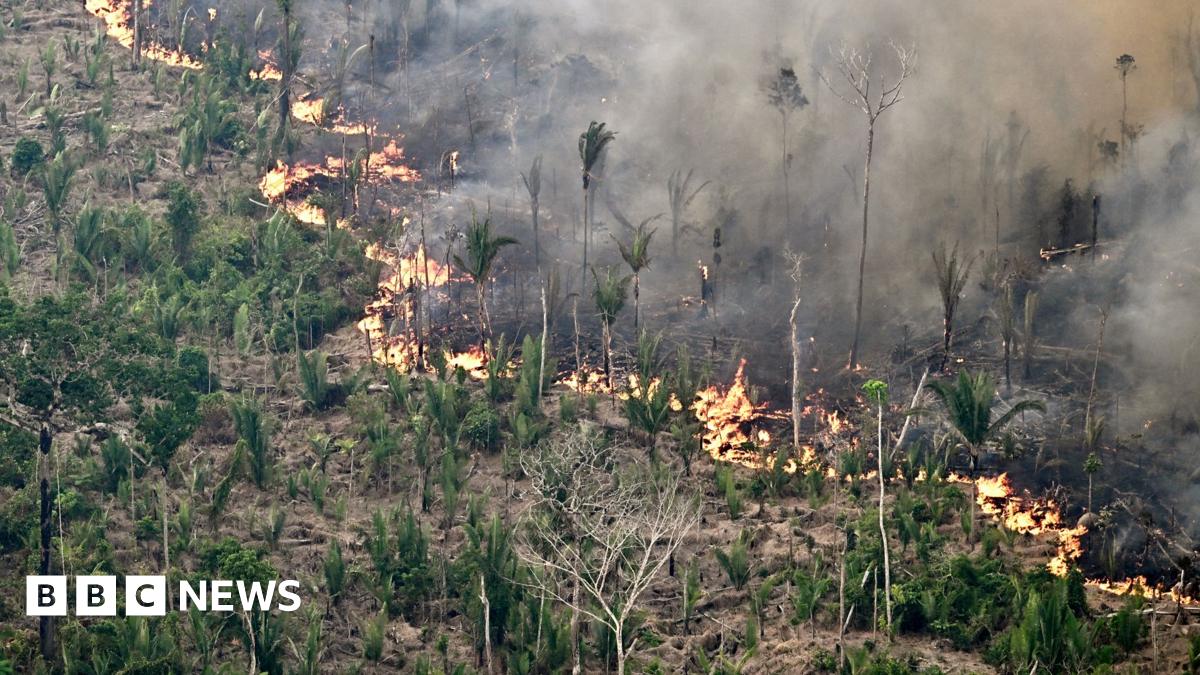
Researchers are concerned the threat from fires could be even higher later this year, due to a combination of climate change and a new phase of El Niño, although predictions are still uncertain.
“Climate change and land clearing have shortened the fuse on global forest fires,” said Prof Matthew Hansen of the University of Maryland.
“Without urgent action to […] manage fire more effectively, we risk pushing the world’s most important forests past recovery.”
In a separate report released on Wednesday, the EU’s Copernicus climate service laid out how climate change had helped to drive intense heatwaves, wildfires and droughts in large parts of Europe last year.
Already the world’s fastest-warming continent, few places escaped the heat, with at least 95% of Europe experiencing above-average annual temperatures.
The warmth helped to create conditions for widespread wildfires, with more than 10,000 sq km (4,000 sq miles) burning in total – a bigger area than Cyprus.
There was no escape for Europe’s traditionally cold regions either, with Alpine glaciers continuing to lose ice and temperatures in the Arctic Circle reaching 30C in July.
The average surface temperature of Europe’s seas was also the highest on record, with the Mediterranean Sea particularly badly hit.
The report did point to progress on efforts to tackle climate change, with nearly half of Europe’s electricity now coming from wind, solar and hydropower.