
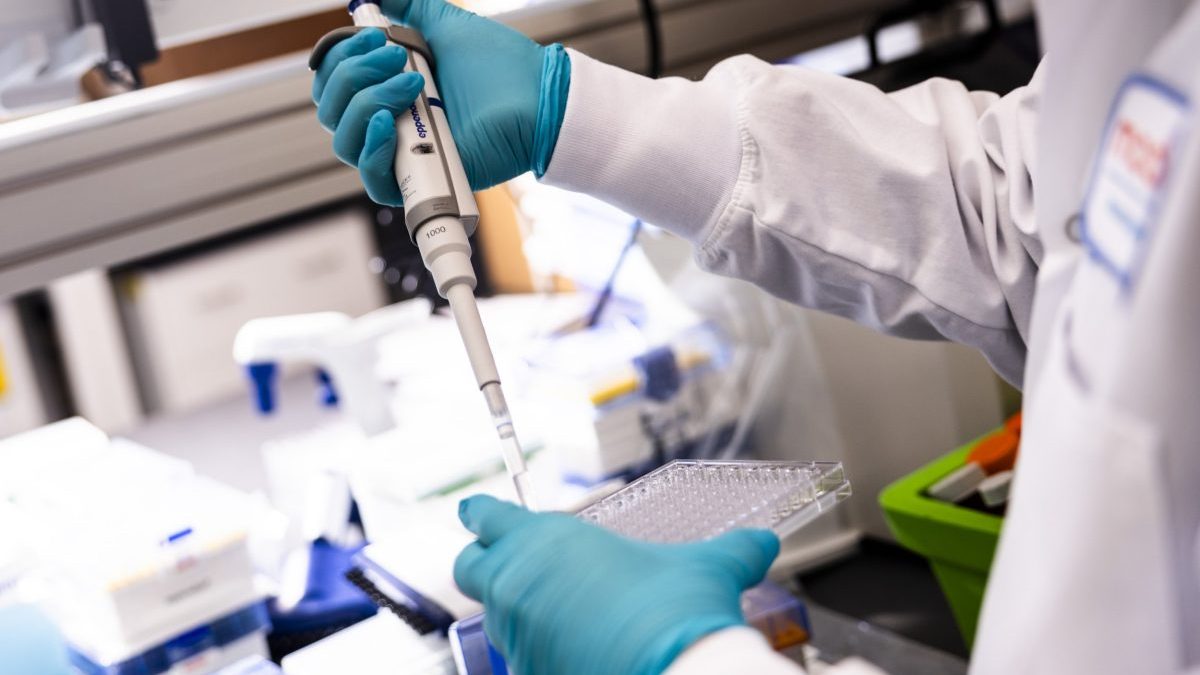
Despite advances in care for patients with head and neck cancer, the advanced form of the disease is difficult to treat and has high rates of recurrence

Science & Environment Correspondent
Patients with advanced head and neck cancers in England will trial a “potentially transformative” new vaccine as part of an NHS drive into personalised treatment.
The first patients have already received the jab, which uses mRNA technology to train the immune system to fight cancerous cells.
Around 100 more people will be enrolled on the trial at 15 hospitals over the next 12 months, while the NHS hopes thousands more will be recruited across the country for various kinds of cancer in the coming years.
Who will get the first cancer jabs?
Head and neck cancer is a general term to describe forms of the disease in those regions of the body, and can include cancer of the mouth, throat or voice box.
Around 11,000 new cases are diagnosed in England every year.
Despite advances in care for patients with head and neck cancer, the advanced form of the disease is difficult to treat and has high rates of recurrence, with two-year survival rates at under 50 per cent.
This cancer vaccine trial will be run through the NHS Cancer Vaccine Launch Pad, coordinated by the Southampton Clinical Trials Unit, which has already helped refer around 550 patients to trials of vaccines for bowel and skin cancers.
The 15 hospitals involved
The Clatterbridge Cancer Centre – Liverpool
The Royal Marsden – Sutton
The Royal Marsden – London
Oxford Cancer Centre – Oxford
Nottingham University Hospitals NHS Trust
Leeds Teaching Hospitals NHS Trust – Leeds
University Hospital Southampton NHS Foundation Trust – Southampton
Lancashire Teaching Hospitals NHS Foundation Trust – Preston
Mount Vernon Cancer Centre – Hertfordshire
Guy’s & St Thomas’ NHS Foundation Trust – London
UCLH – London
Queen Elizabeth Hospital – Birmingham
Addenbrooke’s Hospital – Cambridge
Torbay Hospital – South Devon
The Christie – Manchester
How do the vaccines work?
The vaccines use “mRNA” technology, first pioneered to create Covid jabs during the pandemic.
Traditional vaccine technologies use an inactivated virus to trigger an immune response.
By contrast, mRNA vaccines use synthesised sequences of genetic code that carry the instructions needed for cells to make for themselves the proteins that trigger an immune response.
The vaccine used in this trial, known as AHEAD-MERIT (BNT113-01), will help the immune system recognise and kill cancer cells containing human papillomavirus (HPV) proteins.
The jabs are encoded with two proteins commonly found in head and neck cancers associated with high-risk types of HPV.
The reason they are called vaccines is because they teach the immune system to fight cancer, in the same way that vaccines teach the immune system to protect itself from viruses and bacteria.
But unlike traditional vaccines, they are not designed to prevent cancer from developing in the first place.
Instead, the hope is that these cancer vaccines may reduce the risk of the cancer coming back in the future.
Will they cut cancer rates?
Professor Peter Johnson, NHS England’s national clinical director for cancer, said the “potentially transformative” vaccines offered “renewed hope of holding the disease at bay”.
The new jab is “personalised” because it is designed to trigger the immune system so it can fight back against the patient’s specific type of cancer and tumour.
In order to create the jab, a sample of tumour is removed during the patient’s surgery, followed by DNA sequencing and the use of artificial intelligence.
The results of earlier phases of this trial, including for skin cancer, have proved promising for mRNA vaccines.