
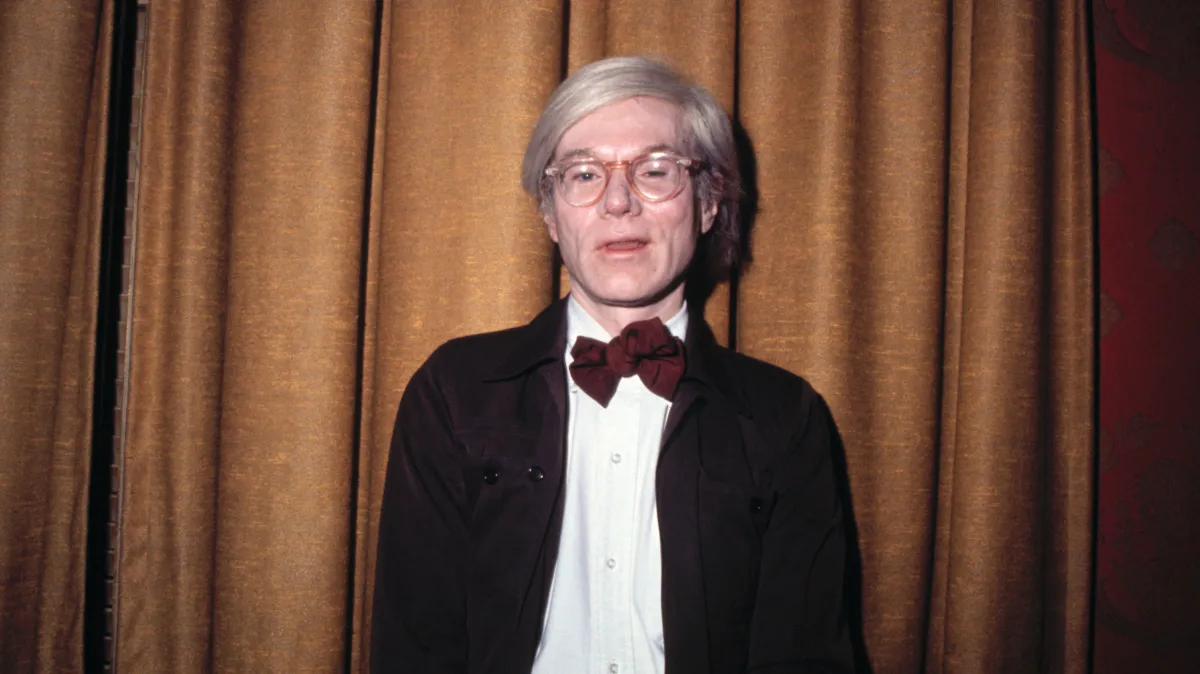
Once upon an American dream, you could buy an Andy Warhol by the yard. “Crease-resistant, pre-shrunk, easy to wash, needs no starch,” promised an advertisement that ran in 1956. Happy Bug Day was a printed cotton designed by Warhol and available in five colourways at 93 cents a yard with another 10 cents for thread in a matching shade. This fabric, the advert continued, is suitable for dresses, skirts, blouses, children’s clothes and home decorating.
Before Warhol was the biggest artist in the world, he was a hack, fresh off the bus from Hicksville. In 1949, the 20-year-old art graduate arrived in New York on the overnight Greyhound from Pittsburgh. That year, a magazine editor would ask him for a potted biography. Warhol gave him the brush-off: “My life wouldn’t fill a penny postcard. I was born in Pittsburgh in 1928 (like everybody else in a steel mill).” Never mind the backstory — immigrant parents from the Carpathian Mountains, dirt, poverty, oatmeal, awkward schooldays, early promise — on with the New York show.
Warhol sublet a three-room apartment on the sixth floor of a tenement building on the Lower East Side. His “studio” was a tabletop laid across a claw-footed bathtub. Every night cockroaches crawled from the corners. On more than one occasion, as Warhol hawked his portfolio from office to office, an insect crawled out. One early editor, Tina Fredericks, the art director at Glamour, thought his drawings might do. “Could you draw something more practical, more merchandisey?” she asked. “I can draw anything,” came the reply. So it proved.
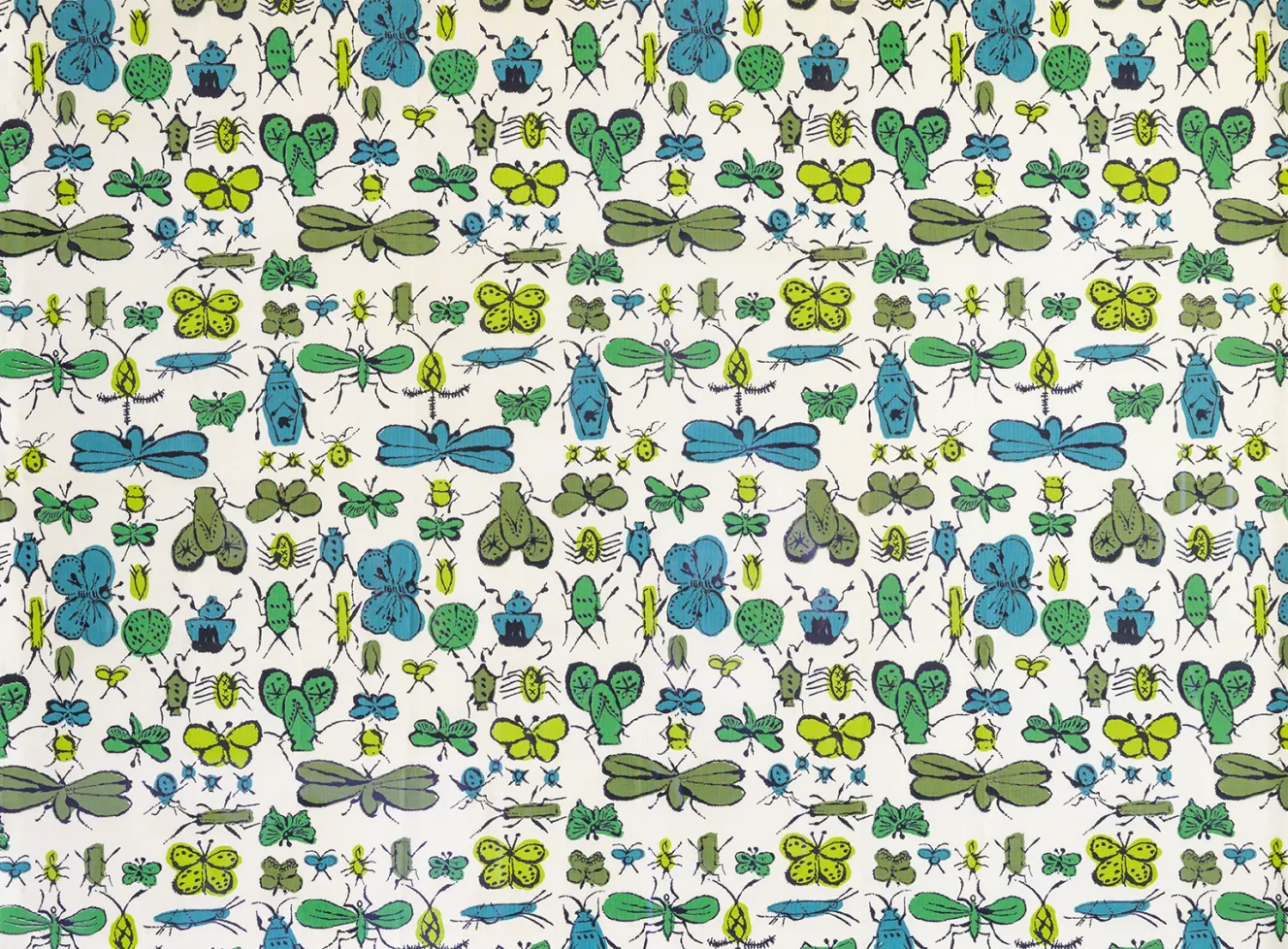 Happy Bug Day, c 1956 Courtesy of Paul Maréchal © 2026 The Andy Warhol Foundation for the Visual Arts, Inc./Licenced by DACS, London
Warhol could draw anything and, even better from the point of view of editors and ad men, he could draw it fast. The next few years were astonishingly productive. He drew for Glamour, Harper’s Bazaar, Town and Country, Sports Illustrated and The New York Times. He illustrated brochures, book jackets, album sleeves, greeting cards, shop windows and awnings, even the placemats for a department store café. He drew hundreds upon hundreds of pumps, boots and brogues for the shoe shop I Miller. He also became a prolific designer of textiles. Happy Bug Day, a jaunty swarm of butterflies, beetles, crickets and moths (no cockroaches), was his bestseller.
Warhol’s textiles have been somewhat overlooked. They merit barely a paragraph in Blake Gopnik’s huge and hugely entertaining 1,000-page biography of the artist. A new book, Andy Warhol: The Complete Textiles and Fashion by the curator and art collector Paul Maréchal, has at last given Warhol’s fabrics their 15 minutes of fame.
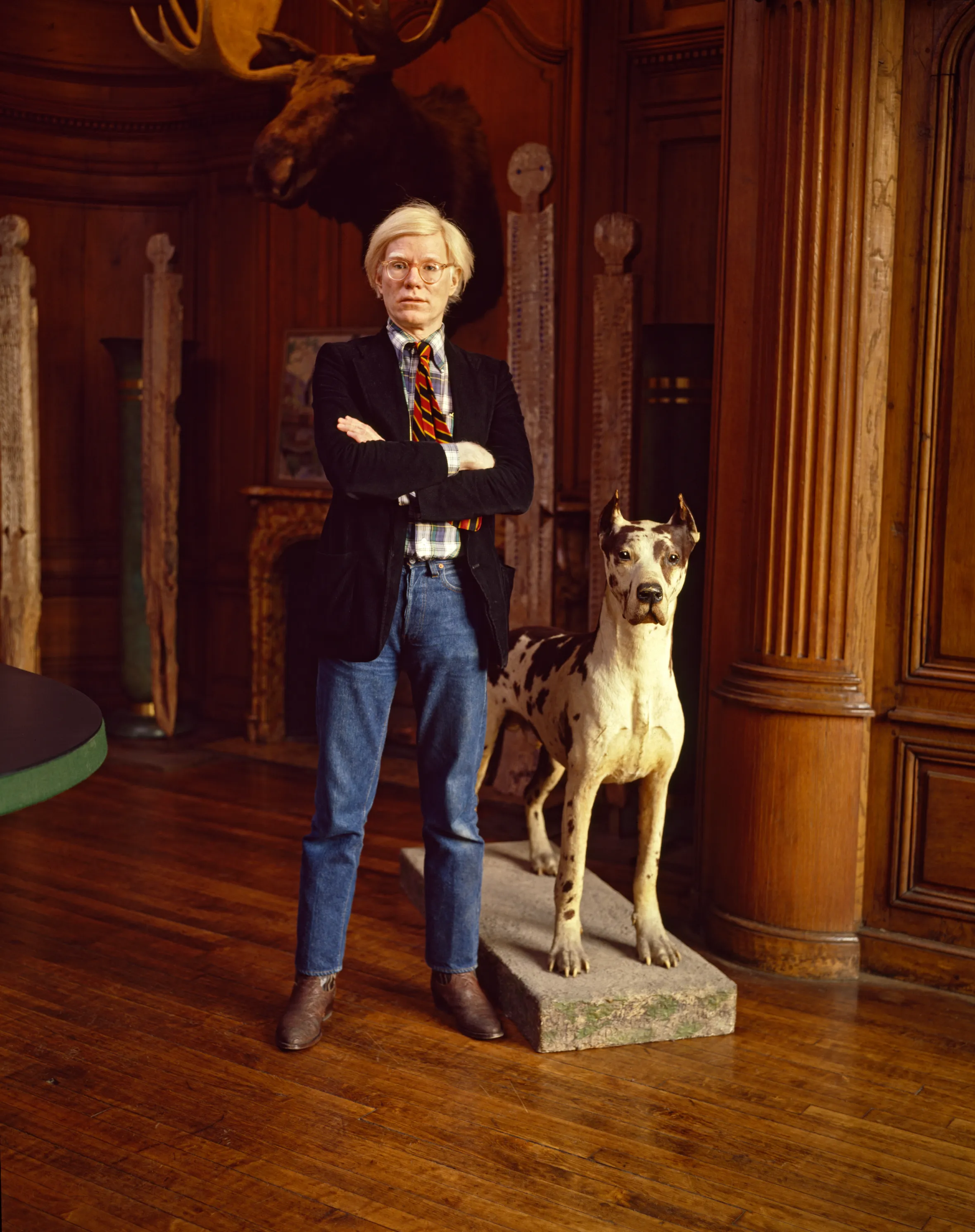 Warhol in 1980 Evelyn Hofer/Getty Images
One of Warhol’s earliest commissions, within months of arriving in New York, was an advert for a Philadelphia fabric company. It was almost certainly the start of his textile career. One of the first fabrics he produced, Tumbling Clown on Horses, started life as a Christmas card. The carousel-like pattern owes something to the 19th-century zoetrope, a cylindrical device that could be fitted with an illustrated sequence of pictures that would appear animated as the cylinder spun. Turned into a full, swishing 1950s skirt and worn to a rock’n’roll dance, the fabric would, in motion, create the illusion of clowns somersaulting on horseback.
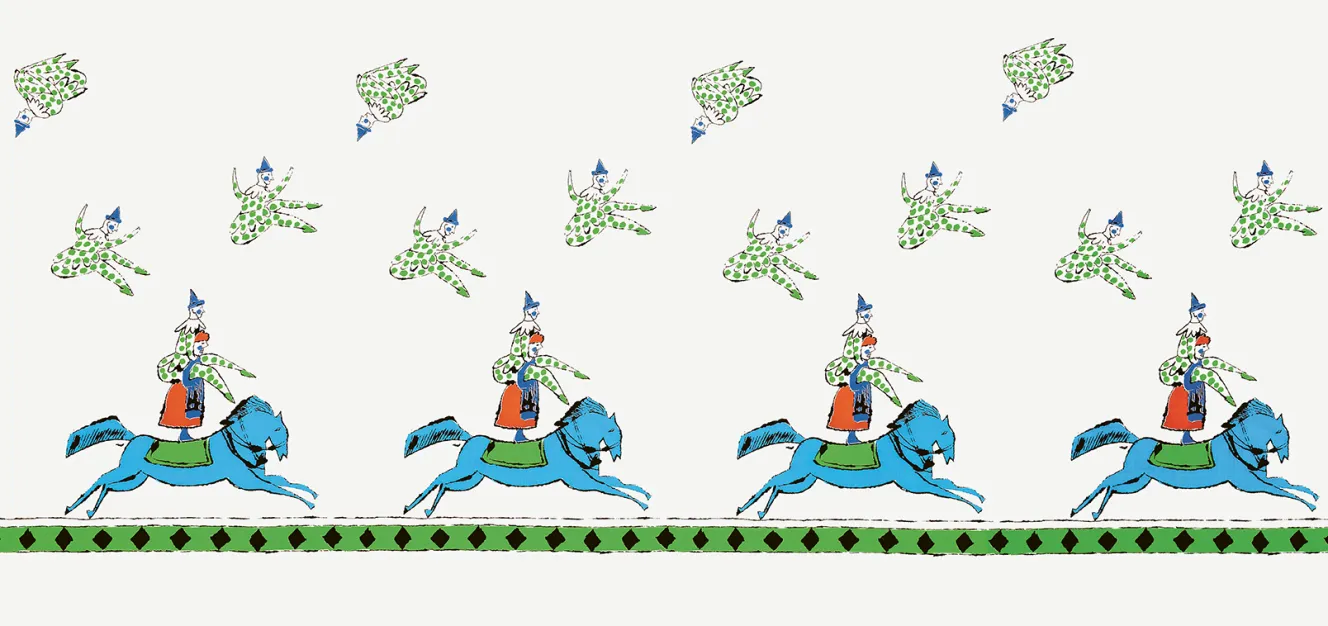 Tumbling Clown on Horses, c 1956 Courtesy of Yale University Press © 2026 The Andy Warhol Foundation for the Visual Arts, Inc/Licenced by DACS, London .Photography by Jonathan Richard © Target Gallery
Women who had worn Rosie-the-Riveter overalls while working in munitions factories and shipyards during the Second World War weren’t going to go back to dressing as their mothers did. There was a boom in the market for inexpensive prints in fabrics that would wash and wear. “Requires little or no ironing when drip-dried without wringing,” the advert that accompanied Happy Bug Day pledged.
Warhol’s early textiles ditched the chintz and chucked the checks. His patterns, very much in the pop art mode, made stars of everyday objects: buttons and broomsticks, pens and perfume bottles, garden tools and pocket watches. One printed cotton that from a distance looked like a simple stripe was, on closer inspection, a series of stacked measuring tapes and rulers. To our eyes, a dress made up in Pretzels or Ice Cream Cones (both 1964) looks a little cartoonish, but “novelty fabrics” were a growing market.
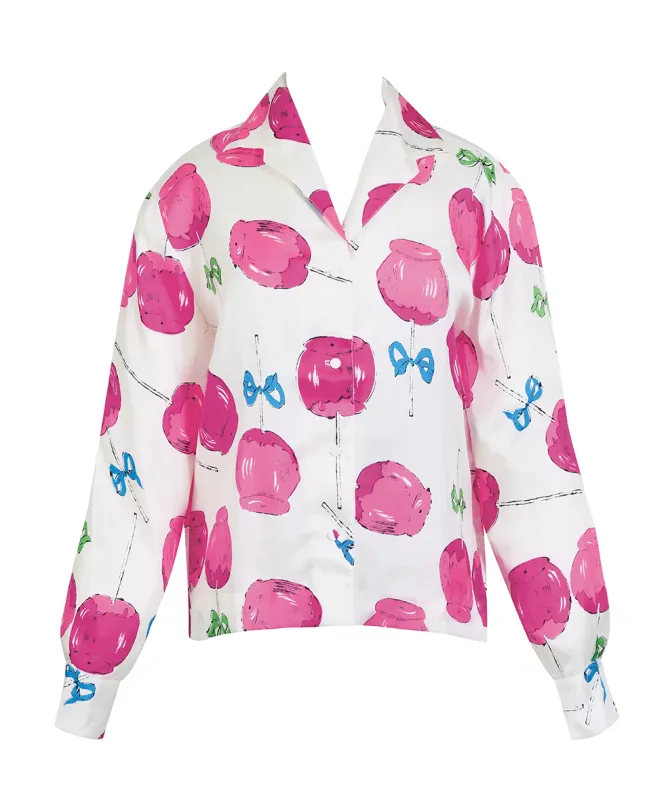 Candy Apples, c 1962 Courtesy of Yale University Press © 2026 The Andy Warhol Foundation for the Visual Arts, Inc/Licenced by DACS, London. Photography by Jonathan Richard © Target Gallery
At almost exactly the time that the American artist Wayne Thiebaud was painting ice cream sundaes and watermelon slices, Warhol was printing the same motifs. They both went in for slick and sickly candy apples. While I don’t think I could pull off a skirt sewn from Warhol’s Potted Plants (c 1958) — too Bill and Ben — Warhol’s florals would still be wearable today.
One of Warhol’s earliest contracts was with Balmoral Looms, a brand for which he produced nine floral designs, trailing and twining and drawing on art nouveau style. His Nasturtiums, Water Lilies, Lilies and Philodendrons (c 1959) marry a pop palette with an elegant, winding repeat. Warhol’s motifs may often have appeared naif — simple in outline, very little in the way of weight or shade — but the arrangement of his shells, starfish and sea urchins, say, was often remarkably complex. However did you line up the seams?
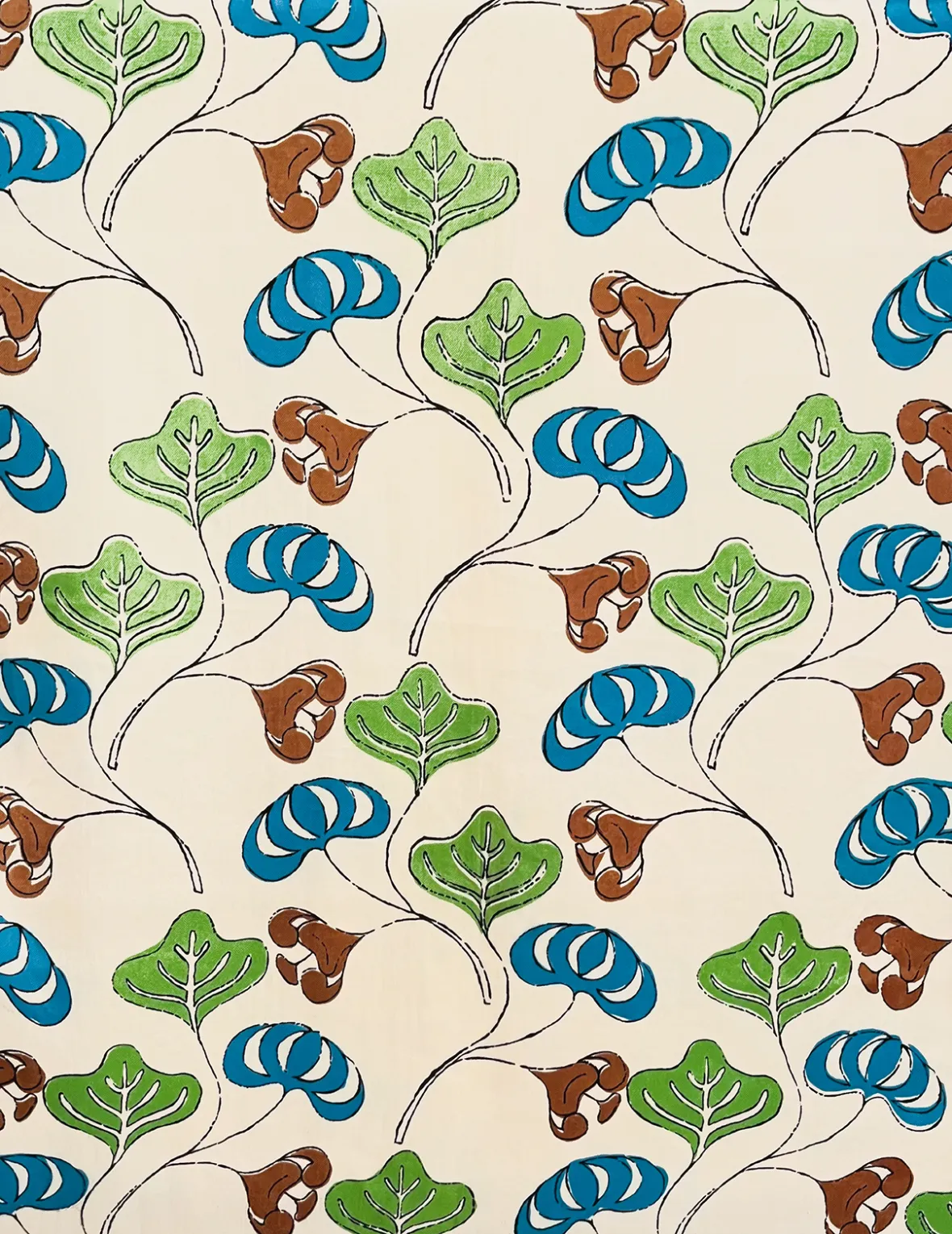 His 1956 fabric design Nasturtiums© 2026 The Andy Warhol Foundation for the Visual Arts, Inc/Licenced by DACS, London
Textiles may have been widely seen as a feminine and therefore lesser pursuit — remember that this was a period when Jackson Pollock, Willem de Kooning and other men of action were going in for massive abstract canvases and nothing so neat as a repeat — but Warhol didn’t see it that way. He remarked that the “ladies’ art” of textiles is “yet another proof that women are the world’s major artists”.
Warhol’s early exercises in repetition would inform some of his most recognisable, I dare not say “iconic”, works: Elvis Presley, Marilyn Monroe, the Coca-Cola bottles. He started “doing silkscreens” in August 1962. “With silkscreening,” he explained, “you pick a photograph, blow it up, transfer it in glue on to silk, and then roll ink across it so the ink goes through the silk but not through the glue. That way you get the same image, slightly different each time. It was all so simple — quick and chancy. I was thrilled with it.”
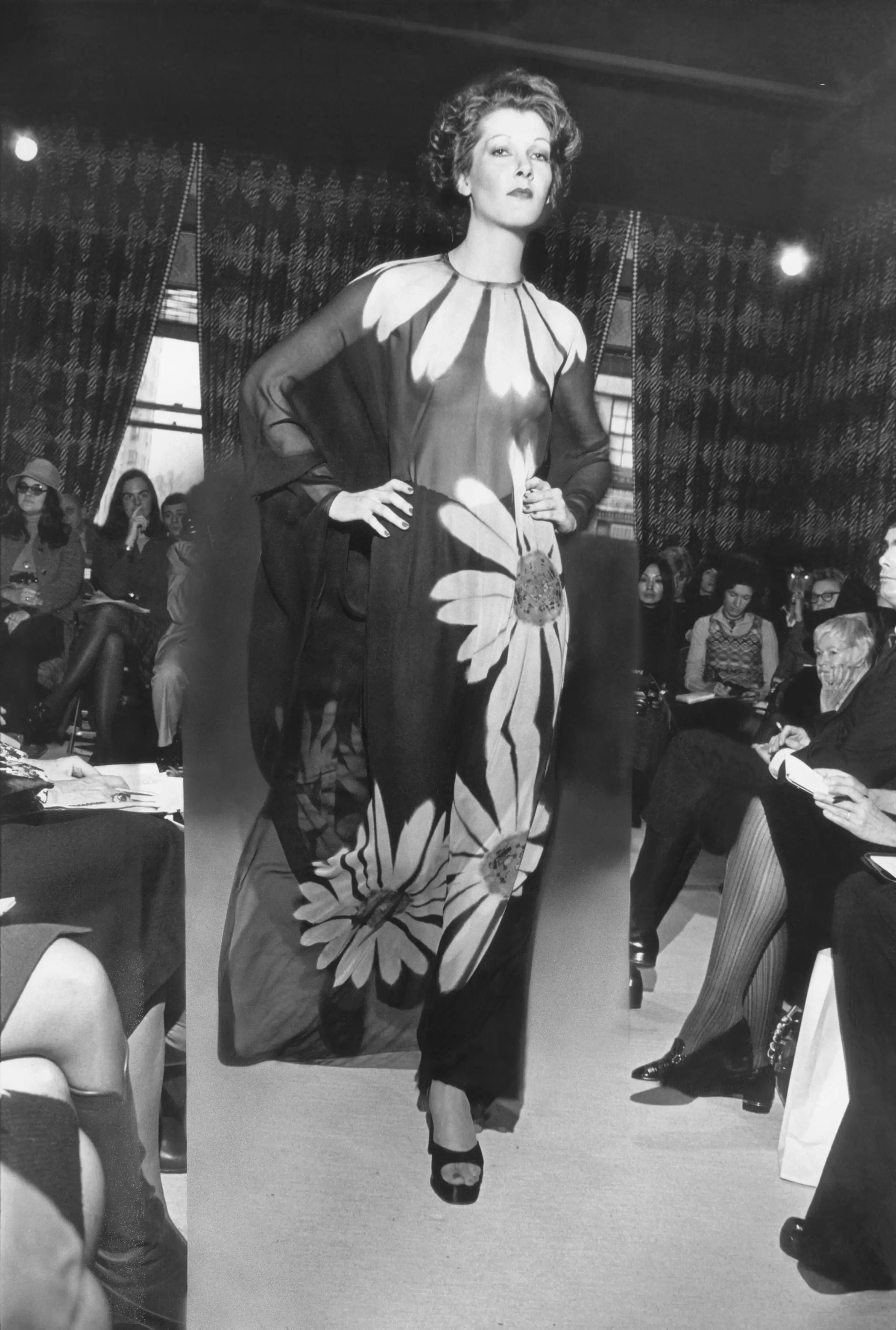 A model for Halston, 1972Berry Berenson/Condé Nast via Getty Images
One of his first series reproduced the packaging of Brillo boxes. For an exhibition in 1964 Warhol printed the Brillo images on to lightweight canvas and turned the canvas into dresses for two of his friends to wear to the afterparty. He would do the same the next year with Campbell’s soup cans. Male friends would sometimes be given a present of a “tie” — a strip cut from the edge of one of Warhol’s canvases, still with a raw edge and crusty with paint.
Warhol never again produced any fabric so obviously pretty, cheerful and commercial as the patterns he made in the 1950s when he was going door-to-door and working hand-to-mouth as a jobbing artist. In 1972 the American fashion designer Halston sent models down the catwalk cocooned in crepe de chine printed with Warhol’s Flower pattern. You could, if you had the money, buy a Warhol dress at the Halston boutique on East 68th Street, but you could no longer send off for five yards of drip’n’dry cotton — with thread to match — and run it up on the Singer at home.
Andy Warhol: The Complete Textiles and Fashion by Paul Maréchal (Prestel £45 pp272) is published on May 12. To order a copy go to timesbookshop.co.uk. Free UK standard P&P on orders over £25. Special discount available for Times+ members