
Every Friday night, Derek and many other Jews across the world mark the end of the week by ushering in the start of the Jewish sabbath – Shabbat. Families light candles and gather around the table for Friday night dinner, sharing the comforts of food and conversation. On Saturday morning, they go to synagogue, to pray and reflect on the week that’s just passed.
This Shabbat is no different. The candles were lit. The synagogues will be busy. Yet at the same time this weekend the ritual will feel different for every Jew in Britain.
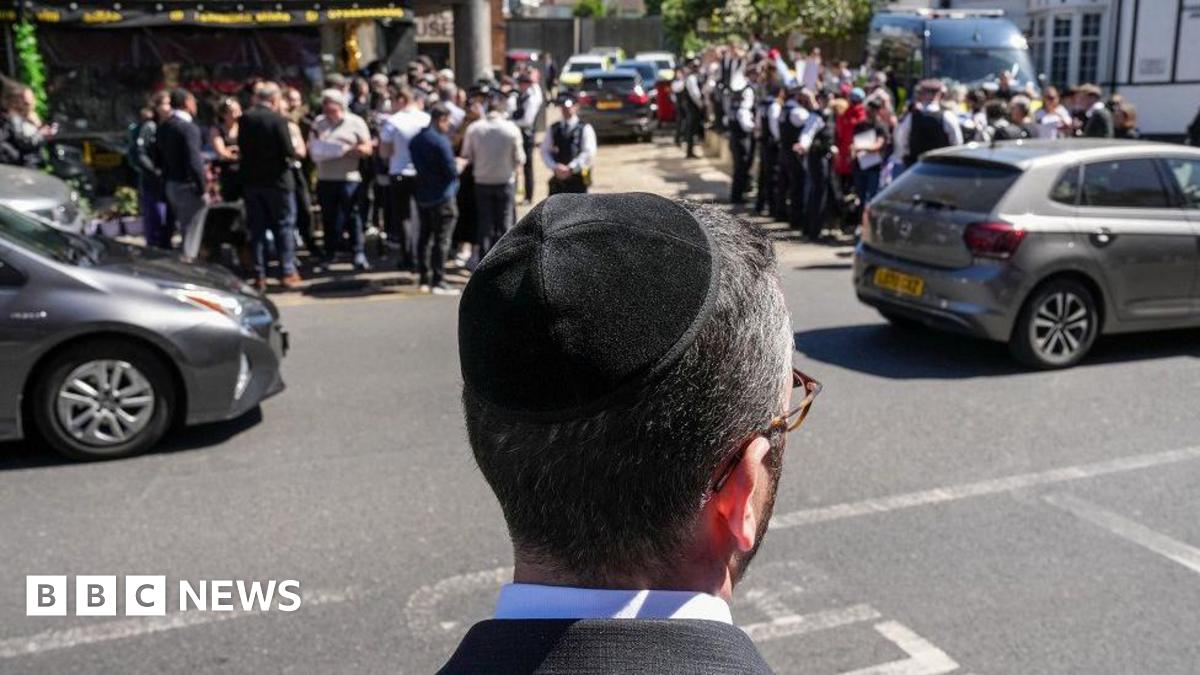
Although he’s covering up his kippah in public, Derek says he will attend synagogue as usual – but that it will feel especially intense.
“Unsurprisingly, this week we are going to have even more security. My synagogue is like a prison. And it’s a small synagogue.”
He adds: “I have never experienced – not the levels of hate, but the deafening silence of a community, of a country in the wake of such virulent antisemitism.”
Adam Wagner, a prominent human rights lawyer, is one of those who have been agonising over whether to stick to his usual routine.
Like many Jews, Wagner prepares for Shabbat by going to buy a challah, a braided bread, from a kosher bakery. But the thought of going to a Jewish site in Golders Green fills him with fear.
“In the back of my mind, I’m thinking how to keep myself from being stabbed in the queue,” he says.
Wagner has also been wrestling over whether to wear a kippah when walking to synagogue this week. His child has surprised him by asking him to promise not to do so.
“I still haven’t decided,” he says. “I will need to have a discussion with them on the day. I would prefer to wear it.”
But these concerns won’t stop Wagner from going to synagogue – though he knows the experience bears little in common with that at other religions’ places of worship.
“I will be spending this Shabbat as I spend most – at my synagogue, behind high walls, volunteers wearing stab vests, specially installed car-ramming prevention barriers and professional security guards,” he says.
This will be a similar scene at every synagogue.
Jonathan Romain, the former rabbi of Maidenhead synagogue in Berkshire, now regularly spends his Shabbat mornings standing outside it on guard duty.
“After many years of being inside the synagogue, leading services and being protected by others, I now repay the debt I’ve owed to others for so many years. I was on last Saturday, and I’ll be thinking of them this Saturday,” he says.
“I shall be worrying about copycat attacks to the one in Golders Green. I hope these new random street attacks will not suddenly multiply.”
Two Jewish men suffered serious injuries after being stabbed in Wednesday’s attack in Golders Green, which police declared a terrorist incident. On Friday, Essa Suleiman, 45, appeared in court charged with attempted murder of them and another man, Ishmail Hussein.
The attack came amid rising antisemitism and a spate of incidents in recent months targeting Jewish sites including an arson attack on ambulances also in Golders Green.