
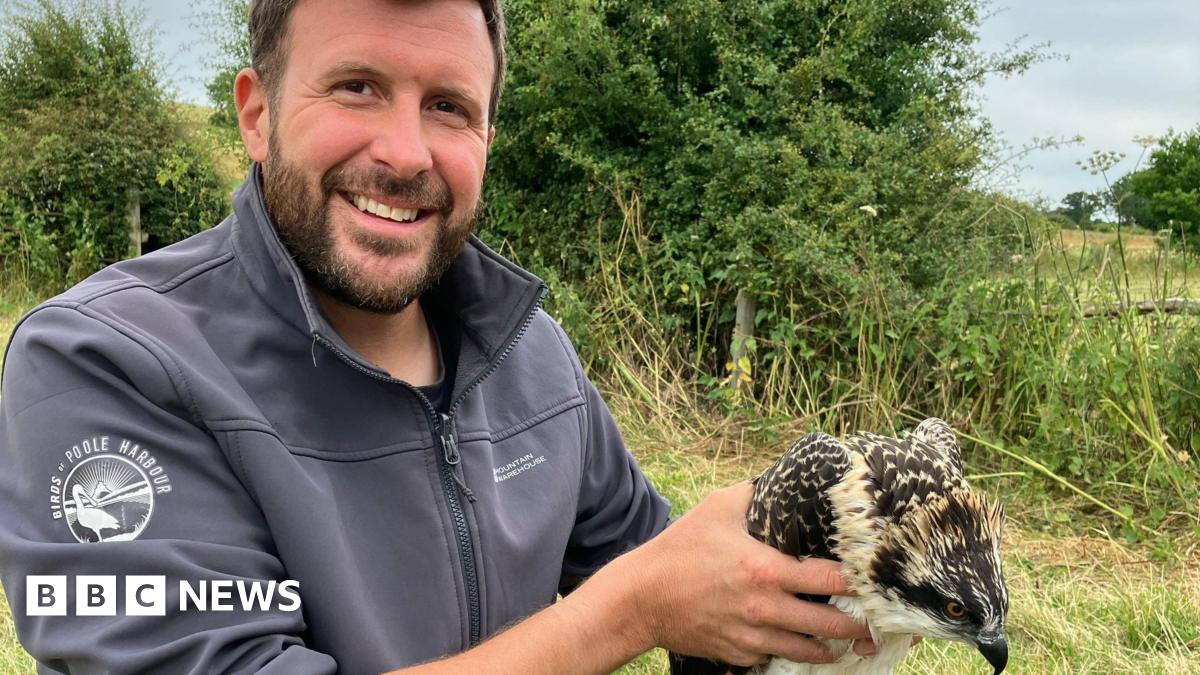
By the time the juveniles migrate in August or September, the location is imprinted on their memory so, when they are ready to breed, usually after two or three years, they will return.
Both of the breeding males in Poole Harbour came from the translocation project.
Last week, a three-year-old male – 5H3 – that fledged from CJ7 and 022’s nest was also spotted, raising hopes that he too will attract a passing female.
As they are part of a scientific project, the birds do not have names and their ring numbers are assigned from a sequence ordered on a strip.
Reflecting on the project’s success, Morton said: “It’s insane but there’s a much greater story than just the ospreys in all of this.
“Within hours in the one location we’ve seen white tailed eagles, red kites, peregrine falcons – all of which have been persecuted in the past.
“Species recovery is occurring and the ospreys are symbolic of a bigger set of stories that are going on here.”