
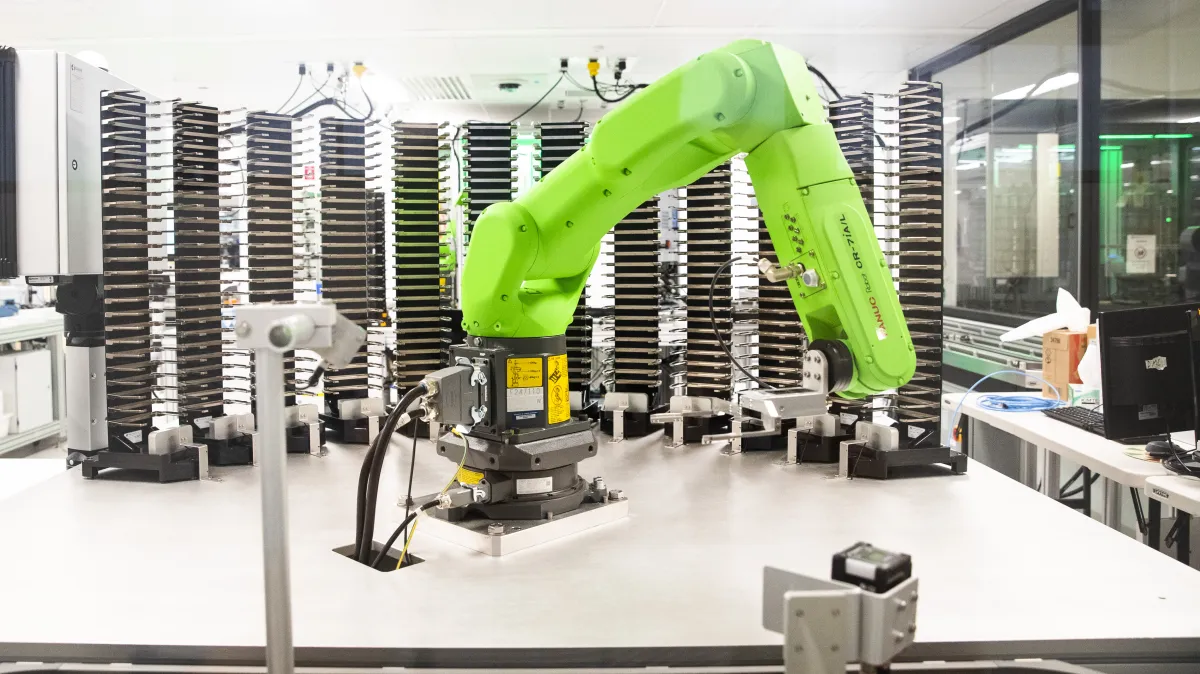
Last summer, in a secure laboratory in Boston, Massachusetts, a phalanx of robot arms silently measured and pipetted their way into the annals of science.
Using a specialised process called cell-free protein synthesis they were able to produce proteins for 40 per cent less than a state-of-the-art facility. This was remarkable, not only because it was done in a human-free “cloud lab”, but that the effort was led by an AI: ChatGPT.
Once given its objective — maximise output of grams of protein per dollar spent — OpenAI’s chatbot acted as a far-off orchestra conductor. It took control of the lab’s liquid handlers and centrifuges, incubators and plate readers. It formed hypotheses, designed experiments, then set the machines in motion, again and again. Over six months and more than 150,000 tests of compositions and techniques, it nailed down a process that yielded 27 per cent more protein than the best human teams have managed, and for nearly half the cost.
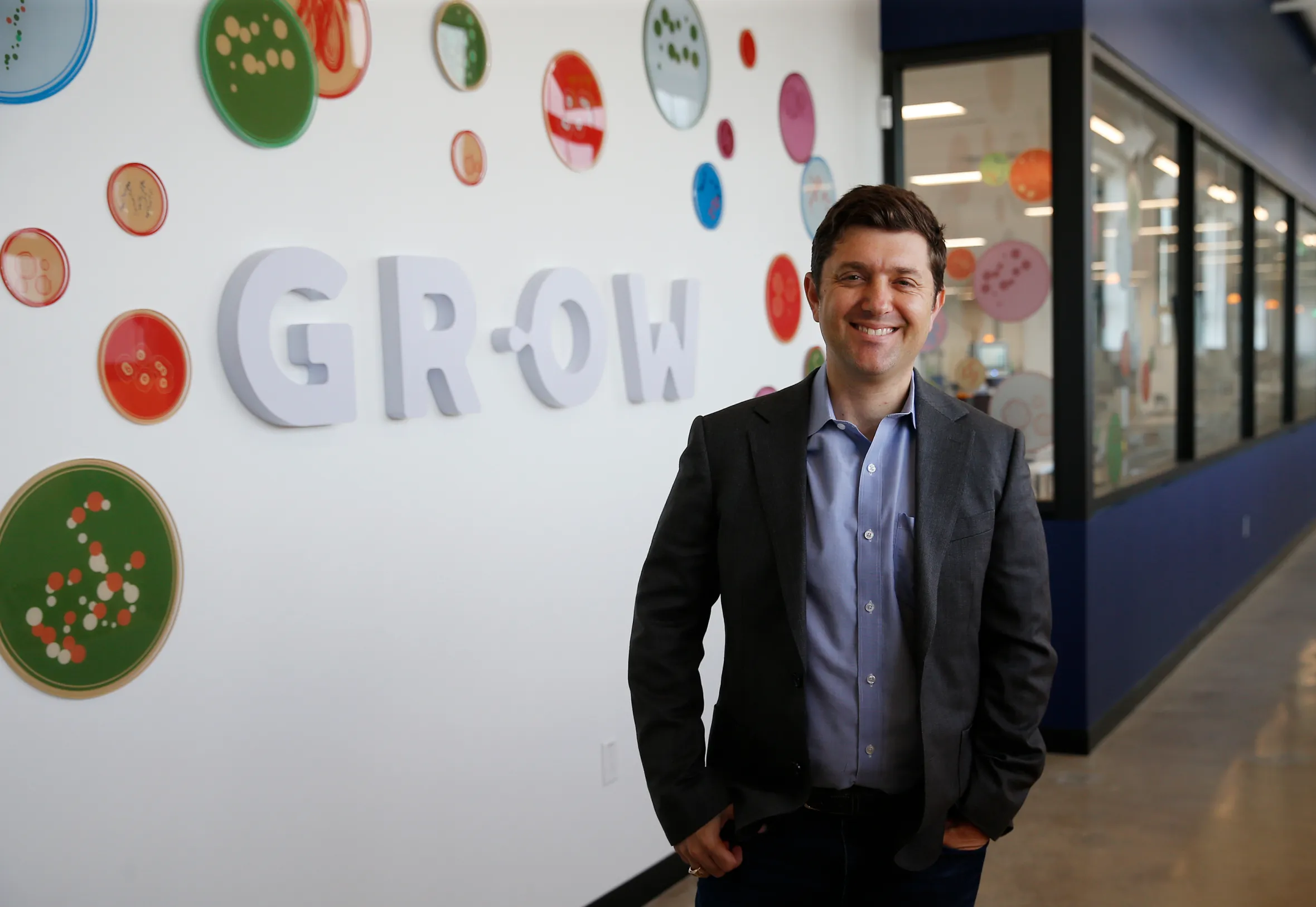 Gingko Bioworks’ co-founder Jason Kelly poses for a portrait inside in Boston on June 8, 2021Jessica Rinaldi/The Boston Globe via Getty Images
Jason Kelly, chief executive of Ginkgo Bioworks, whose cloud lab was used for the experiment, said it provided a glimpse of the future: mass automation followed, eventually, by full, self-driving science.
“As a scientist, at least for a certain class of problem like these optimisation problems, you can spin up an agent and tell it, ‘Go work for a few weeks. Do an experiment. Get the results. Design another experiment, get the results, and come back when you work down that tree.’ You could maybe have 10, or 100, or 1,000 of those running at the same time, pursuing lots of different hypotheses. That’s wild. That’s a change to science.”
Executives and researchers have talked for years about how science will be the domain where AI delivers lasting, undeniable benefit. Cancers cured. Lifespan doubled. Alzheimer’s banished. Curing all disease was “within reach”, said Sir Demis Hassabis, founder of DeepMind, the artificial intelligence research laboratory owned by Alphabet. Dario Amodei of AI business Anthropic predicted that AI will compress a century of scientific progress into the next decade.
Fuelling those visions are the convergence of automated labs and hyper-intelligent AIs to drive them. Through another lens, however, critics warn that this marks the arrival of a terrifying new era, “essentially making everyone a PhD virologist who can be walked through the process of designing, synthesising and releasing a biological weapon, step-by-step,” Amodei warned.
OpenAI’s Sam Altman shares the concerns. Terrorists using AI to invent biological weapons, he said, is “no longer a theoretical thing”.
Early days
At the heart of the fear is AI’s ability to empower people en masse. Just as hopelessly non-technical people can use these tools to build a website or an app, the expectation is that anyone will soon be able to deploy their favourite bot as a for-hire scientist, and then run experiments in a cloud lab. Gingko charges $39 per experiment.
These are early days. There are, depending on how you categorise them, just a handful of cloud labs today: for-hire facilities, accessible via the internet, where— for a fee — any researcher can run an experiment. Yet experts say the industry is on the cusp of a boom, similar to the 2010s cloud computing explosion, when companies got rid of their expensive in-house servers and instead rented space in the data centres of cloud giants such as Amazon Web Services.
Kelly estimated that cloud labs can run for one-tenth of the price of traditional facilities because they need less space to accommodate humans, and can run 24 hours a day.
The rise of the robot lab could dramatically accelerate the automation of drug discovery and production, a move that is already under way. Under pressure to cut costs, pharmaceutical giants and biotech start-ups are pushing the grunt work of science — designing and running trials, and data collection — to third-party contract research organisations (CROs). Others rely on contract development and manufacturing organisations (CDMO) to manufacture their drugs.
China, meanwhile, has leveraged its low labour costs to transform itself into the new drug discovery engine for the West. In four years, the value of Chinese biotech assets licensed to Big Pharma has risen nearly tenfold — from about $14 billion to more than $135 billion.
The result is that the business of biology is becoming increasingly virtual, sitting atop a scattered supply chain — and regulation has not kept up. Bad actors could, for example, split an order for different pieces of, say, the Spanish flu, have them delivered and then bring them together in their own lab.
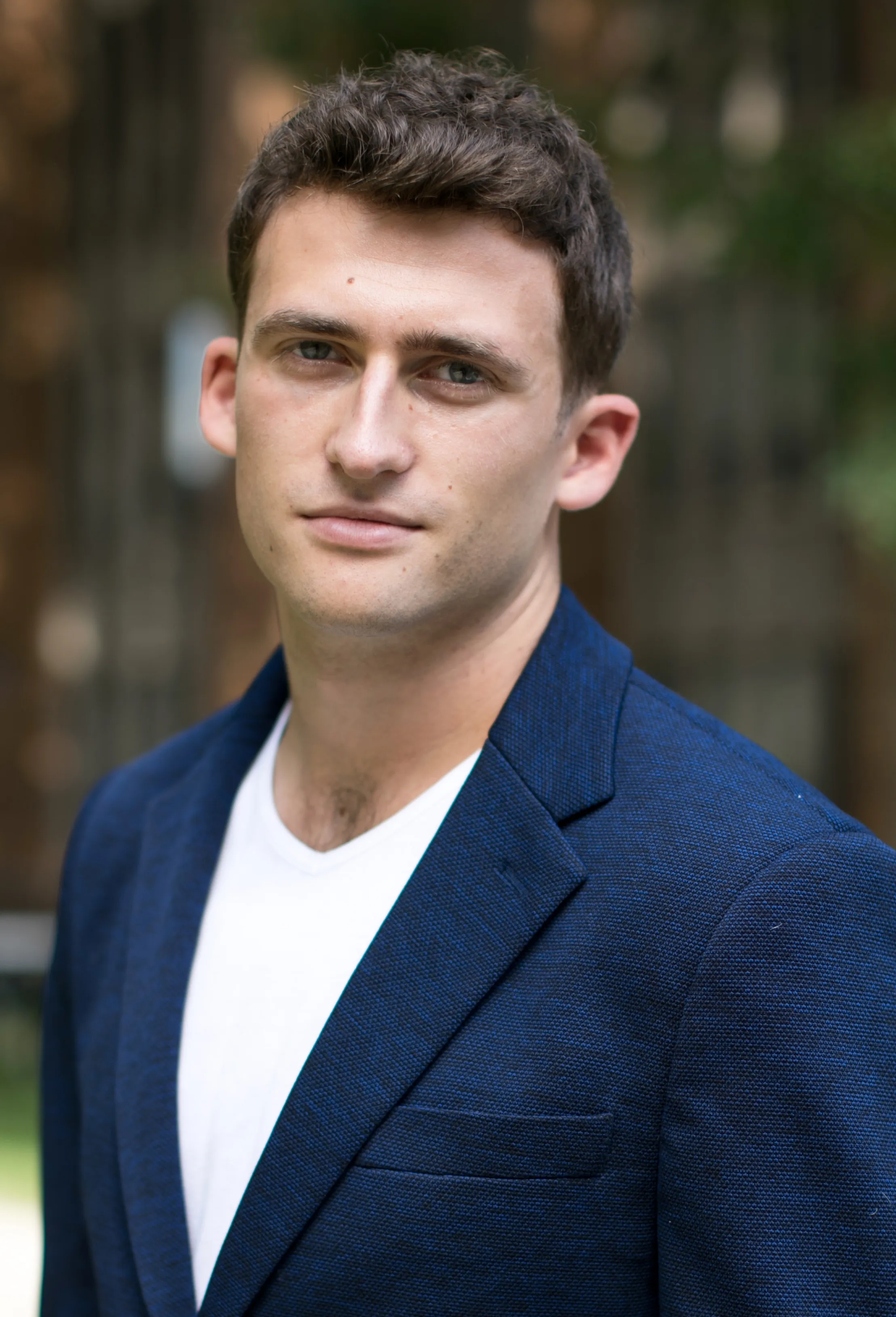 Evan Davison Kotler Helena
Scarier still, said Evan Davison Kotler, health security director at global advocacy group Helena, was AI’s ability to bypass screening methods, which typically check lab requests against an index of sequences of known dangerous pathogens.
“New AI models are allowing us to produce protein sequences for viruses that look nothing like the original sequence, but they still function like them. So you could actually be holding Spanish flu. You could be holding ricin, and the nucleic acid sequence or the amino acid sequence looks nothing like that list you have to cross-reference.
“It is actually obfuscating the fact that this is indeed the thing that is hazardous. We don’t have good answers for how you deal with that risk.”
Kelly, for one, thinks the danger remains mostly theoretical. “I don’t see a lot of extra threat from AI personally,” he said, arguing that despite the power of these new tools it is still “not trivial” to actually produce a viable pathogen. For its part, Ginkgo has put in place extensive know-your-customer and quality controls to ensure its labs are not used for nefarious ends.
Whether a virus or bacteria is lab-made or naturally occurring, the West remains remarkably vulnerable, as Covid-19 showed. “We have a weird gap in defending ourselves against viruses because really, there’s no economic engine,” Kelly said. “The viable defence in the long run is to build mature antiviral and antibacterial defences. We need to do that anyway.”
In the meantime, the technology is hurtling toward an era where, in the not too distant future, even a child, with the aid of an AI, can come up with an experiment and then check in at a Cloud Lab app and carry it out. Kelly said: “A citizen science app would be pretty amazing.”