
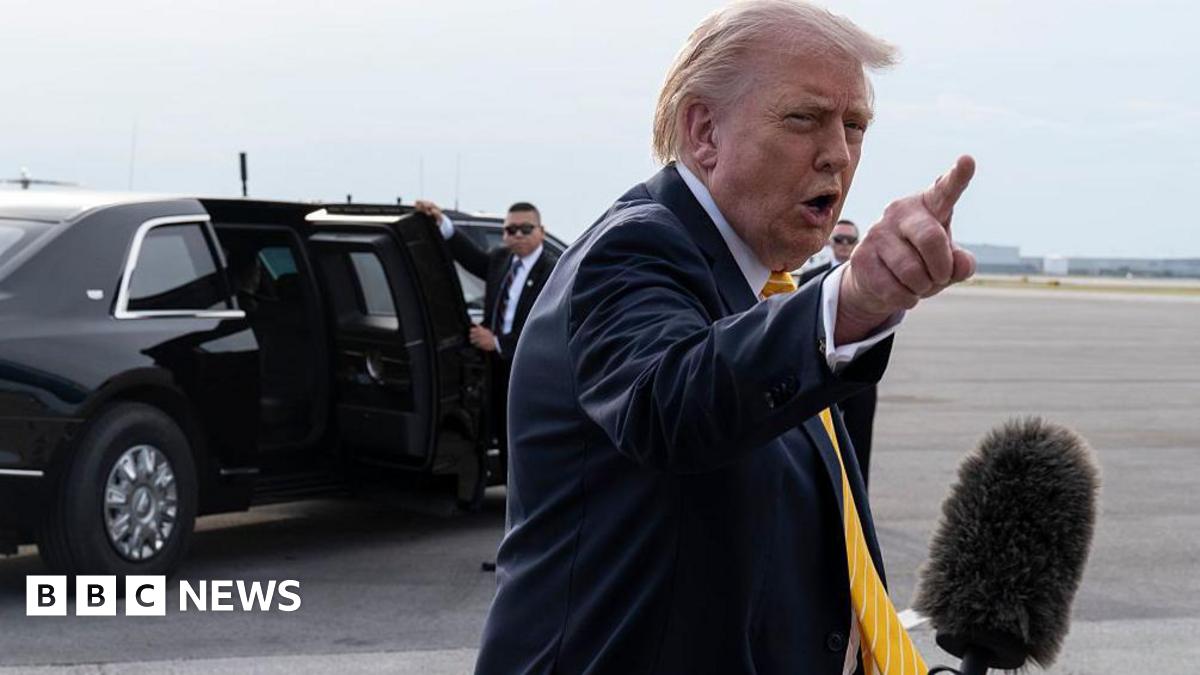
On Friday, Trump addressed a letter to members of the US Congress, saying the conflict had been “terminated” since a ceasefire took effect on 8 April – even though Iran still posed a “significant” threat to the US and its military forces deployed in the region.
The ongoing blockade of Iranian ports, he claimed, did not represent the continuation of the conflict.
“It’s a very friendly blockade,” he said. “Nobody is even challenging it.”
Trump also argued he did not need to meet a deadline for legislative approval of the war as the truce had paused the clock on any such obligation.
By law, a US president must receive Congress’ approval within 60 days of notifying lawmakers of military action, or else cease hostilities.
Friday was the 60th day since Trump formally notified Congress of US strikes against Iran on 2 March. The US and Israel launched their attacks two days earlier – on 28 February.
At various points during a series of public remarks on the same day, Trump also repeated his refrain that “Iran can never have a nuclear weapon”.
Iran has repeatedly denied it is seeking a bomb and says its programme is only for peaceful purposes, though the country is the only non-nuclear-armed state to have enriched uranium at near weapons-grade level.
Trump’s latest remarks come as US lawmakers – including many from his Republican party – are growing publicly frustrated with what many view as a costly, complex war with murky objectives.
Missouri Republican Senator Josh Hawley called on the Trump administration to begin redeploying forces away from the conflict and argued that Congressional approval would be necessary for the war to continue.
“I don’t really want to do that,” Hawley said. “I want to wind it down.”
Another Republican Senator, Alaska’s Lisa Murkowski – a prominent Trump critic – cast doubt on the success of the operation and any potential talks.
“While the administration may point to ongoing negotiations, events on the ground and the rhetoric coming out of Tehran tell a different story,” she said.
“But if the US steps back abruptly and prematurely, we almost certainly leave their critical capabilities intact.
“And those are not risks that I’m willing to take. But the answer is not a blank check for another endless war,” Murkowski added.