

The 61st Venice Biennale, with its themes of connection, collaboration and affinities shared across borders, is proving remarkably fractured — and fractious — well before it opens to the public this week.
There have been protests about the inclusion of the Russian and Israeli national pavilions (the Biennale, it points out, can’t refuse them entry, since the countries own their pavilions), and on May 1 the organisation’s jury resigned en masse, already having decided to exclude from their deliberations countries accused of crimes against humanity. Now none must have prizes, except two voted for by the public.
Still, the British artist Anish Kapoor, a favourite of said public for his big, splashy sculptures that border on architecture in scale and purpose, remains aloof. His new exhibition at the Palazzo Manfrin, home to the artist’s foundation, is not part of the competitive Biennale and is likely to invite no controversy whatsoever.
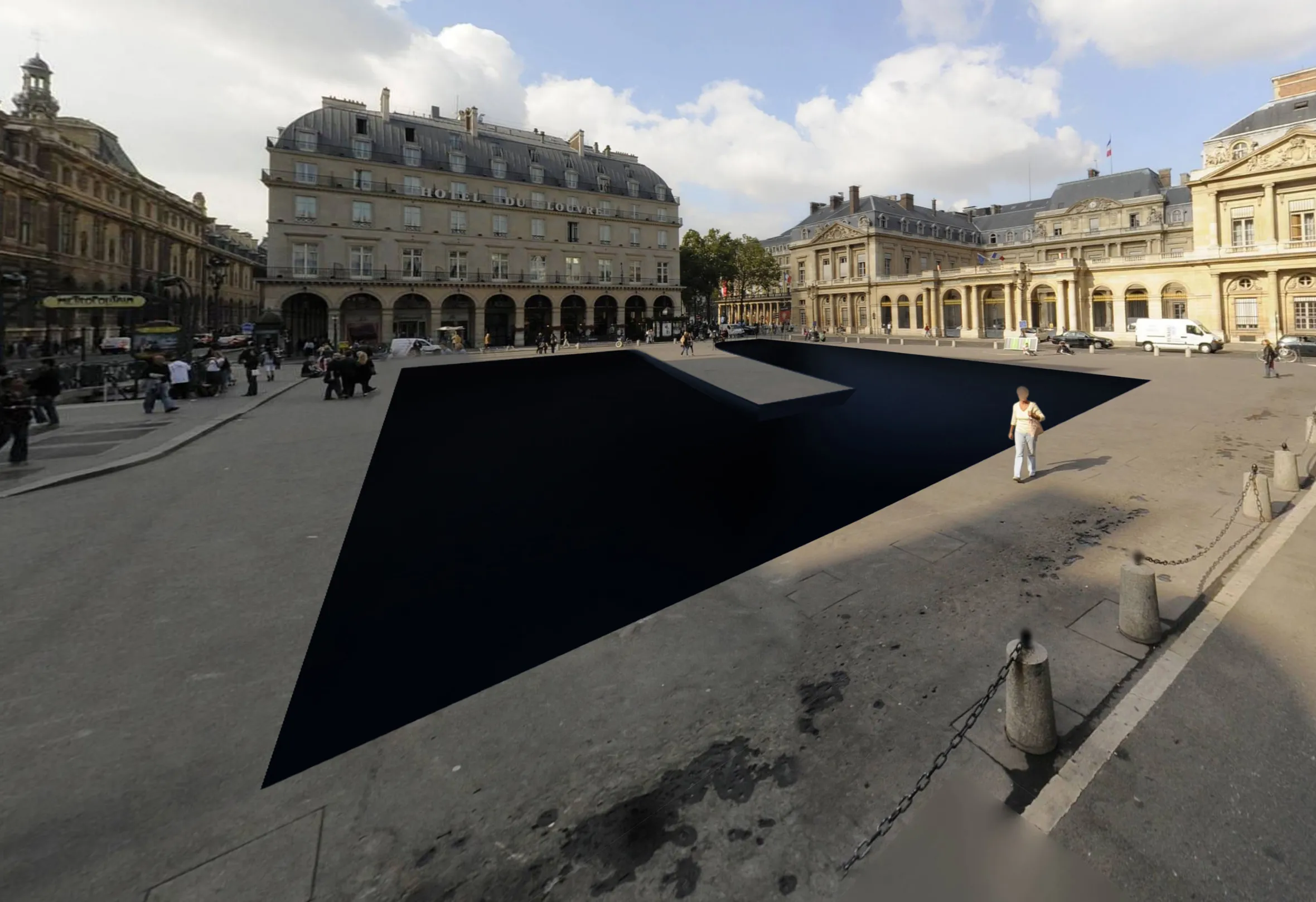 No Place (1989)Digital render/©Anish Kapoor. All rights reserved, 2026
The exhibition brings together about 100 architectural models documenting projects, both realised and unrealised, from the past 50 years of Kapoor’s career. Alongside these, because Kapoor knows on which side his bread is buttered, is a series of large-scale installations and stainless-steel works dotted over two floors of this once magnificent building, now stripped back to its crumbling bare bones.
As you enter you’re confronted with Ga Gu Ma (2011-12), a room full of extruded cement masses that look one step away from edible but are very much not, establishing Kapoor’s interest in the intersection between the mechanical and the grotesque. One of his satisfyingly disgusting red-wax rooms is upstairs, rank and bodily, as if frozen in the act of surging into life.
Several of his stainless-steel sphere experiments are on display — the kind that make your eyes go funny and turn you upside down. But the majority of the works here are models. Humph, I thought, but in fact, brought together they trace a highly enjoyable journey through the mind of an artist who thinks really big.
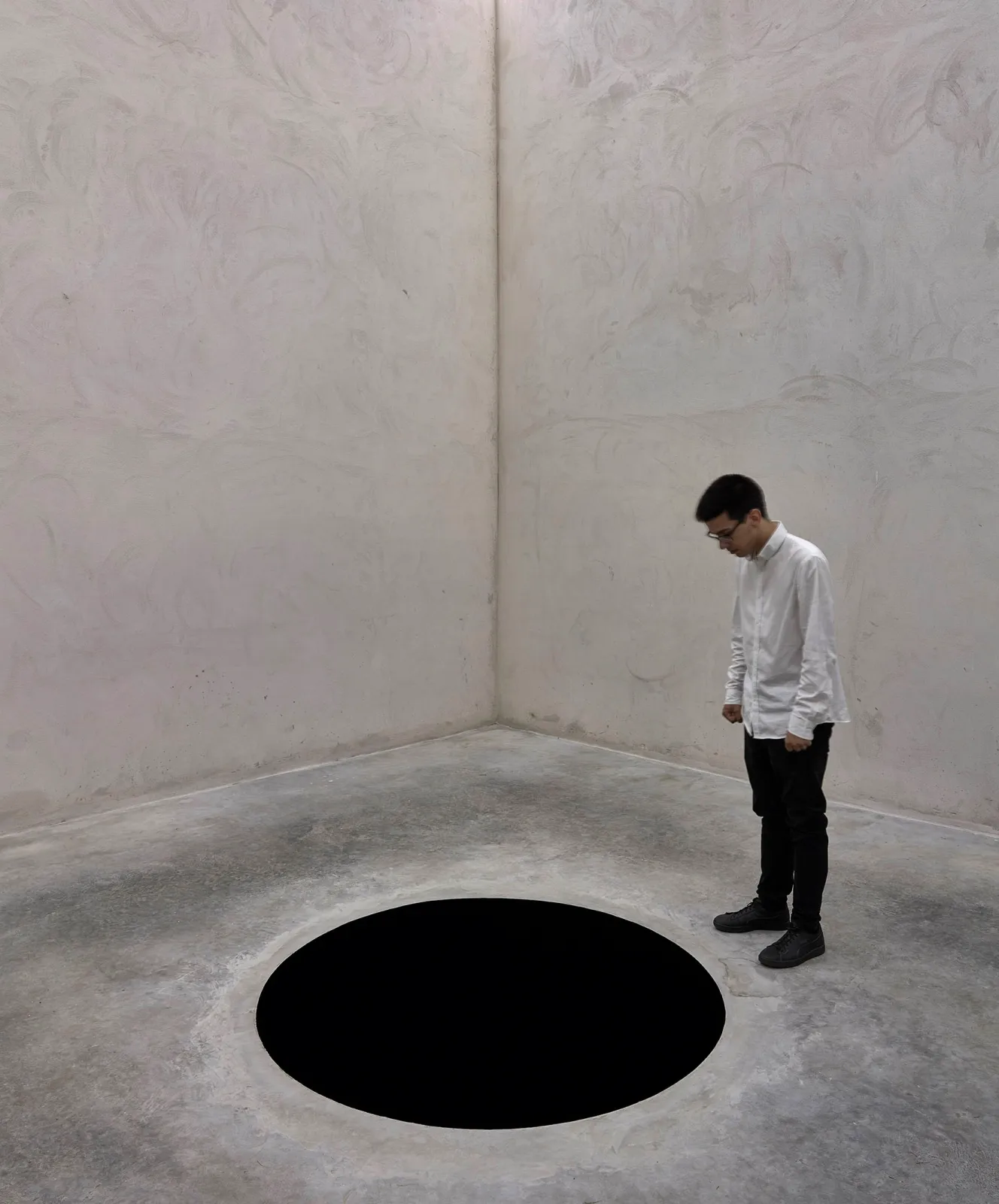 Descent into Limbo (1992)Filipe Braga/©Anish Kapoor. All rights reserved, 2026
There are very few artists who have successfully filled Tate Modern’s Turbine Hall but Kapoor’s Marsyas (2001-02) did it effortlessly. The model for that is here. But what about cutting a vast hole in a mountain and painting it the blackest black (a patented pigment that only he has the licence to use), as he seems to propose here? Or a slash like a ragged wound cut into a huge swathe of land, as is on the way to being realised in Japan?
Here is the maquette for his Cloud Gate (aka the Bean, 2001-04) in Chicago but I’d like to see someone try to build his Sky Garden, a huge stainless-steel dome that seems to hover over a formal garden. Here’s the model for the egregiously ugly Orbit (2010) at the Olympic Park in London but then there’s his Dome Coil, a 2013 proposal for New York that seems to be a similar idea but in the shape of a wasps’ nest — a vast improvement. Can we have one of those instead?
★★★★☆
Anish Kapoor: Palazzo Manfrin is at the Venice Biennale May 6-Aug 8