
People using Greg’s Meadow in Spixworth were initially advised to keep their distance from part of a picnic area last summer.
Greg’s Meadow, Spixworth (Image: Peter Walsh, Newsquest)
It followed the discovery of Japanese knotweed, a plant native to East Asia which has spread since being introduced to the UK in the 1800s.
Japanese Knotweed (Image: PA)
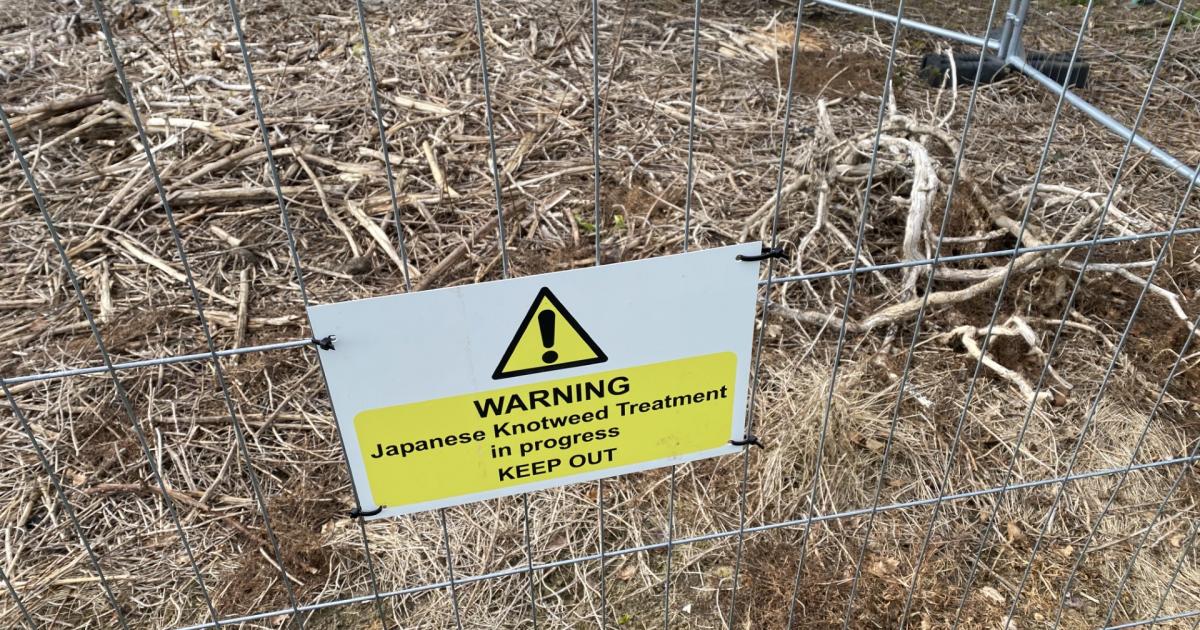
Work has since started to clear the area of the invasive species.
Matthew Field, vice chairman of Spixworth Parish Council, confirmed “treatment is ongoing”.
The fenced off area in Spixworth (Image: Peter Walsh, Newsquest)
While Paul Rowe, the parish council chairman, said they would continue to treat the area “as recommended by our ground maintenance contractor”.
The work is taking place after warning notices appeared in the meadow last year.
A warning letter regarding the knotweed (Image: Peter Walsh, Newsquest)
Japanese knotweed is identified by distinctive red stems and bamboo-like appearance.
It can grow up to 8ft tall and its roots can reach as wide as 28ft.
The knotweed being treated in Spixworth (Image: Peter Walsh, Newsquest)
It can grow up to four inches a day and forms dense thickets which can kill native plant species, making it particularly harmful to the flora of the Norfolk Broads.
The knotweed being treated in Spixworth (Image: Peter Walsh, Newsquest)
Tackling its spread costs the UK nearly £250 million a year, according to invasive plant specialists Environet, with an estimated 5pc of homes affected across the UK.
It can crack tarmac, block drains, undermine foundations and invade homes. Its presence can be enough to cut a property’s value or prevent a mortgage lender approving a loan.