
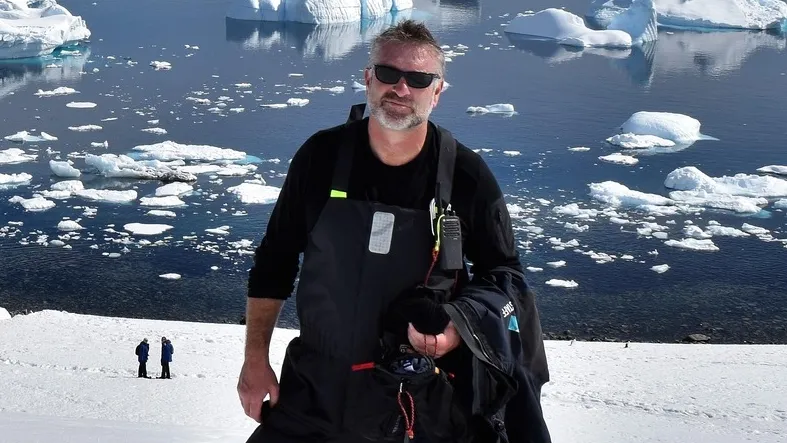
A British crew member who was evacuated from a cruise ship at the centre of a hantavirus outbreak is a former police officer turned wildlife photographer.
Martin Anstee, 56, was on the MV Hondius as an expert guide and had talked excitedly about going on a 35-day expedition before the outbreak of a cluster of infections, which officials have linked to a visit to a landfill site during a birdwatching expedition in Argentina.
Two people who returned independently to the UK from the cruise ship have been told to self-isolate at home, the UK Health Security Agency (UKHSA) announced on Wednesday night.
Daily Briefing newsletter
Get our top stories and exclusive analysis sent straight to your inbox every morning.
Sign up with one click
Anstee served as a police officer for 33 years before moving into special operations, which included two years in the Falkland Islands. After retiring he turned to conservation work and travelled the world developing his photography skills.
He had written online: “I will be part of the guide team on this incredible trip starting on April 1st. It is one of the most fascinating trips you can be involved in … it is the trip of a lifetime.”
A family member confirmed to The Times that Anstee was being evacuated to the Netherlands on Wednesday. They said that while the past few days had been concerning, they were relieved that his condition had improved.
Anstee, a Dutch crew member and German passenger were evacuated after a diplomatic row broke out over the fate of those stranded on the vessel.
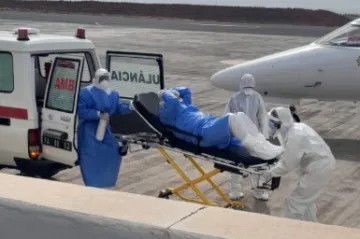 Medical workers in hazmat suits wheel a patient into an ambulance Tedros Adhanom Ghebreyesus/x
An international evacuation plan involving the British government was instigated as the boat was left stranded when concerns emerged about a suspected outbreak of the rat-borne virus.
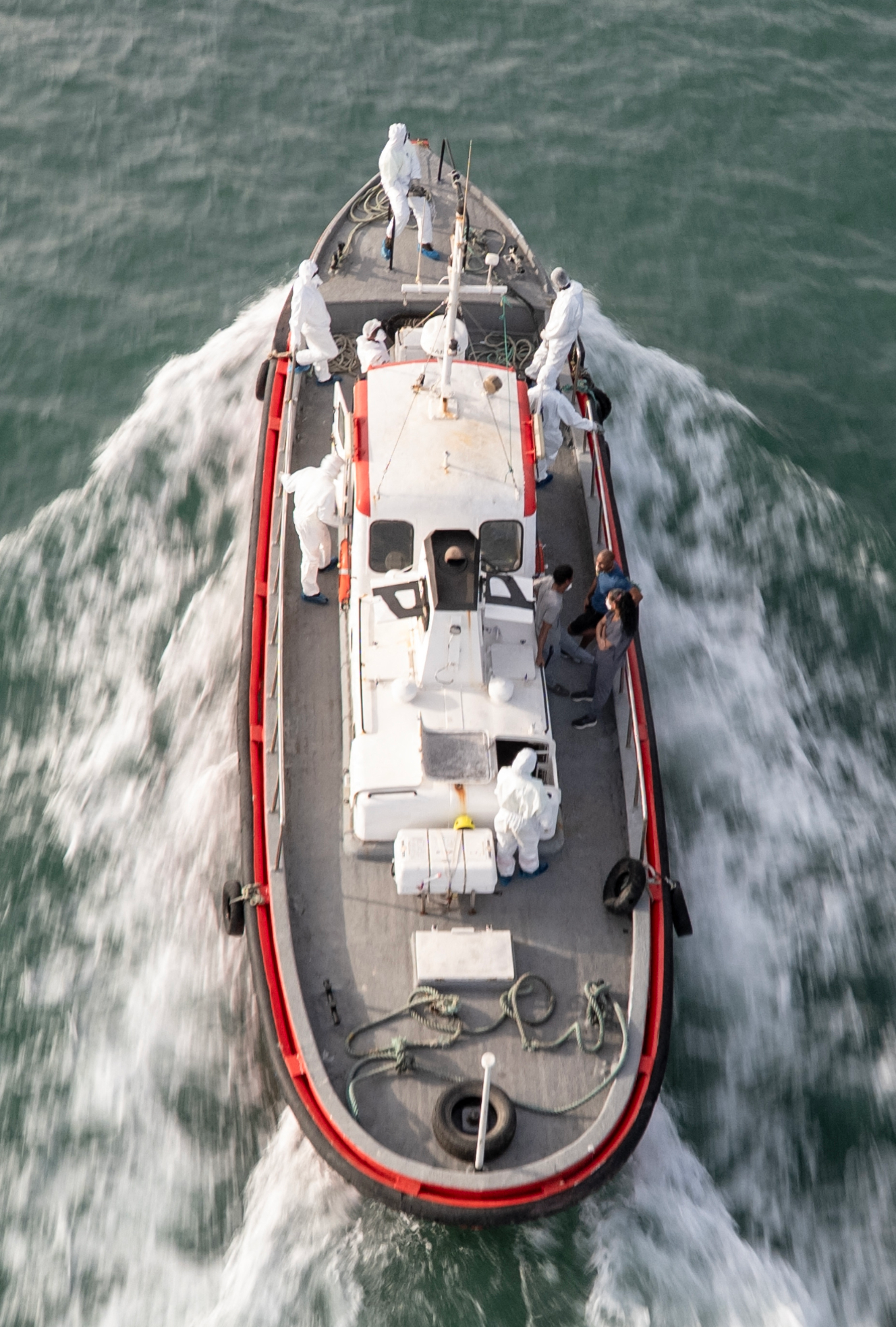 Medical workers in hazmat suits travelling via an ambulance boatAFP/Getty Images
Anstee was left in a “critical condition” during the stalemate as the boat remained anchored off Cape Verde. His health was said to have improved but he remained in a “serious condition”, according to Oceanwide Expeditions, the tour company.
The remaining 146 passengers and crew, including 22 British citizens, will be repatriated from Tenerife after Spain agreed to accept the ship despite opposition from leaders in the Canary Islands.
Officials believe that the infections began when a couple undertook a birdwatching trip in Argentina before boarding the vessel for a 35-day “Atlantic Odyssey” voyage on April 1.
Two Argentinian officials said the couple visited a landfill site during the tour, where they may have been exposed to rodents carrying the infection.
Three passengers — a Dutch couple and a German woman — have died and five other suspected cases linked to the vessel are being investigated.
While officials have played down the possibility of a wider risk to the public, the authorities across multiple jurisdictions are trying to trace dozens of people who came into contact with those who were infected.
A third positive case was identified in Switzerland on Wednesday involving a passenger who returned home after the first leg of the tour.
The UKHSA said two people had been told to self-isolate after returning to Britain from the ship via Johannesburg after it docked in St Helena at the end of April, but neither had symptoms and “the risk to general public remains very low”. They had contacted health officials when they heard about the hantavirus cases on the MV Hondius.
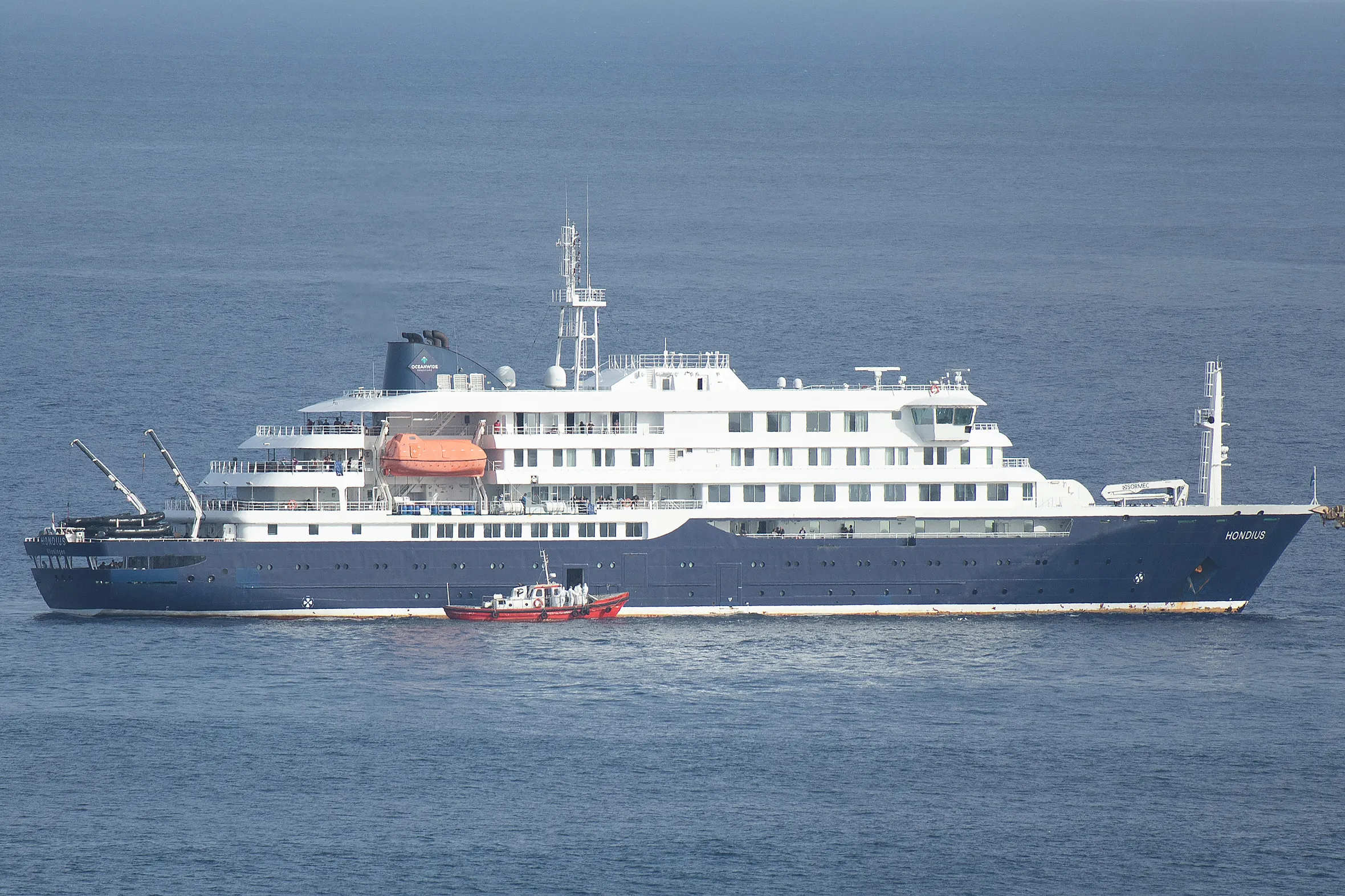 The MV HondiusAFP/Getty Images
The agency said it was working to trace passengers who came into contact with the two Britons on their journey home.
Britons who were still on the ship would be flown home on a charter flight, probably from the Canary Islands, as long as they did not have symptoms, the UKHSA added. On their return, the passengers would have to self-isolate or be put into quarantine for up to six weeks, depending on the timing of their last potential exposure to the virus.
Weeks ago, the vessel’s travellers were reassured that the ship was not infectious, according to one of those on board. Ruhi Cenet, a Turkish YouTuber, shared a video of a crew member believed to be the ship’s captain briefing passengers after the death of a Dutch male passenger on April 11.
In the video, the crew member can be heard saying: “One of our passengers sadly passed away last night … I’m told by the doctor we’re not infectious. The ship is safe when it comes to that.” Cenet added: “It turns out the situation was much worse than we were told.”
The fate of the Dutch-flagged ship became an international issue this week when the Cape Verde authorities refused to accept it, citing public health concerns. It is expected to arrive in Tenerife within three to four days after the Spanish government accepted a request to assist by the World Health Organisation (WHO) and the European Union.
Fernando Clavijo, president of the Canary Islands, said he did not agree to the plan, which he said Madrid had approved without consulting the archipelago. Mónica García, the Spanish health minister, dismissed the concerns and said the remaining passengers were asymptomatic and posed no risk to the local population.
García said the MV Hondius would dock at Granadilla, a port close to Tenerife’s main airport. After screening checks, non-Spanish passengers will be repatriated to their countries. The Spaniards on board will be quarantined at a military hospital close to Madrid.
Fernando Grande-Marlaska, the Spanish interior minister, said there was “an ethical and humane duty” to assist.
Two doctors from the Netherlands who specialise in infectious diseases also boarded the vessel on Wednesday and will remain on it until all passengers and crew disembark safely.
On Wednesday evening the cruise liner set off from the coast of Cape Verde, according to marine traffic data, while one of the aircraft carrying the evacuated trio touched down in Amsterdam.
Two others whose aircraft landed in the Canary Islands to refuel will need a new plane to leave due to a “fault in the electrical support system” of one patient, the Spanish health ministry said. “The patient remains on the plane with the airport’s electrical supply awaiting the arrival of a new plane to continue their journey,” it added.
Yvette Cooper, the UK foreign secretary, said her government would ensure that Britons “get safely home with proper protection for public health”, adding: “The outbreak of hantavirus is very serious and deeply stressful for those affected and their families.”
While the disease is normally passed to humans from rodent faeces or urine, scientists have confirmed that a strain that passes more easily between people is behind the outbreak.
Tests conducted by the National Institute for Communicable Diseases in Johannesburg identified the Andes strain of hantavirus in two passengers who came off the MV Hondius. This included a Dutch woman who died in Johannesburg and a 69-year-old British man who remains seriously ill in hospital after being airlifted off the vessel.
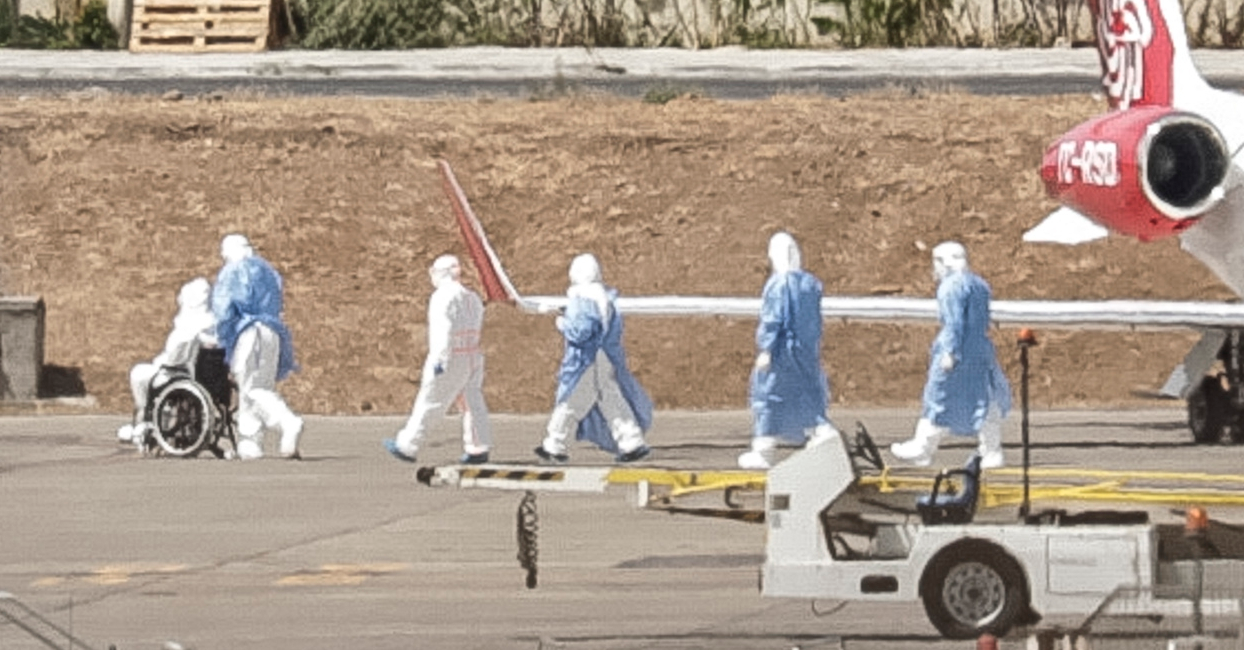 A passenger in a wheelchair at Nelson Mandela airport on Praia, the capital of Cape Verde, on WednesdayAFP via Getty Images
The Andes strain, found in parts of South America including Argentina and Chile, is the only form of hantavirus known to spread between humans, although such transmission is rare and typically requires close and prolonged contact, particularly in the early phase of illness.
The case of the passenger who returned home was confirmed by the Swiss government on Wednesday. It said the man arrived back from the cruise at the end of April, then visited University Hospital Zurich after becoming unwell.
He is in isolation and the authorities are investigating whether he had close contact with others, though they say there is no immediate risk to the public. His wife, who was also on the trip, has no symptoms.
The WHO has insisted that the situation is not comparable to the coronavirus pandemic.