
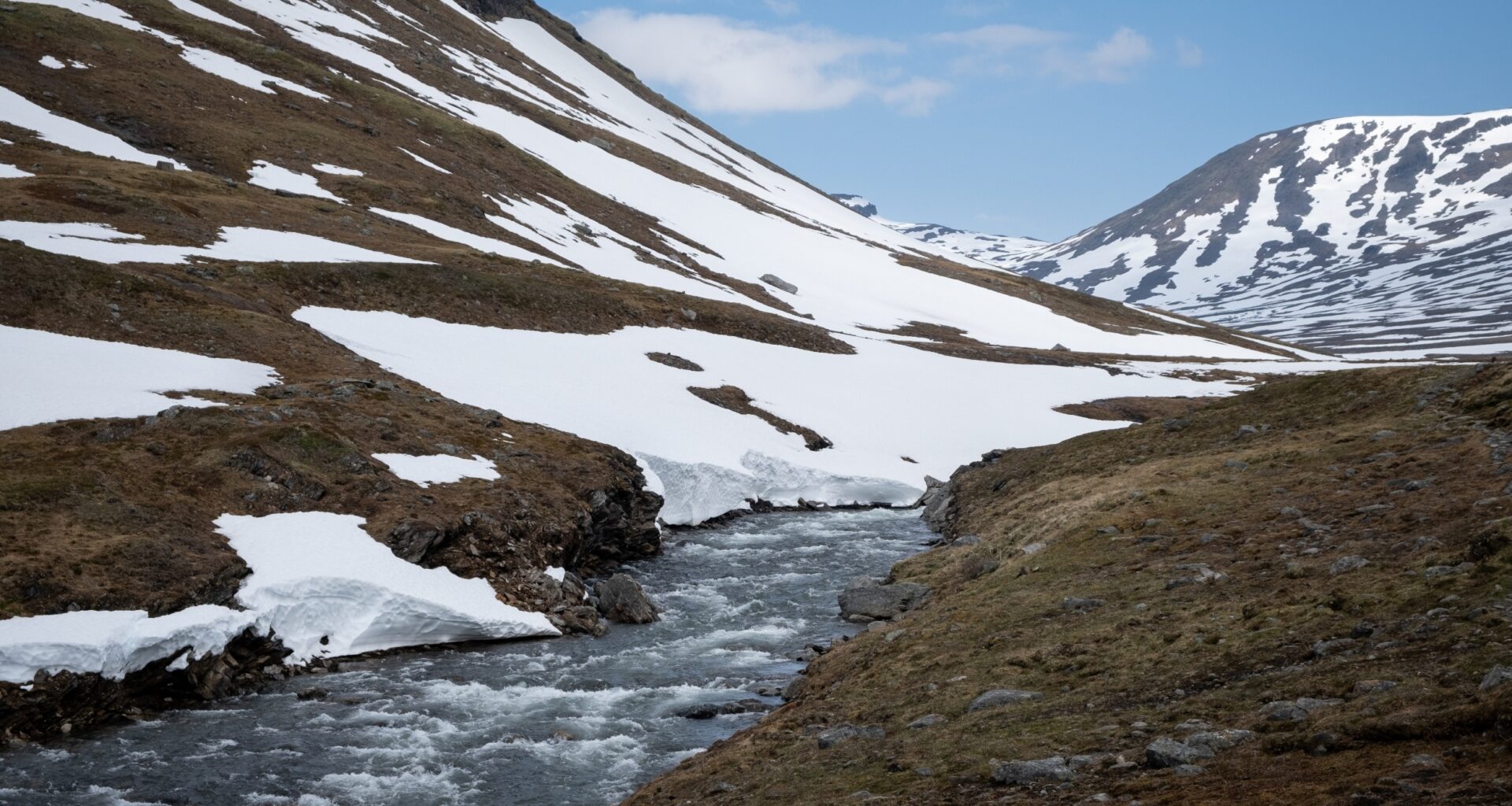
The Arctic often feels distant and still. Ice stretches across the landscape, and the ground stays frozen for most of the year.
But beneath that frozen surface lies a living system that responds quickly when conditions change.

A new study from Svalbard shows that thawing soil does not wake everything at once. Instead, life returns in stages, with some microbes acting immediately and others waiting their turn.
Frozen ground, hidden life
In late March, researchers drilled into permafrost near Ny Ålesund in Svalbard. They collected soil that had stayed frozen for years.
This soil held microbial communities locked in place, preserved by the cold.
When the team thawed the samples in the lab, they did not see a simple return to activity. They saw a sequence.
Different microbes became active at different times. Some stayed inactive even after months.
Arctic warming speeds up
The Arctic is warming faster than most parts of the planet. Svalbard shows this trend clearly.
As temperatures rise, the frozen ground begins to soften. The layer that thaws each summer grows deeper.
This matters because Arctic soils store huge amounts of carbon. When frozen, that carbon remains trapped.
When the soil is thawed, microbes can break it down and release gases like carbon dioxide and methane.
Tracking active microbes
To understand which microbes were active, the researchers used a clever method. They added water containing a heavier form of oxygen.
When microbes grew and copied their DNA, they absorbed this heavier water.
This allowed scientists to separate active microbes from inactive ones. By checking the DNA, they could see exactly which organisms had grown during the experiment.
The results showed that activity started almost at once. Within days, the thawed soil began releasing carbon dioxide. There was no delay.
The strongest burst of carbon release happened in the first few weeks. After that, the rate slowed. This suggests that easily available carbon gets used quickly by early microbes.
This finding raises concerns. Even short warming events could trigger carbon release from Arctic soils.
Early microbes dominate first
Not all microbes responded at the same time. Early activity came from fast-growing groups. These included Actinobacteriota, Bacteroidota, and Proteobacteria.
These microbes specialize in breaking down simple organic material. When the soil thaws, they quickly use what becomes available. They act fast and take advantage of fresh resources.
After the first wave, a different set of microbes became active. These included groups like Verrucomicrobiota and Planctomycetota.
These organisms grow more slowly. They handle complex carbon compounds that remain after the first wave.
This creates a clear sequence in the ecosystem, where one group prepares the way for another.
Microbes become surprisingly active
One group showed remarkable behavior. Bacteroidota started as a small part of the community. Yet by the end of the experiment, every detected species in this group had become active.
These microbes have tools that help them break down complex carbohydrates. They can move across surfaces and locate food efficiently. Even in small numbers, they play a major role.
The study also revealed something unexpected. Some microbes do not just consume organic matter. They consume other microbes.
Groups like Myxococcota and Bdellovibrionota act as predators. They hunt, attack, and consume other bacterial cells. These predators became active during the thaw.
Their timing varied. Some appeared early, while others became active later. This suggests a developing food web where prey populations must grow before predators can thrive.
Many microbes stay inactive
Despite all this activity, a large portion of the community remained dormant. About half of the detected species showed no growth at all.
Some entire groups did not respond. This remained true even under different conditions. Temperature alone did not activate them.
This suggests that other factors control their activity. They may need specific nutrients or signals that were not present in the experiment.
“The thawing of soils in the Arctic doesn’t simply switch on microbial activity,” said Dr. James Bradley, co-author of the study.
“We found that only part of the community responds, and that response develops over time. This has important implications for how we predict carbon release in a warming Arctic.”
Methane consumers appear later
The researchers did not detect methane production in the samples. However, they did find evidence of methane consuming microbes becoming active over time.
These microbes carry a gene linked to methane oxidation. By the end of the experiment, many of them had grown, even without methane present.
“We found that some methane-consuming microbes only become active after longer periods of thaw,” said Dr. Margaret Cramm, lead author and Research Fellow at University College London.
“This suggests that the impact of Arctic soils on greenhouse gas fluxes may increase over time as thaw seasons lengthen.”
These organisms may switch between food sources. They could help reduce methane levels later in the thaw season.
Longer thaw changes the dynamics
As Arctic warming continues, thaw seasons are becoming longer. This gives more time for late growing microbes to become active.
It also allows complex interactions to develop. Predator and prey relationships become more important. More types of metabolism appear over time.
This layered response is not captured in many climate models. Those models often assume a simple and uniform microbial reaction.
One core, complex system
This study focused on a single soil core. Yet it revealed a highly dynamic system. Microbes do not act as one group. They follow a sequence shaped by resources, timing, and interactions.
Some act quickly. Others wait. Some feed on organic matter, while others feed on each other. Many remain inactive, waiting for the right conditions.
Understanding this complexity is essential. These microbes influence how carbon moves between land and atmosphere. Their behavior plays a direct role in climate processes.
The frozen ground may look still. But when it thaws, it reveals a system full of motion, timing, and change.
The study is published in the journal mSystems.
—–
Like what you read? Subscribe to our newsletter for engaging articles, exclusive content, and the latest updates.
Check us out on EarthSnap, a free app brought to you by Eric Ralls and Earth.com.
—–