
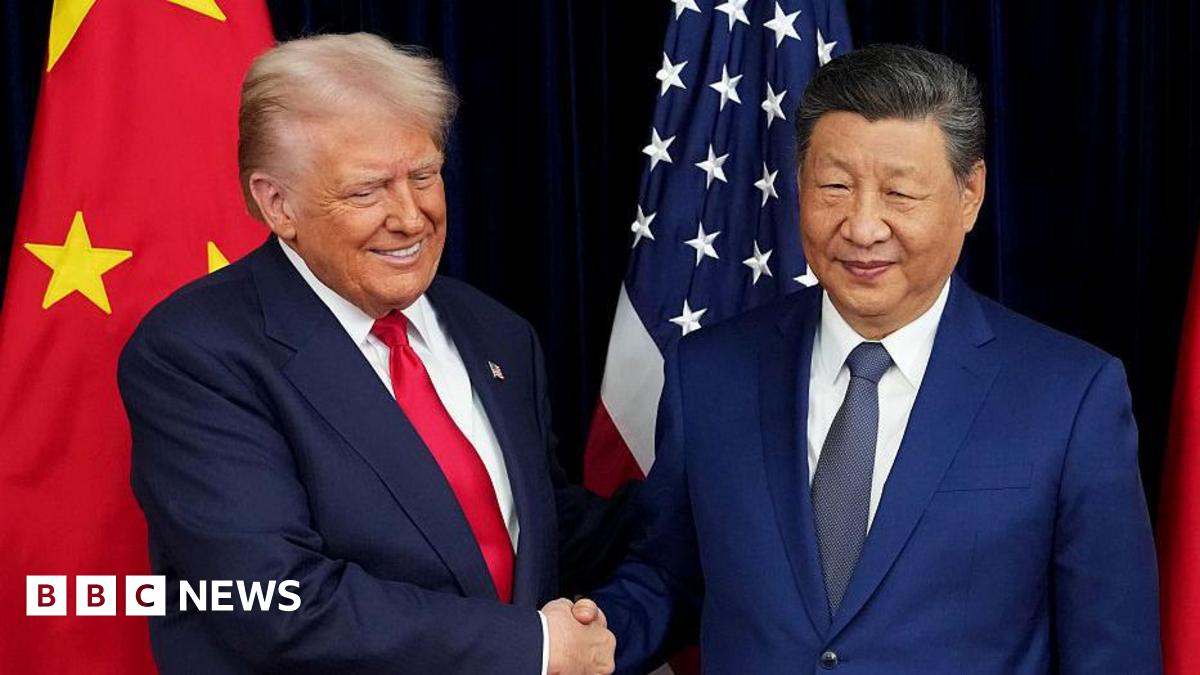
Trump won the 2016 election vowing to make trade fairer for the US and to bring manufacturing jobs back to the country.
In 2018, he had announced tariffs on $250bn (£185bn) of Chinese imports – the moment that many analysts say the trade war started.
The same year, Trump imposed levies on other trading partners – including Mexico, Canada and Europe – which he said were also taking advantage of the US.
The sweeping measures were a shock, especially for China, said policy researcher Ning Leng from Georgetown University.
“It was the first time they dealt with Trump seriously, and they probably did not expect him to go ahead with it,” Ning said.
At the time, China was much more reliant on trade with America.
The US was a key importer of Chinese manufactured goods, putting its workers at risk if American buyers turned away due to Trump’s tariffs.
The tensions added to existing issues that have weighed on China’s economy for years, including sluggish domestic consumption, high unemployment and a prolonged property crisis.
Exports to the US offered a lifeline for Chinese jobs, but with Trump, that was now put at risk.
“It’s harder for one country to withstand a trade war with another that it has trade surplus with,” Ning said.
When Joe Biden succeeded Trump in 2021 he kept up the pressure on Beijing.
His administration chose to not lift Trump’s tariffs on China, sharing a belief that the US needed to keep a lid on its rival’s growth in sectors like technology, Ning said.
Biden also introduced restrictions on Chinese firms, including tech giant Huawei, which was essentially ousted from the US over national security concerns. He also put TikTok under scrutiny, with its US operation eventually being separated from its Chinese parent company.