
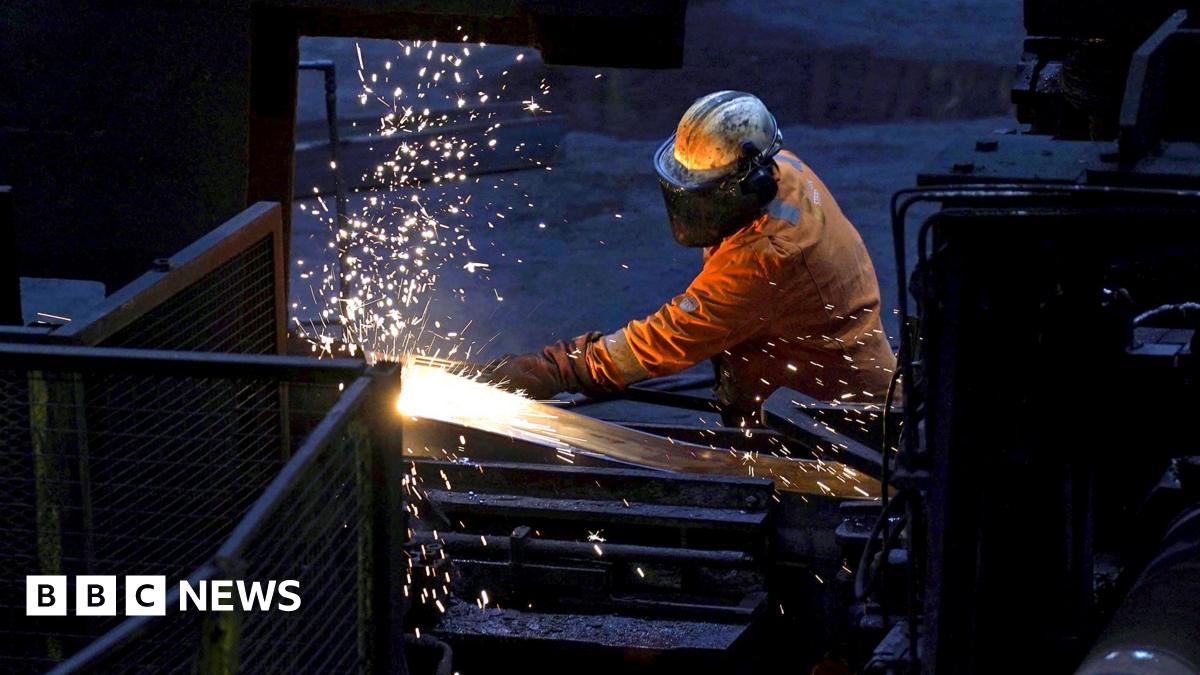
Virgin steel-making involves iron being extracted from its original source to be purified and treated to make all types of steel used in major construction projects, such as new buildings and railways.
Jingye claimed the Scunthorpe site was losing £700,000 a day and was no longer financially sustainable, ahead of the government stepping in last year. The BBC understands that the government is spending about £1m a day to keep the loss-making company going.
In March, the National Audit Office revealed the current government supervision regime had cost some £377m in order to fund operations, workers and buying raw materials at Scunthorpe.
The NAO, which monitors government spending, said in March that if such spending was to continue at current rates, it could exceed £1.5bn in 2028 “depending on policy choices that may be taken in the future”., external
A precise figure of how much full nationalisation of British Steel could cost has not been announced and it is understood that following legislation an independent valuation would be carried out of the business, to see what, if any, compensation might be due to Jingye.
This is not the first time the government has taken over British Steel, with the Insolvency Service running the company for nine months after it collapsed in 2019, at a cost of £600m.
In a joint statement, the general secretary of the Community union, Roy Rickhuss, and Unite union general secretary Sharon Graham said they “fully support” the decision to nationalise.
“British Steel has a bright future, with a world class highly skilled workforce making strategically important steels for the UK’s rail and infrastructure,” they said.
“The government must also take actions to ensure that all government-funded projects use UK steel.”
Charlotte Brumpton-Childs, national secretary of the GMB Union, said it was “right the government does everything in its power to secure its long term future”.