
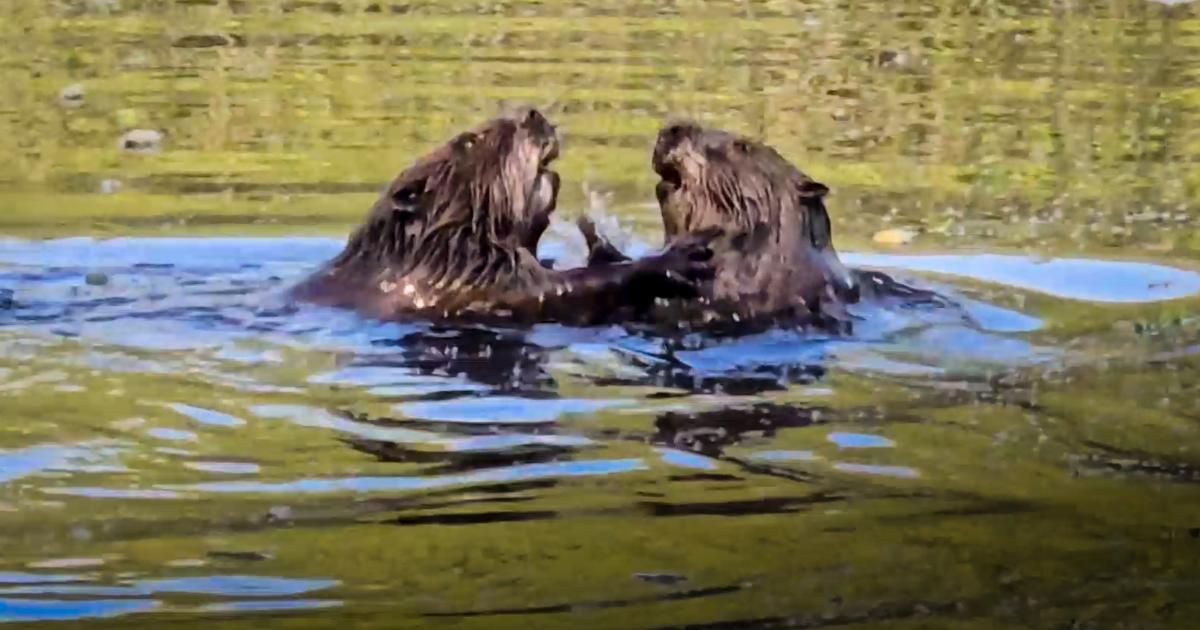
The animals were seen at Blashford Lakes Nature Reserve, near Ringwood, with footage confirmed by Hampshire and Isle of Wight Wildlife Trust.
The sighting was captured on Friday, May 1 by a regular visitor.
The trust has described the appearance of the beavers as a significant and exciting moment, crediting the reserve’s network of lakes, wetlands and waterways as ideal habitat for the animals.
Beaver at Blashford Lakes Nature Reserve. (Image: Tony Thompson)
Martin de Retuerto, director of nature recovery at Hampshire and Isle of Wight Wildlife Trust, said: “We were both surprised and delighted to see this footage.
“Blashford Lakes is a remarkable place for nature, with a rich mix of lakes, wetlands, reedbeds and woodland, so it’s no great surprise that beavers, which depend on healthy freshwater habitats, may be exploring the area.”
Tony Thompson, a nearby resident who recorded the video, described the encounter as “an incredible thing to witness”.
Tony said: “I walk through the nature reserve regularly and am used to seeing wildlife, so I initially assumed it was an otter.
“But when I saw it splashing its tail, I realised it was behaving differently.
“A few minutes later I was amazed to see two of them interacting in the water.
“They seemed completely unaware of me nearby, and it was an incredible thing to witness.”
While the trust welcomes the arrival of the beavers, it has asked visitors to respect the animals’ space.
Beavers at Blashford Lakes Nature Reserve. (Image: Tony Thompson)
Visitors are reminded to keep a safe distance and avoid disturbing wildlife, with the trust noting that the reserve does not allow dogs.
Beavers are considered a keystone species, meaning their activities can have a transformative impact on landscapes.
They create wetlands and slow water flow, supporting biodiversity, improving water quality and helping landscapes adapt to climate change.
Beaver habitats can also reduce pollution, store water in droughts, slow floodwaters during heavy rain and increase plant and animal variety.
The trust acknowledged that some people may have concerns about the beavers’ return.
However, it pointed to evidence from other parts of the UK, such as Devon and Kent, showing that beavers can coexist with modern landscapes when properly managed.
The trust plans to continue monitoring the situation in collaboration with partners and the community.
It also has licensed staff with expertise in beaver behaviour who can advise on managing their activity.
Footage of the beavers can be viewed on the trust’s Facebook and YouTube channels.