
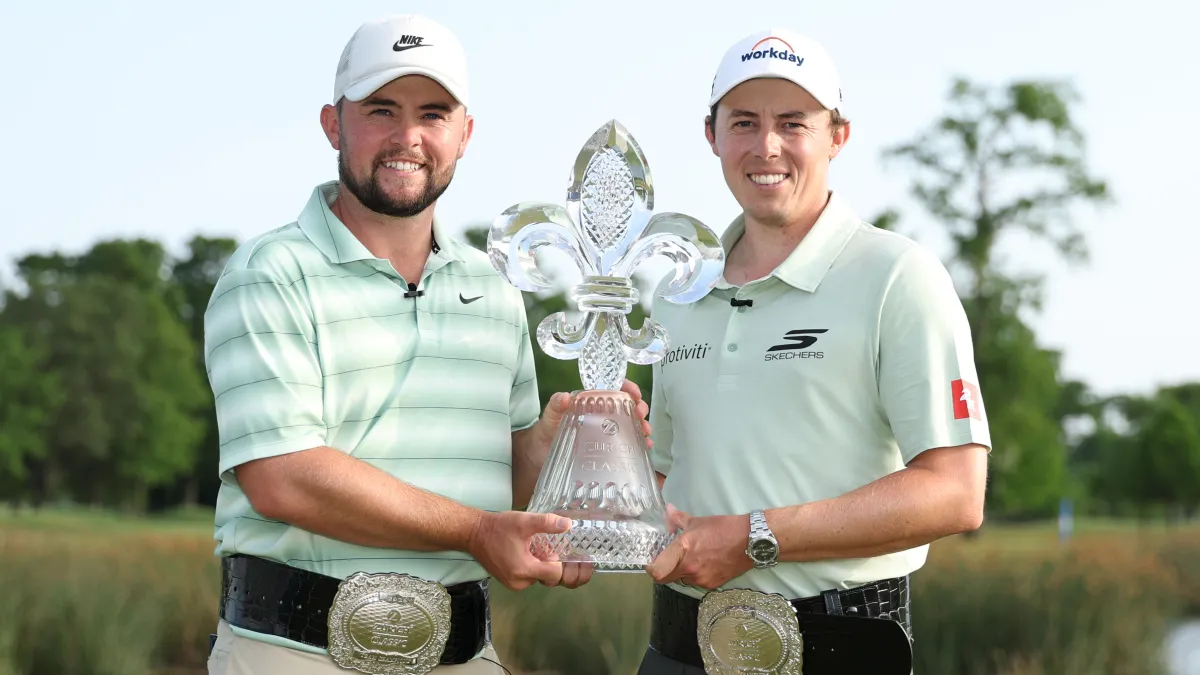
It seems fitting that Matt and Alex Fitzpatrick are sharing a house at this week’s US PGA Championship near Philadelphia. The Sheffield siblings are in the form of their lives after racking up victories on the back of a coach exchange, and if the bathroom at their rented property is messier on Alex’s side, the fraternal feelgood factor is clear in the City of Brotherly Love.
Four years ago Matt won the US Open after the shot of his dreams from a fairway bunker at Brookline. Alex, who is four years younger at 27, was consumed by nerves at the back of that green. Then, when Alex qualified for the Open in 2023 after playing a sublime bunker shot of his own from his knees, his more venerated brother said: “The kid’s short game is so good.” Fast forward to April and the duo joined forces and clinched the Zurich Classic of New Orleans, a win wrought in deep emotion due to their closeness as well as the bonus of earning Alex a PGA Tour card and a place at Aronimink this week.
That was part of a remarkable three months in which Matt won twice on the PGA Tour and rose to No3 in the world, while Alex won the Indian Open and come close at the Truist Championship at Quail Hollow on Sunday. “It must be a coincidence,” Alex says of this superb sequence. “I mean we haven’t been drinking the same water or anything. I’m sure in ten years’ time we’ll look back and say that period in 2026 were unbelievable, and to top it off by winning together, it’s like ‘What on Earth is going on?’ ”
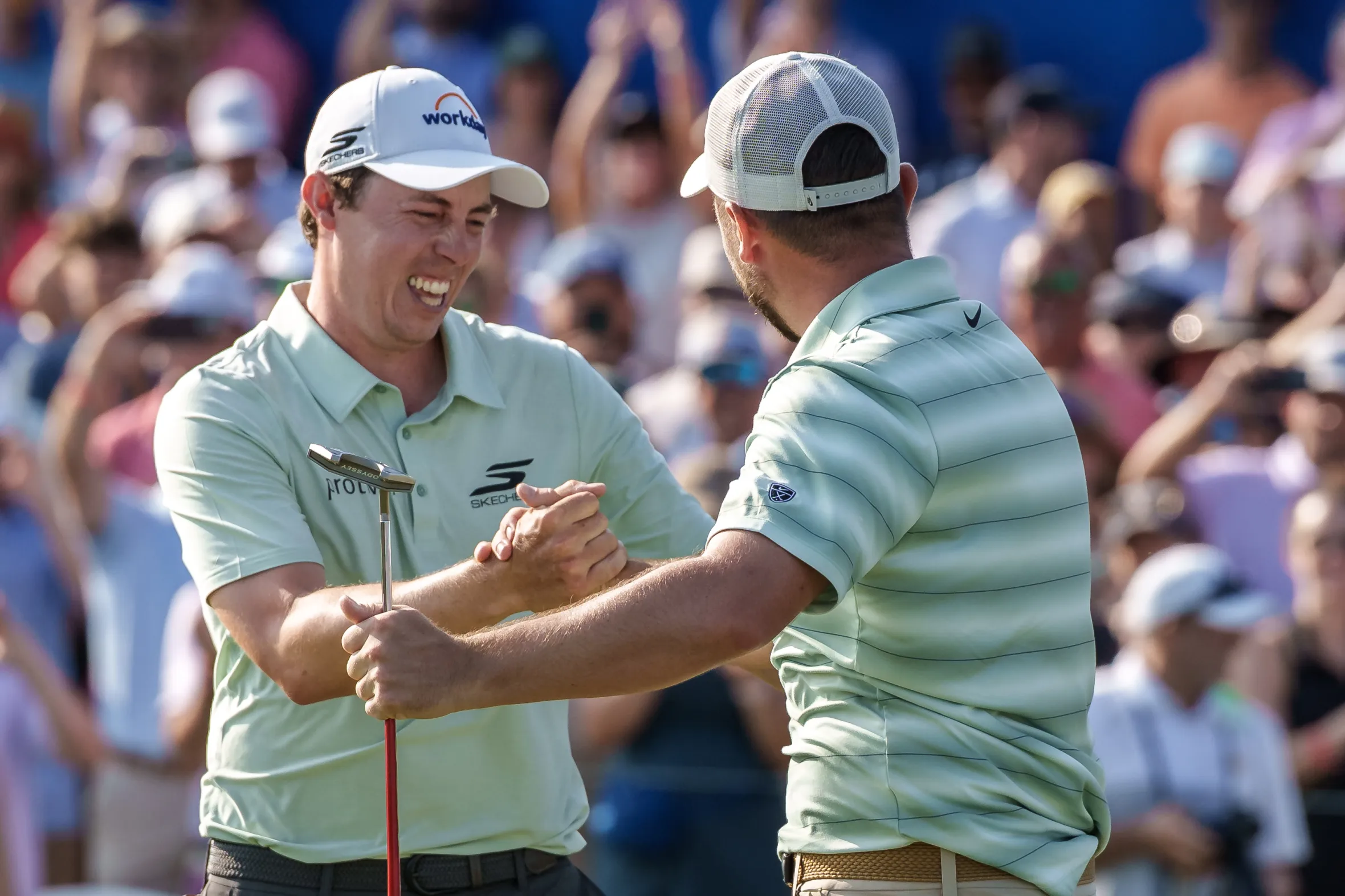 Alex, right, said of the win in New Orleans with his sibling: “I had tears streaming down my face as soon as I holed that last putt”Matthew Hinton/AP
Alex, now a career-high 83rd in the rankings, once told me he got social media abuse merely for not being as successful as his brother. That casual criticism resurfaced after the pair’s win in New Orleans with some suggesting he did not merit a PGA Tour card. He was on course to get one anyway via his form on the DP World Tour, but having a famous brother is easy ammunition for nepo trolls.
“I’d like to think that at this point people understand I’m not too bad myself,” he says. “But nothing was ever going to bring me down that day. You look through the comments and people say, ‘You shouldn’t get this, you shouldn’t get that,’ but it’s not my fault. If other people had a brother that was really good, they’d play with him. I think I had ten birdies that Saturday and I played decently on Sunday. I feel like I held my own.”
He did more than that but self-deprecation is part of the Fitzpatrick DNA. Matt once told The Times that when he watched the Full Swing docuseries, he nearly fell asleep during the episode featuring him. As his coach, Mark Blackburn, puts it: “He’s a bit of a dour Yorkshireman so he’s not super-optimistic. It’s why with him you have play on the analytical side and give him the evidence.” The down-to-earth approach of this family affair was shown when former coach Mike Walker flew back to Britain before the end of Matt’s US Open triumph; he watched the finale on his phone somewhere off the M6 and cracked open a can of beer to celebrate when he got home.
Blackburn, who also coaches Justin Rose, has worked with Matt since last year’s amicable split from Walker who was finding it hard to travel due to a family issue. Alex was also coached by States-based Blackburn, but the distance was difficult and when he could not see him last autumn, Walker helped out. Now that has worked so well that Walker is the main coach, although Blackburn will chip in if asked.
It has been quite a spell for Blackburn, too, with Rose contending at successive Masters, and his insight into the psychology of elite golf is illuminating. “The unique thing about a tour player is one day they can be suicidal and the next they’re bulletproof, but success leaves clues right? Matt and Rosey have both won the US Open, arguably the hardest test in golf, so you have to say, ‘Look what you’ve done.’ Great players sometimes have amnesia. The artistic part of coaching is to make people see something in themselves that they’ve either forgotten or never seen.”
The elder Fitzpatrick had successfully pursued distance off the tee to keep up with the game’s big-hitters, but high draws were not conducive to playing the iron shots he wanted, specifically cuts. Noting that he had unusually long arms, Blackburn reasoned he needed different patterns for different strokes.
“Your swing has a radius and his radius was getting way too long and changing, so you’ll see him try to pin his arms more to the body and shorten that. Then we tried to get his swing a bit steeper and clean up his downswing. His body used to move a lot laterally too, which is great for a draw but no good for a cut.”
The upshot was better iron shots and a different strategy. Fitzpatrick has garnered a reputation for playing well on the hardest courses, partly because his natural conservatism mitigates risk. “Now he can tighten those margins and get more aggressive,” Blackburn says. “He used to say he was a very good driver and great putter, but he wasn’t that good as an iron player. Now his strokes gained approach is very, very good, which has opened up a new world to him in terms of playing and scoring. I know the focus is on winning majors and he’s trending in the right direction.”
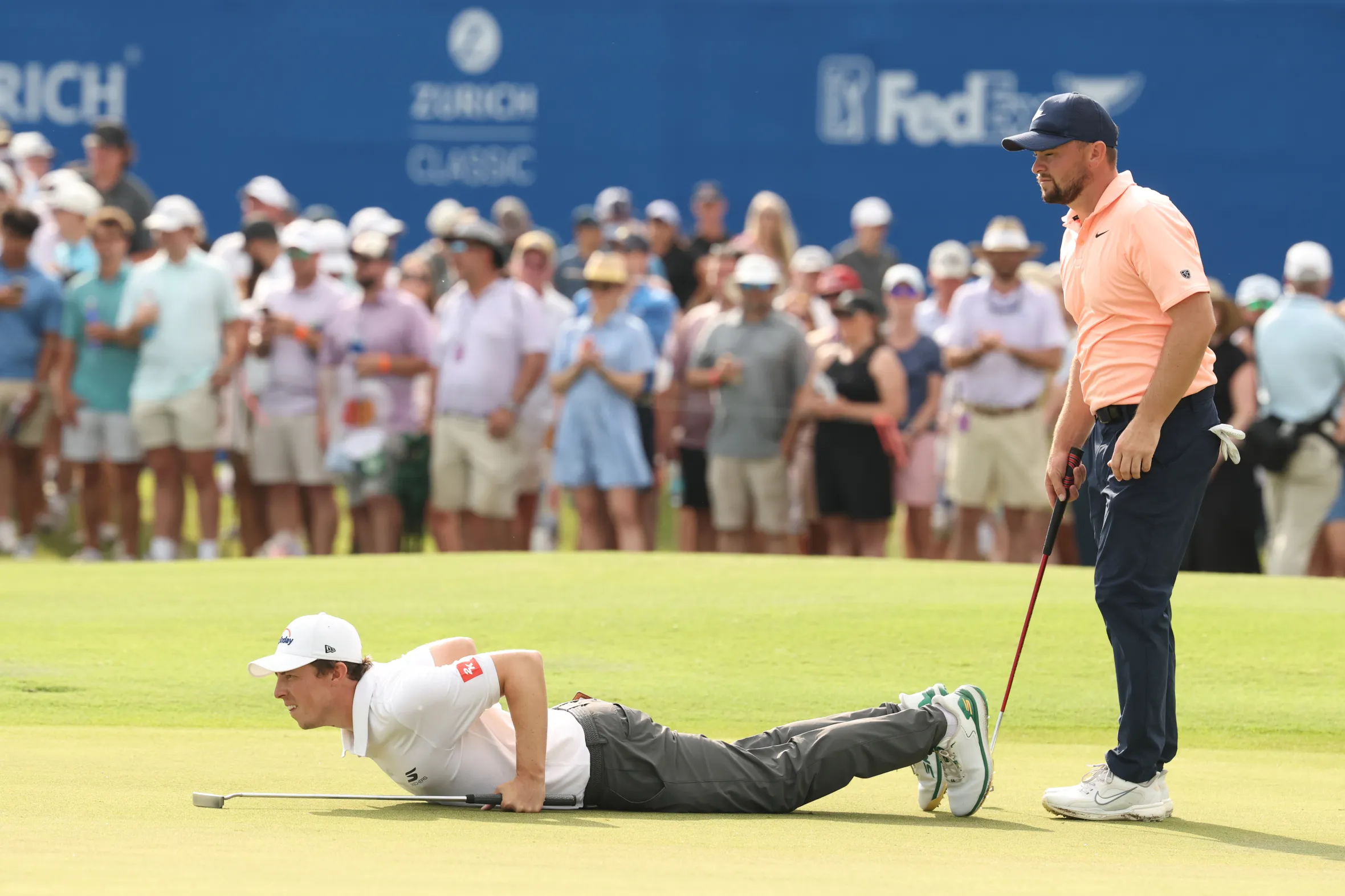 The Fitzpatricks line up a putt at the Zurich Classic, where they won by one strokeStacy Revere/Getty Images
Cut from the same cloth and coached by the same Englishmen, the Fitzpatrick brothers are very different. Matt is the numbers nerd, recording every shot he ever plays, while Alex is more intuitive. “The way I put it is Matt is Faldo and Alex is Seve,” Blackburn says.
In the aftermath of winning in New Orleans, Matt said it felt as good as his US Open triumph. That may have sounded like recency hype, but Alex backs it up. “I don’t really know how to describe it other than this overwhelming emotion of happiness,” he says. “I had tears streaming down my face as soon as I holed that last putt, but it wasn’t for myself. It was ‘I’m here with you and can’t believe we’ve done this together.’ Winning with my brother was far superior to any feeling I’ve ever had before.”
They went to different colleges in the USA and both turned down offers from LIV Golf. For Alex, who was just turning professional at the time, the temptation was more practical, but his brother advised against it. For many on the outside, such decisions are black and white but Alex explains how he would sometimes lose money on trips if cuts were missed and how he thought he might lose his DP World Tour card as recently as last year.
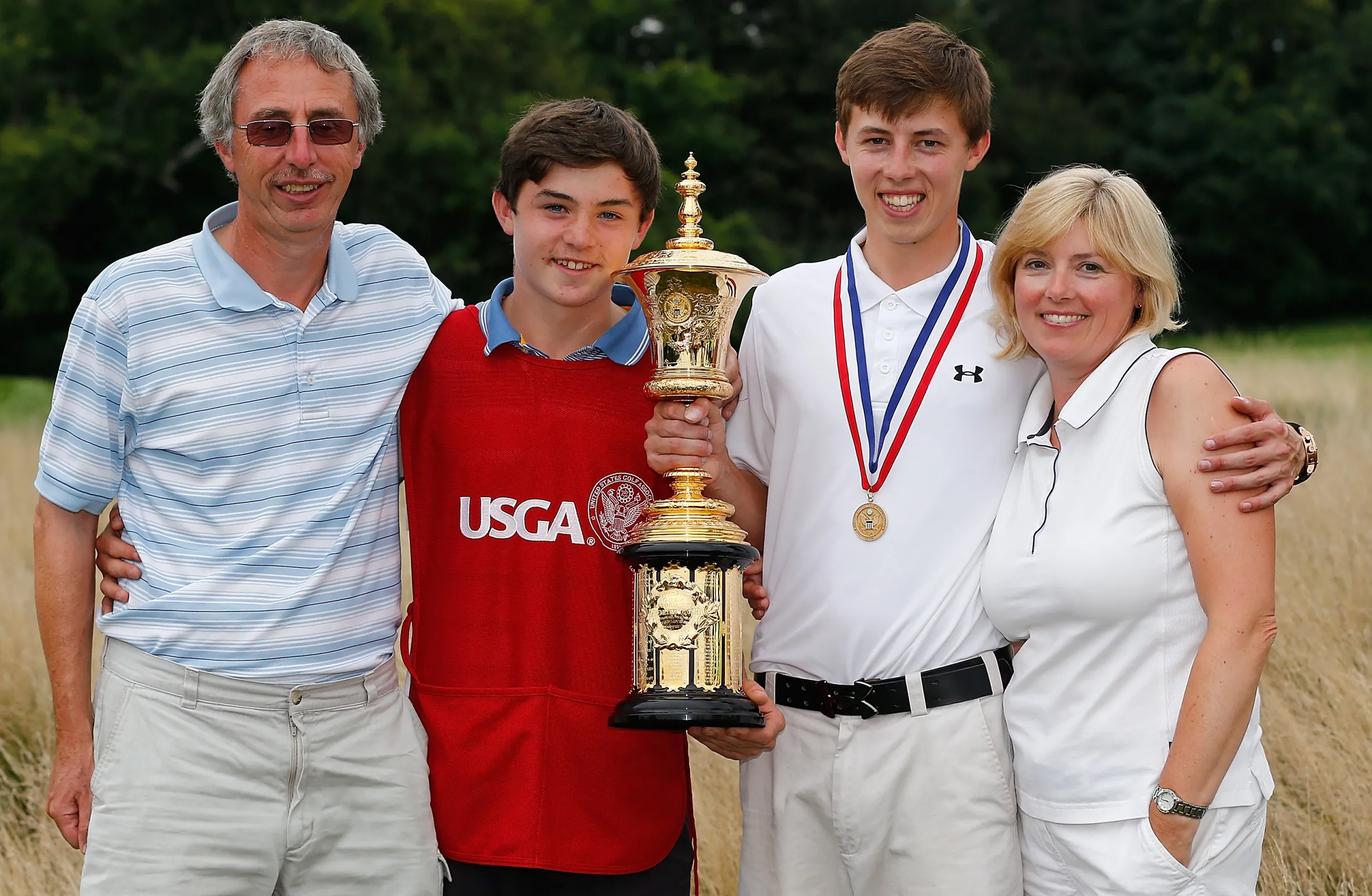 Alex and Matt with their parents Russell and Sue after Matt’s victory at the 2013 US Amateur Championship at Brookline, MassachusettsJim Rogash/Getty Images
“I was coming out of college and it was money in your hands,” he recalls. “You never know what’s going to happen, if you’re going to lose form or get injured, but looking back, I’m so thankful I stuck to my guts and roots. I tried to do it the hard way and work my way up through the ranks. It would have been very easy to go the other way, but I wouldn’t be in this position if I had. I’m extremely grateful.”
Matt says his brother is the messy one but other than the bathroom chaos, his pride and admiration is patently clear. After this week, Alex will start looking for a place to live, close to his brother’s Palm Beach berth, but will keep his place in Sheffield too. Matt and his wife, Katherine, are expecting their first child this summer. The siblings say they can draw on each other’s successes this week and such a brotherly shove would be in keeping with Philly’s moniker and a remarkable run.