
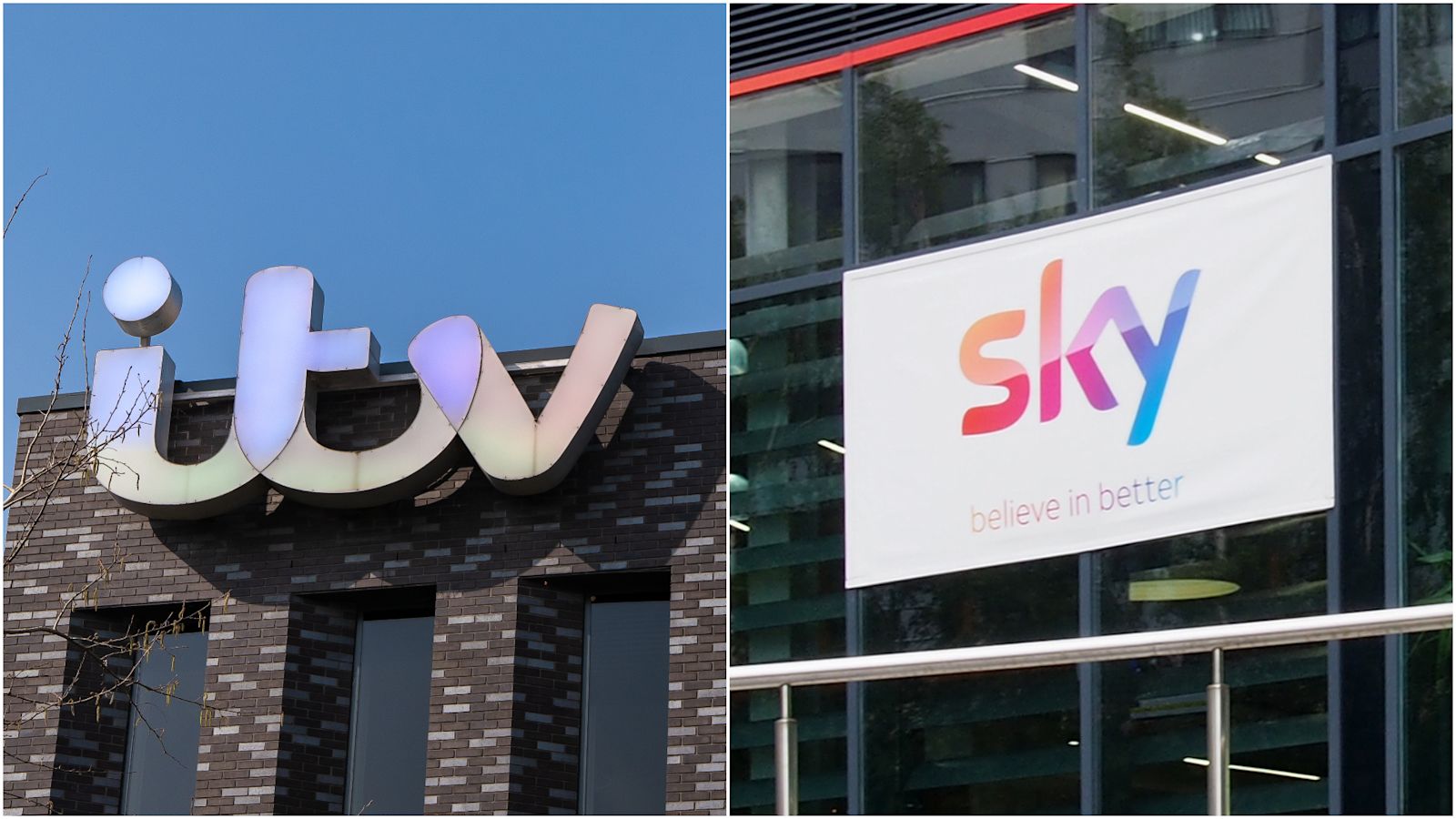
Sky and ITV are closing in on a deal that would pave the way for the TV and telecoms operator to take over the UK’s most-watched free-to-air commercial broadcaster, with sources suggesting that an agreement could be reached within weeks.
The proposal would see ITV split in two, with the television channels and its ITVX streaming service sold to Sky, while ITV shareholders retain ownership of the studios business, which makes programmes for ITV and other media outlets, including the big US streamers like Disney.
I have spoken to multiple sources familiar with the negotiations, on both sides of the transaction, who said there is growing confidence that key elements of the deal are falling into place and that both Sky and ITV are keen to agree terms – although they cautioned that no agreement has yet been finalised and discussions remain ongoing.
“It’s gone on much longer than we had ever thought likely, but there’s no problem,” one source told me. “Within a month would be my guess.”
The proposed sale was first announced in November last year, but six months on, a detailed set of heads of terms has yet to be signed.
In ITV’s trading update on Thursday morning, shareholders were told the company remains in “active discussions” with Sky, but no explanation was given for why the process is taking so long.
“This is not a straightforward takeover,” another source said. “What we are trying to do is separate a business that has been intertwined for 70 years.”
In addition to a Share Purchase Agreement – setting out what Sky is buying, for how much and on what terms – both sides must negotiate a Content Supply Agreement covering programmes such as Love Island, I’m a Celebrity! and The Voice, which ITV Studios would continue to produce for the ITV channel, along with Coronation Street and Emmerdale.
The final agreement will also cover the sections of Sky’s production business set to move to ITV Studios as part of the transaction – Sky owns Love Productions, which makes The Great British Bake Off for Channel 4 – as well as the terms under which ITV’s brand and archive will be used.
Notionally, the deal is between Sky and ITV, but Comcast, the US media group that owns Sky, will have the final say. The contracts are currently being scrutinised by its legal team in the United States.
“Decisions are being taken at Comcast HQ level,” a source told me. “[The deal] is with a lot of lawyers.”
In one sense, this deal looks like a rounding error for Comcast.
The company is a US giant in the truest sense, with annual group sales of more than £90 billion last year, from broadband, cable television, mobile telephony, Universal Studios and its theme parks.
ITV’s Media & Entertainment division, which is being purchased, generated just under £2 billion.
You can understand Comcast’s caution. It is widely seen as having significantly overpaid when it bought Sky in 2018 – around a quarter of the £31 billion purchase price has since been written off. As things stand, the purchase price of £1.6 billion for ITV’s broadcast business is unchanged, although my understanding is that up to £200 million of that sum will be made contingent on ITV’s advertising income holding up over the next few years.
There’s no guarantee it will. Live sport and big-budget drama are where the viewers – and therefore the advertising money – are. This summer’s World Cup is likely to boost ITV’s performance in the short term, but the longer-term trend is cause for concern.
Streaming apps available in the UK. Credit: iStock
Since the pandemic, when there was a surge in households signing up to Netflix, Apple TV and other US streamers, the decline in traditional television audiences has accelerated for all the UK’s public service broadcasters – the BBC, Channel 4 and Channel 5, as well as ITV.
“ITV isn’t going to fall off a cliff tomorrow, but look at the market – the company is just about holding on to advertising, and the direction of travel is clear,” a former Ofcom executive said.
Sky, too, is struggling to hold off the US streamers. Its advertising revenue has fallen; so too has the number of its television subscribers.
Sky has millions of mobile and broadband customers in the UK, but the subscription television business – increasingly delivered over the internet rather than satellite – is under pressure.
Nowadays, Sky’s adverts positions itself as a service through which to access Netflix, Disney and HBO apps as much as a place to watch its own content.
Dominance in sport is Sky’s big commercial advantage.
The company recently struck a deal for the rights to broadcast Formula 1 in the UK until 2034.
Premier League football is the jewel in the crown. Over the years, Sky has repeatedly won the battle of the chequebooks – fighting off challenges from BT and others.
But the streamers have even deeper pockets and are developing a taste for sport. The next auction process begins next year. There may be trouble ahead.
The logic of the Sky/ITV deal is that by combining Sky’s paid platforms with the much wider reach of ITV’s free-to-air service, the enlarged group could attract more subscribers and arrest the decline in advertising revenue.
There are also significant savings to be made by cutting duplicate roles and sharing technology when the businesses merge. “Synergies” will likely mean some jobs are lost.
By joining forces, Sky and ITV will argue they stand a better chance of competing in a world dominated by much larger, better-resourced American streamers, as well as platforms such as YouTube and TikTok.
“[The new business would] be a good-sized player in a world of giants,” one source said.
When the proposed tie-up was first announced last November, Peer Bazalgette, a former Chairman of ITV, said he believed the consolidation of British broadcasters was inevitable.
“Think about our own viewing habits,” he told ITV News.
“How often do we watch the public service broadcasters? But they matter, they deliver incredibly important public service news. We need that in the mad world of the internet and the AI world we are in now.”
Even if a deal is agreed, significant hurdles remain.
The Competition and Markets Authority and Ofcom would both need to approve it, while the final decision would rest with the Culture Secretary, Lisa Nandy.
“ITV and Sky’s opening pitch is that together they account for around 10% of digital advertising spend, not 70% of TV advertising,” someone close to the negotiations said.
“It’s hard to argue otherwise – Google and Meta is where the ad money has moved; linear television is slowly dying.”
They added: “Although there are bound to be objections from Channel 4 and Channel 5.”
Sky’s purchase of ITV’s 40% stake in ITN is also potentially difficult – partly because of the large and stubborn deficit in ITN’s final salary pension scheme, a liability no one wants, but mainly because ITN produces news for Channel 4 and Channel 5 as well as ITV.
Expect scrutiny and debate over whether Comcast and Sky would end up with too much influence over multiple news providers in the UK.
Sky is prepared to commit to honouring the terms of ITV’s Public Service Broadcasting licence, which requires it to provide national and regional news, current affairs, and a specific quota of UK-made programmes. These obligations run until the end of 2034.
Subscribe free to our weekly newsletter for exclusive and original coverage from ITV News. Direct to your inbox every Friday morning.
However, Comcast is not currently planning to make a funding commitment similar to the one it made to support Sky News when it bought Sky in 2018, which guaranteed its budget, indexed to inflation for 10 years.
It proved to be an expensive promise, but protected the service through rounds of cuts and belt-tightening elsewhere.
One Ofcom insider suggested that funding could become an issue. “This deal should be an opportunity to secure increased investment in news. Ofcom will want to see it not just maintained, but strengthened – at both Sky and ITV.”
That may be difficult.
Sky currently spends around £140 million a year on Sky News, with ITV spending a similar amount on national and regional news.
“Net of advertising income, Sky News loses more than £100 million a year – that’s a vast sum of money,” one insider said.
“Comcast wants to spend less on news, not more. And the government can’t push too hard – who else is bidding for ITV? From ITV’s perspective, this deal is a godsend. The world is too unpredictable to offer any guarantees on spending.”
Reporting History sees journalists join News At Ten anchor Tom Bradby to revisit their remarkable on-the-day reports of the defining events of the modern age. Listen to the episodes below…