
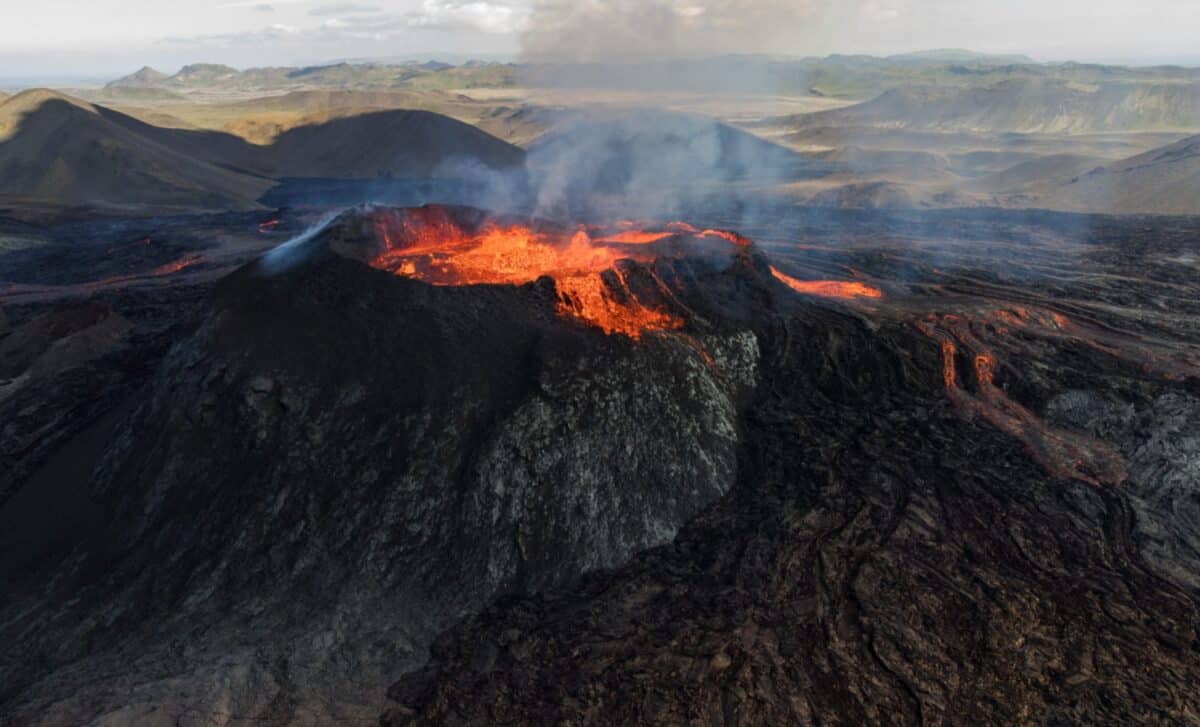
Roughly 74,000 years ago, the Toba volcano in what is now Sumatra erupted with a force more than 10,000 times greater than the 1980 eruption of Mount St. Helens. The blast ejected an estimated 2,800 cubic kilometers of volcanic ash into the stratosphere, potentially darkening skies for years and triggering severe global cooling. For decades, scientists debated whether this event pushed the human population to the brink of extinction, a theory formalized as the Toba catastrophe hypothesis.
That hypothesis held that the eruption caused a volcanic winter lasting up to six years, driving global human numbers down to fewer than 10,000 individuals. Genetic studies appeared to support this narrative: modern human DNA shows evidence of a population bottleneck (a sharp reduction in genetic diversity consistent with a catastrophic population collapse) occurring sometime in the Late Pleistocene. The precise timing and cause of that bottleneck, however, remain actively debated.
What the Archaeological Record Reveals
The most direct way to test the Toba catastrophe hypothesis is to compare human activity at archaeological sites immediately before and after the eruption. To do this, researchers rely on a forensic tool embedded in the sediment itself: tephra, the general term for material ejected during volcanic eruptions, ranging from coarse ash to microscopic glass shards known as cryptotephra.
Each eruption produces tephra with a chemically distinct fingerprint. By isolating and analyzing these near-invisible shards (a painstaking process that can take months per site) scientists can establish precise timelines of human occupation relative to the Toba event.
The results have repeatedly complicated the catastrophe narrative. According to a 2018 study published in Nature, researchers identified Toba cryptotephra at two South African archaeological sites on the country’s south coast, Pinnacle Point 5-6 and a nearby site located nine kilometers away. Rather than showing signs of abandonment or cultural collapse, both sites yielded evidence of continuous human occupation before, during, and after the eruption. At Pinnacle Point 5-6, human activity and technological innovation, including an early microlithic stone tool tradition, actually appear to have increased in the period following the eruption.
A separate 2024 Nature study reported comparably resilient behavior at Shinfa-Metema 1, an archaeological site in the lowlands of northwestern Ethiopia. There, cryptotephra dating to approximately 74,000 years ago was found alongside evidence of intensive riverine foraging. Stable oxygen isotope analysis of fossil mammal teeth indicated that the site was occupied during a period of high seasonal aridity. People living there appear to have followed receding seasonal rivers, harvesting fish from increasingly shallow waterholes during prolonged dry seasons. Researchers also found stone projectile points consistent with bow and arrow technology, one of the earliest instances of that technology on record, suggesting a level of behavioral flexibility and planning that enabled survival under difficult conditions.
A Revised Understanding of Human Adaptability
These findings do not entirely dismiss the Toba catastrophe hypothesis, but they significantly revise its scope. While populations living near the Indonesian eruption site were almost certainly devastated, the evidence from Africa and parts of Asia now suggests that the global human response was far from uniform.
Stanley Ambrose, writing in the Journal of Human Evolution in 1998, originally proposed that Toba’s volcanic winter could have reduced human populations to the point where genetic drift and founder effects began producing the population differentiation seen in modern humans. That framing still holds relevance, but more recent archaeological discoveries suggest some communities were buffered by local resources and behavioral ingenuity rather than simply overwhelmed.
The most recent and widespread migration of humans out of Africa, which occurred less than 100,000 years ago, may have taken place during a particularly arid period following the Toba supervolcano eruption in Indonesia, a study in @Nature suggests. https://t.co/wbUQi2Ry8F pic.twitter.com/bUg8TdQbqB
— Nature Portfolio (@NaturePortfolio) March 21, 2024
The south coast of South Africa, with its exceptionally rich marine and terrestrial resource base, may have functioned as a refuge of sorts. In Ethiopia, the ability to exploit rivers as seasonal food corridors appears to have transformed an otherwise hostile landscape into a viable habitat.
According to the 2024 Nature study, this kind of adaptive foraging along dry-season waterholes may have done more than sustain local populations, it may have helped facilitate eventual human dispersal out of Africa, by transforming seasonal rivers into what researchers describe as “blue highway” corridors into new territories.