
Why you can trust What Hi-Fi?
Our expert team reviews products in dedicated test rooms, to help you make the best choice for your budget. Find out more about how we test.
“What took you so long?”
It’s a fair question we might aim at Cambridge Audio, which, over its near-60-year history, has dabbled in almost every audio category: amplifiers, CD players, music streamers, turntables, subwoofers, wireless speakers… even a Blu-ray player.
Latest Videos FromCambridge Audio L/R S at Crutchfield for $549Price

(Image credit: What Hi-Fi?)
The L/R S is the smallest and cheapest model of Cambridge’s L/R speakers, and costs £399 / $549 / $949 per pair. This puts it squarely in the crosshairs of the Award-winning Ruark MR1 Mk3 (£399 / $579 / AU$899) powered desktop speakers, while Onkyo’s five-star GX-30ARC can be yours for a little less at £299 / $349 / AU$649.
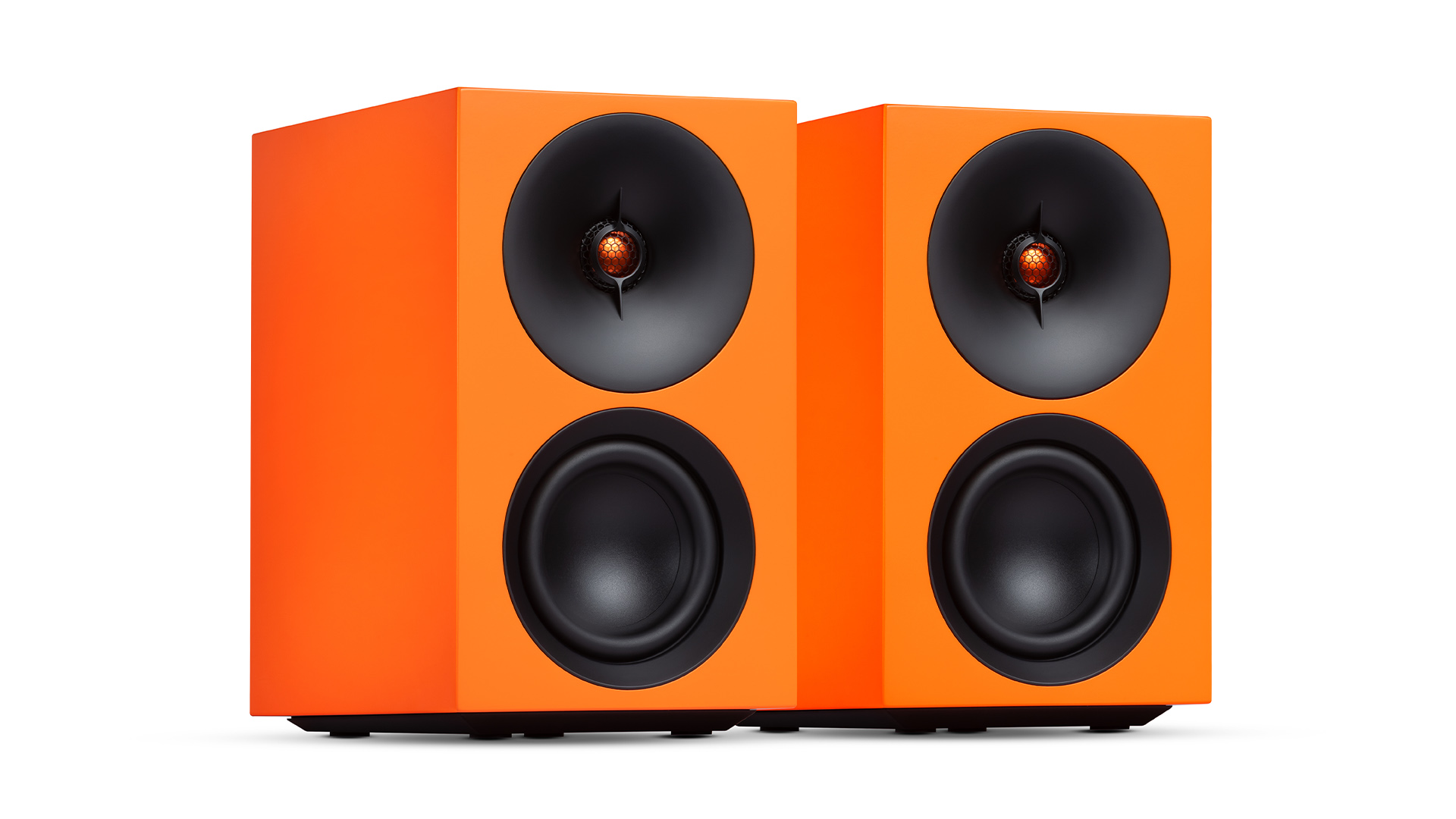
The L/R S are available in six finishes that include the standard black and white, as well as more colourful green, blue and orange finishes. If you opt for the walnut veneer finish of our review sample, you’ll have to pay a little more at £449 / $599 / AU$1049 per pair.
If you’ll be placing the L/R S speakers on your desk, it’s worth checking out the optional angled desk stands (£49) that tilt the speakers up so the sound is more directed towards you.
Build & design
(Image credit: What Hi-Fi?)
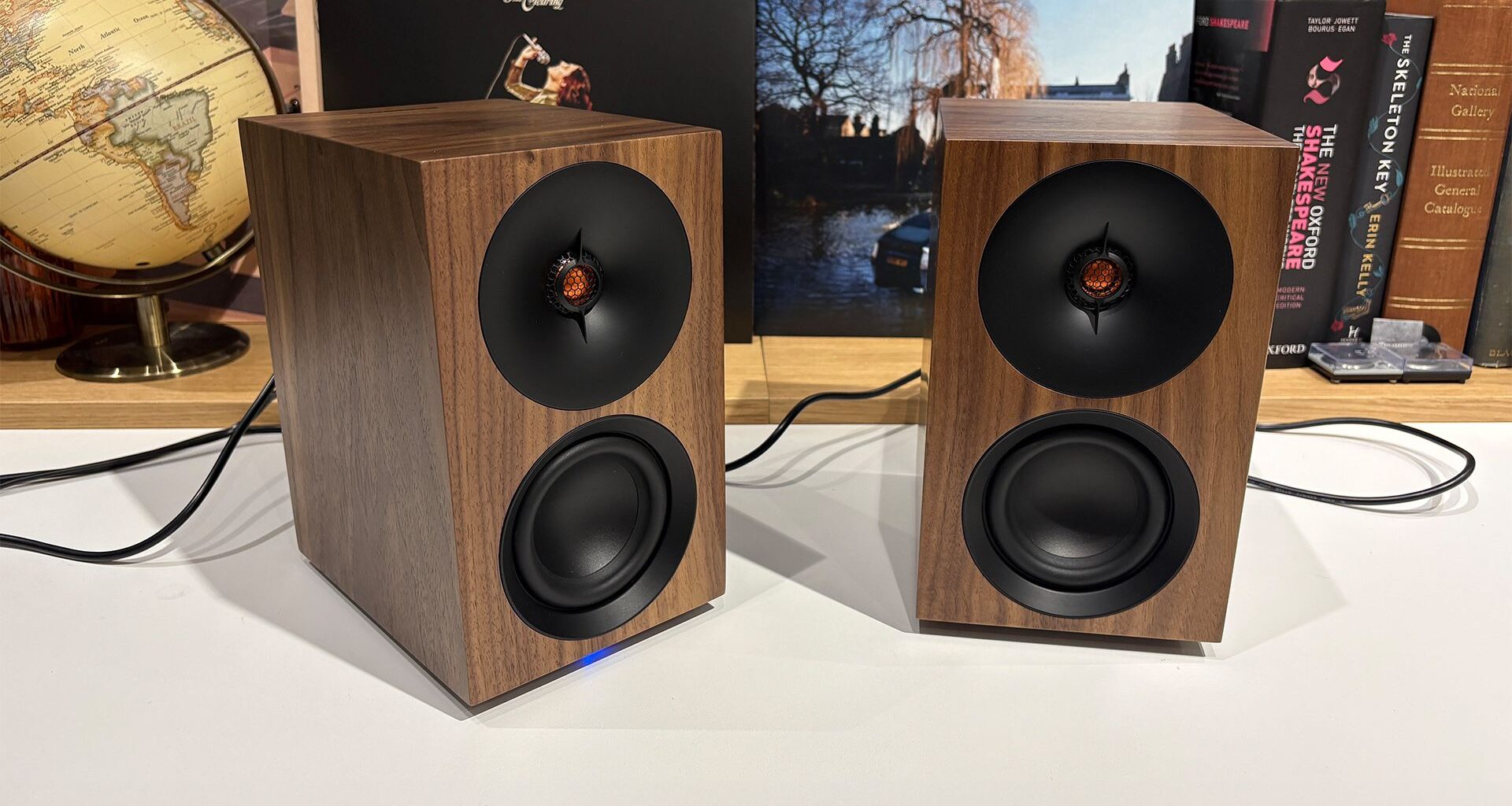
If you’re working with limited space – small rooms, student digs, not a lot of surface real estate – then these active speakers will work a treat. Each cabinet is just under 23cm tall and about 13cm wide – no wider than your average paperback book – which means they’ll fit onto most desktops and even shelves, ideally perched on either side of a laptop or your TV.
Cambridge Audio L/R S tech specs
(Image credit: Cambridge Audio)
Bluetooth? Yes (aptX HD, aptX, SBC, AAC)
Inputs RCA line level, optical, USB-C
Outputs Subwoofer
Dimensions (hwd) 22.6 x 13.4 x 18cm
Weight 3.0g (primary) / 2.6g (secondary)
Finishes x 6 (black, white, green, blue, orange, walnut veneer)
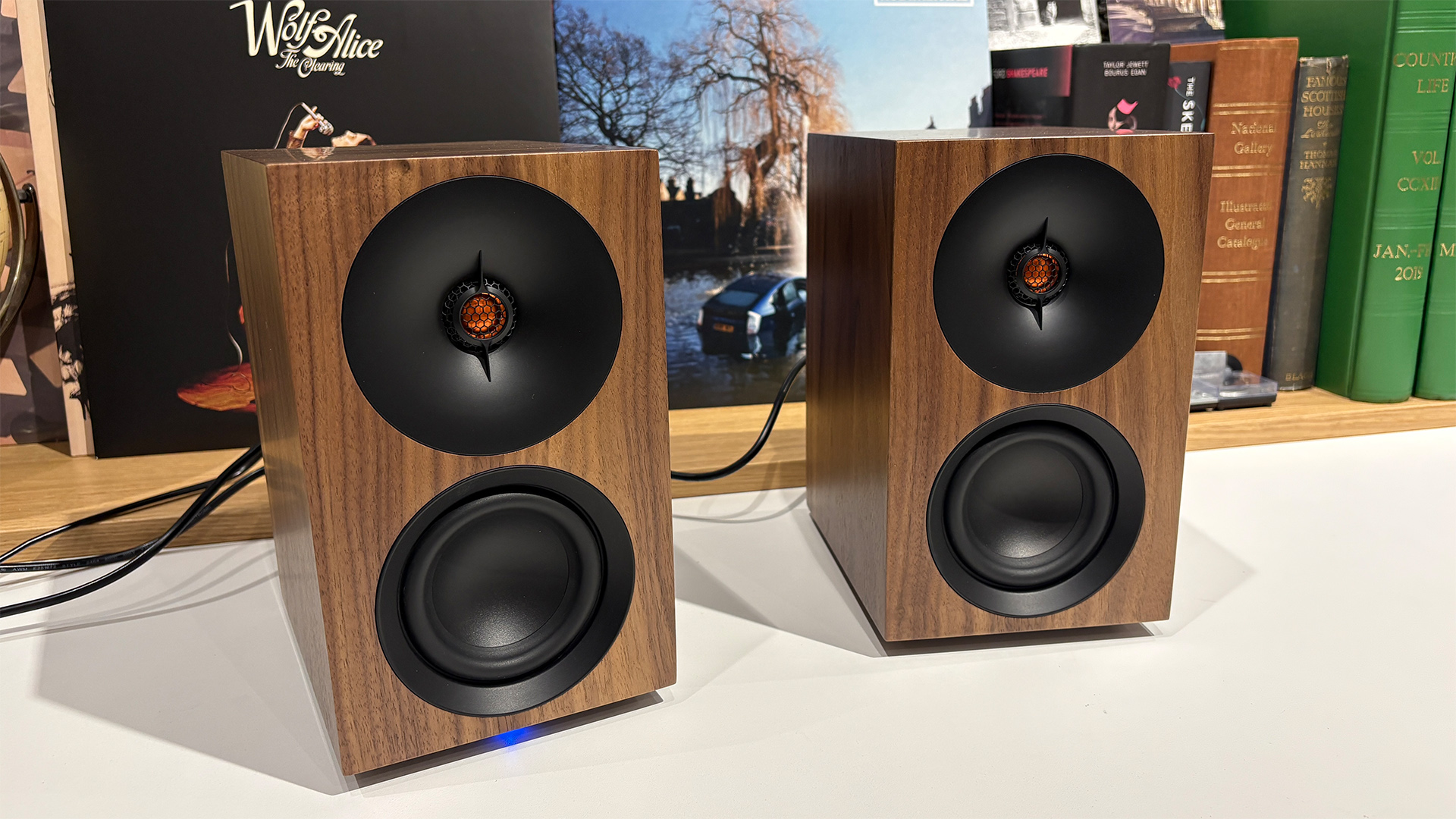
The speakers themselves look neat and stylish, and we can imagine the minimal cabinet design fitting into most interiors, whether you want them to blend into a spartan layout or add a splash of colour with the punchier hues.
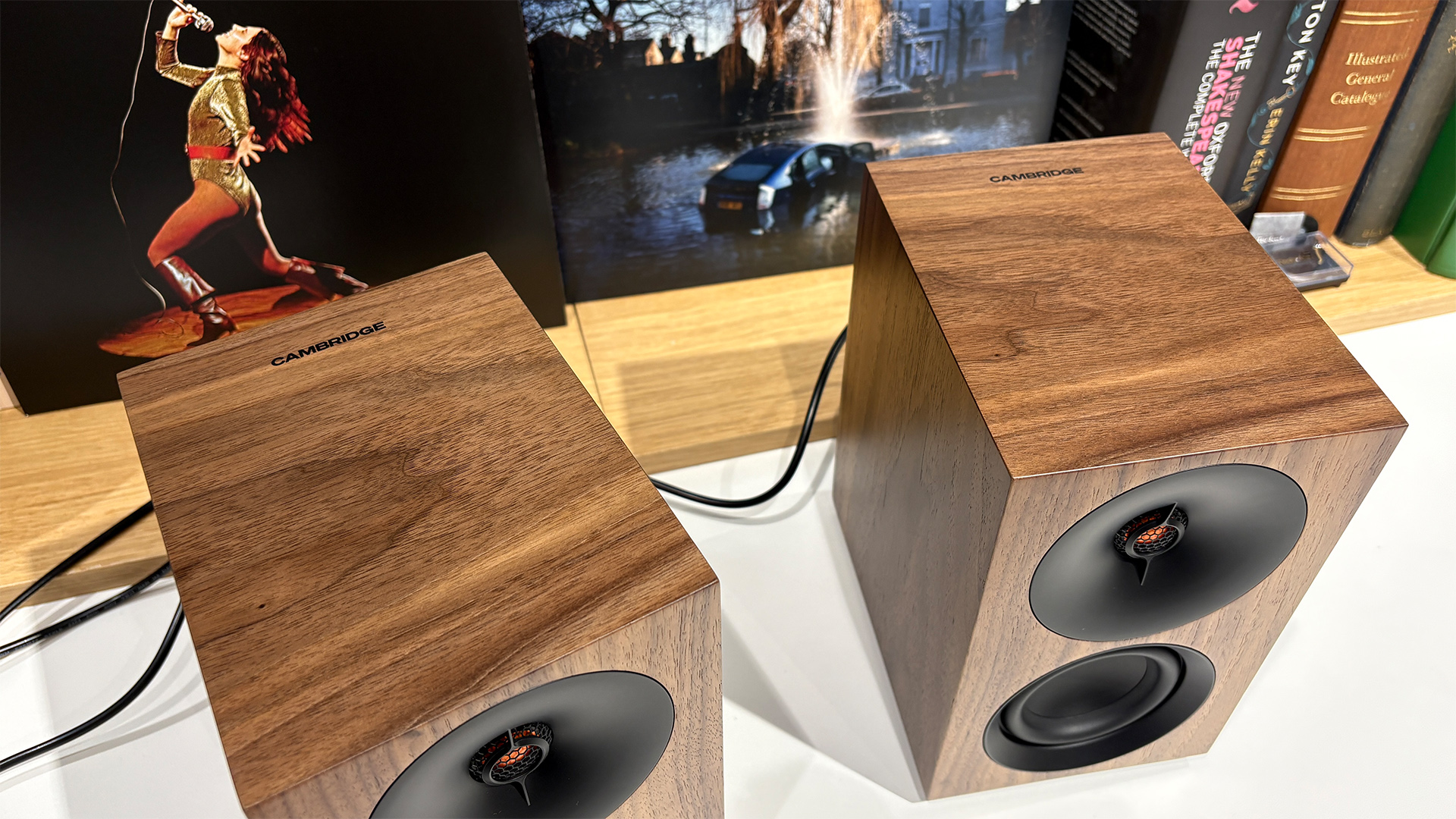
Build quality is of a high standard, with clean, crisp edges and a smooth finish. We particularly like how the Cambridge logo is etched into the finish at the top of the cabinet. It looks classy.
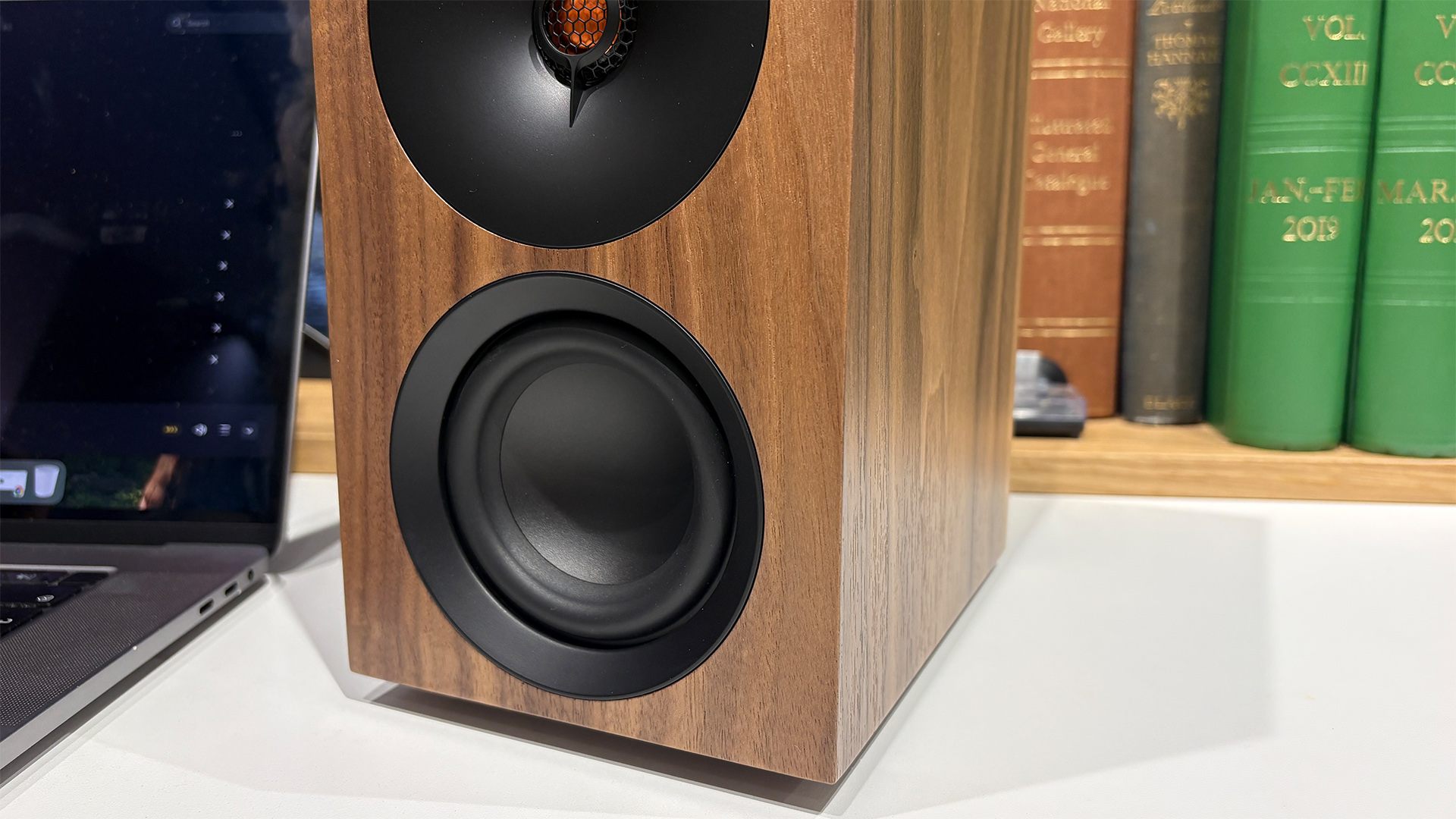
Each speaker is furnished with a 21mm aluminium tweeter and a long-throw 76mm mid/bass driver, with a bass reflex slot positioned at the rear of each cabinet. All drivers are powered by Class D amplification, and altogether, the L/R S claim to offer a mighty 100W of total output, split evenly between the two channels.
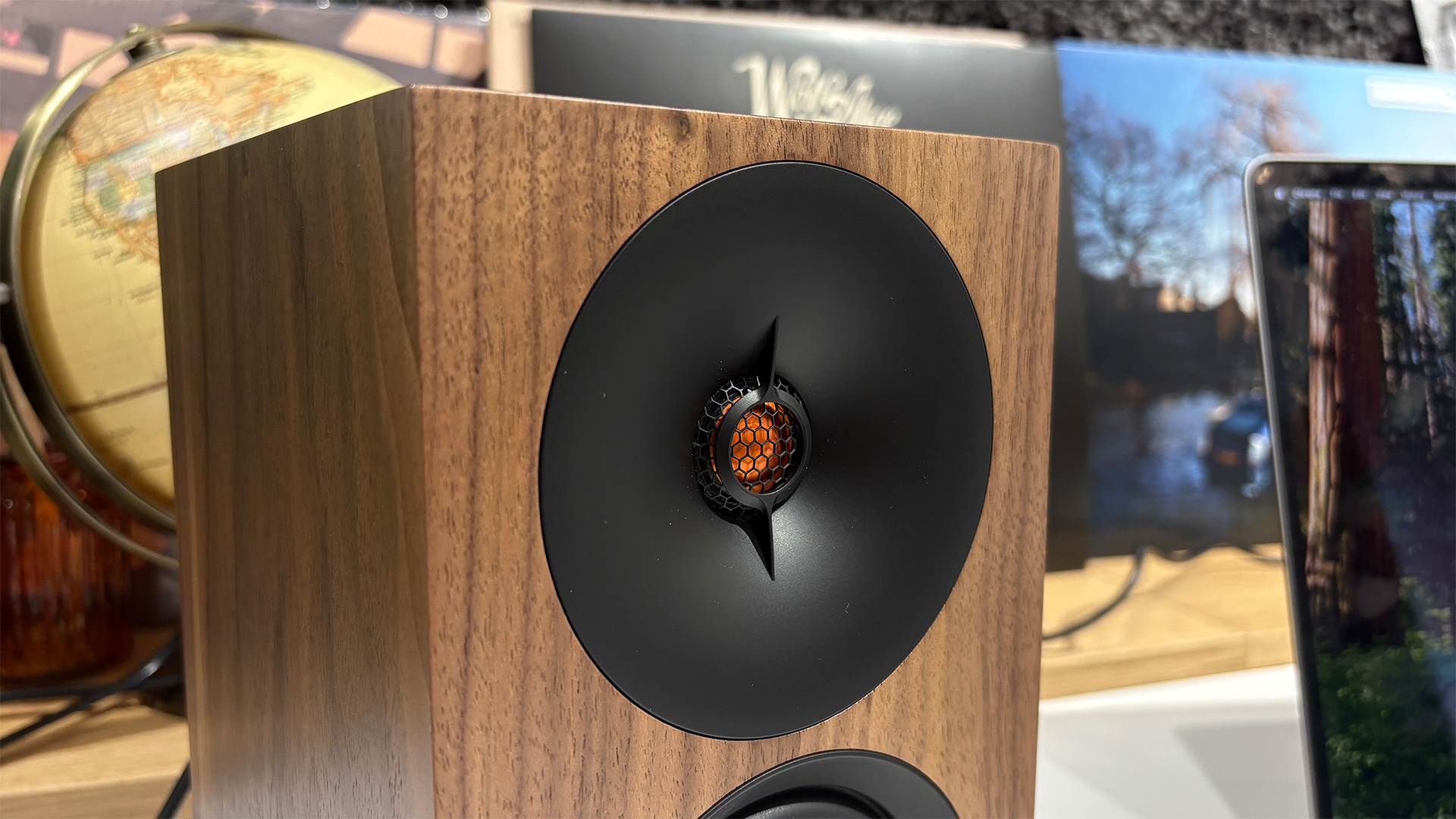
The tweeter has a large waveguide that, along with the mid/bass driver, occupies the majority of the ultra-minimal fascia, with the metallic orange colour of the dome peeking through to offer some visual interest. The speakers don’t come with a grille, but the tweeter’s phase cap doubles up as a guard to protect it from poking fingers.
(Image credit: What Hi-Fi?)
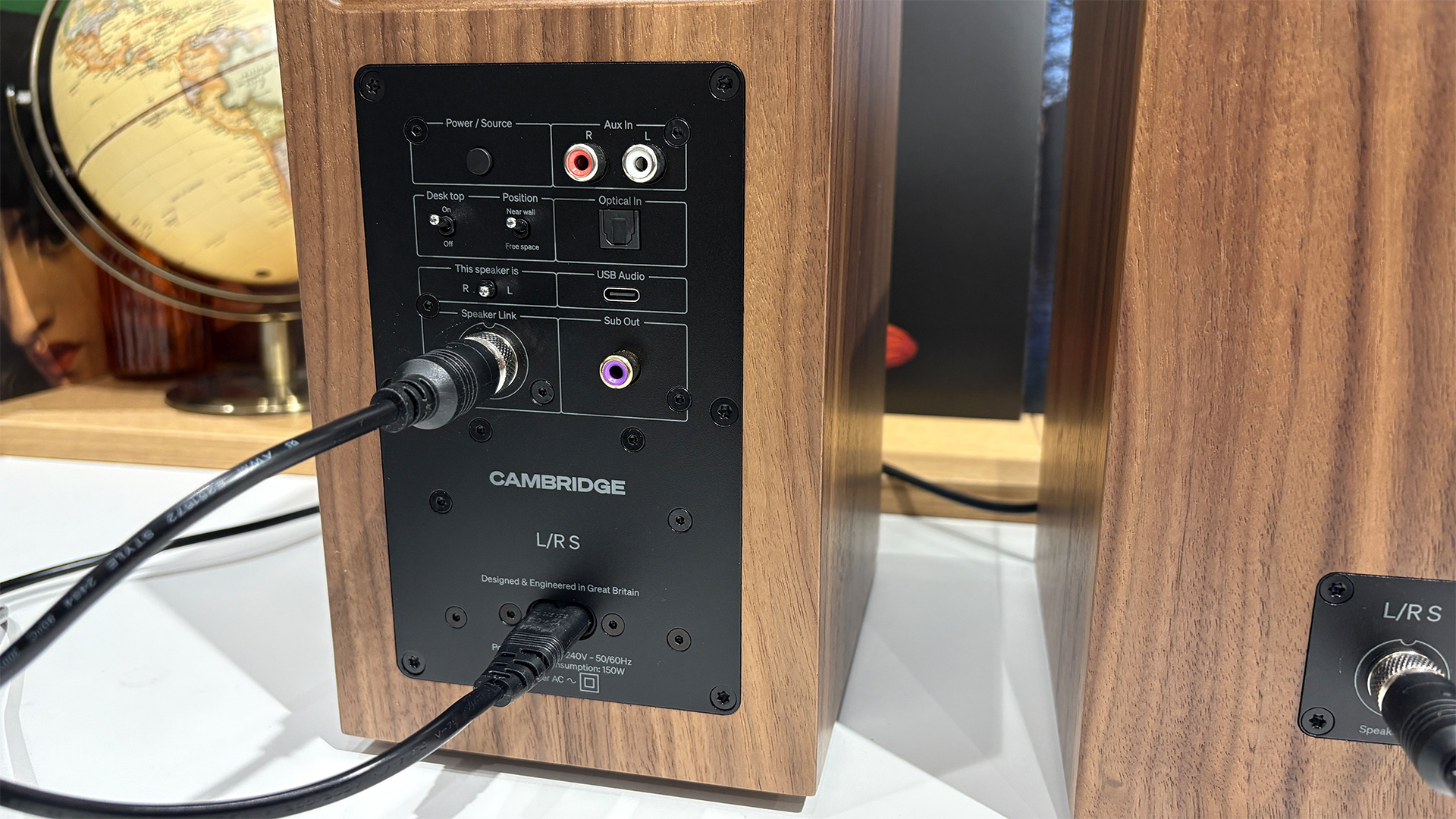
This is a fully active design with all the amplification and electronics housed in the primary speaker. The supplied 2m connecting cable has a bespoke 4-pin conductor that carries the signal to the secondary speaker. This cable has a pleasingly secure locking mechanism at either end, too. If you need a longer lead between the speakers, a 5m cable is also available to buy separately.
Keeping things simple seems to be the main aim with these petite active speakers. There are no controls or dials on the speaker for choosing inputs or changing volume – which might irk some users who like having such controls within easy reach – but there is a colour-coded LED under the primary speaker which clearly indicates the input chosen.
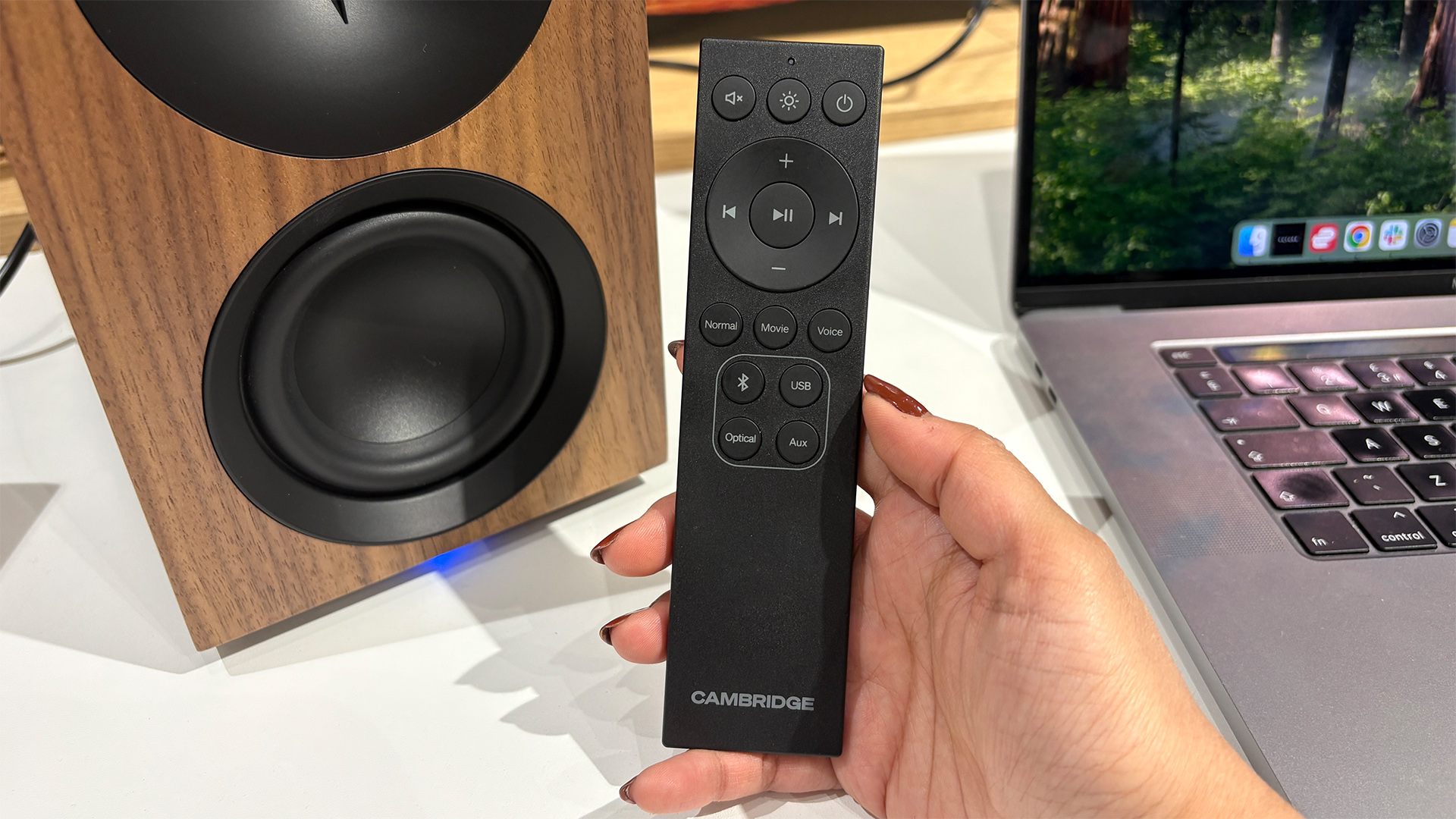
A remote control is supplied, which takes care of input choosing, volume and power. It’s a slim unit made of light plastic, but it works well, and we would take pains not to mislay this remote.
You can place these small speakers pretty much anywhere, and, knowing this, Cambridge has taken steps to ensure the L/R S are able to sound their best wherever you place them. At the back, you’ll find a pair of toggle switches: one to indicate whether the speakers are placed on a desk or not, and another to indicate if they are positioned close to a wall (“near wall”) or out in “free space”. The “near wall” mode is straightforward. It reduces the mid-bass around 100Hz to account for any boominess that might occur when placing the speakers very close to a back wall.
(Image credit: What Hi-Fi?)
The “desk top on” mode, meanwhile, deals with two issues at once – time alignment and desk reflection – and shows how much thought Cambridge’s engineers have put into this design. When the small speakers are placed on a desk, the drivers will naturally be physically lower than your listening height. This desk mode compensates for this effect, delaying the tweeter output and readjusting the top and mid frequencies so that music sounds “right” from your listening position.
Additionally, this mode also notches down the mid frequencies (around 700Hz, says Cambridge) to balance out the unwanted energy coming from the speakers’ sound being reflected from the desk.
We would try out the various combinations to see what works best for your speaker placement. We quite liked the combination of “free space” and keeping ‘desk top’ mode off for a richer and more solid sound overall, but the effect will vary depending on your room and the surface the speakers are placed on.
And finally, there is a third and very useful toggle switch that lets you assign the primary speaker as the left or right channel, giving you greater flexibility for placement.
Features
(Image credit: What Hi-Fi?)
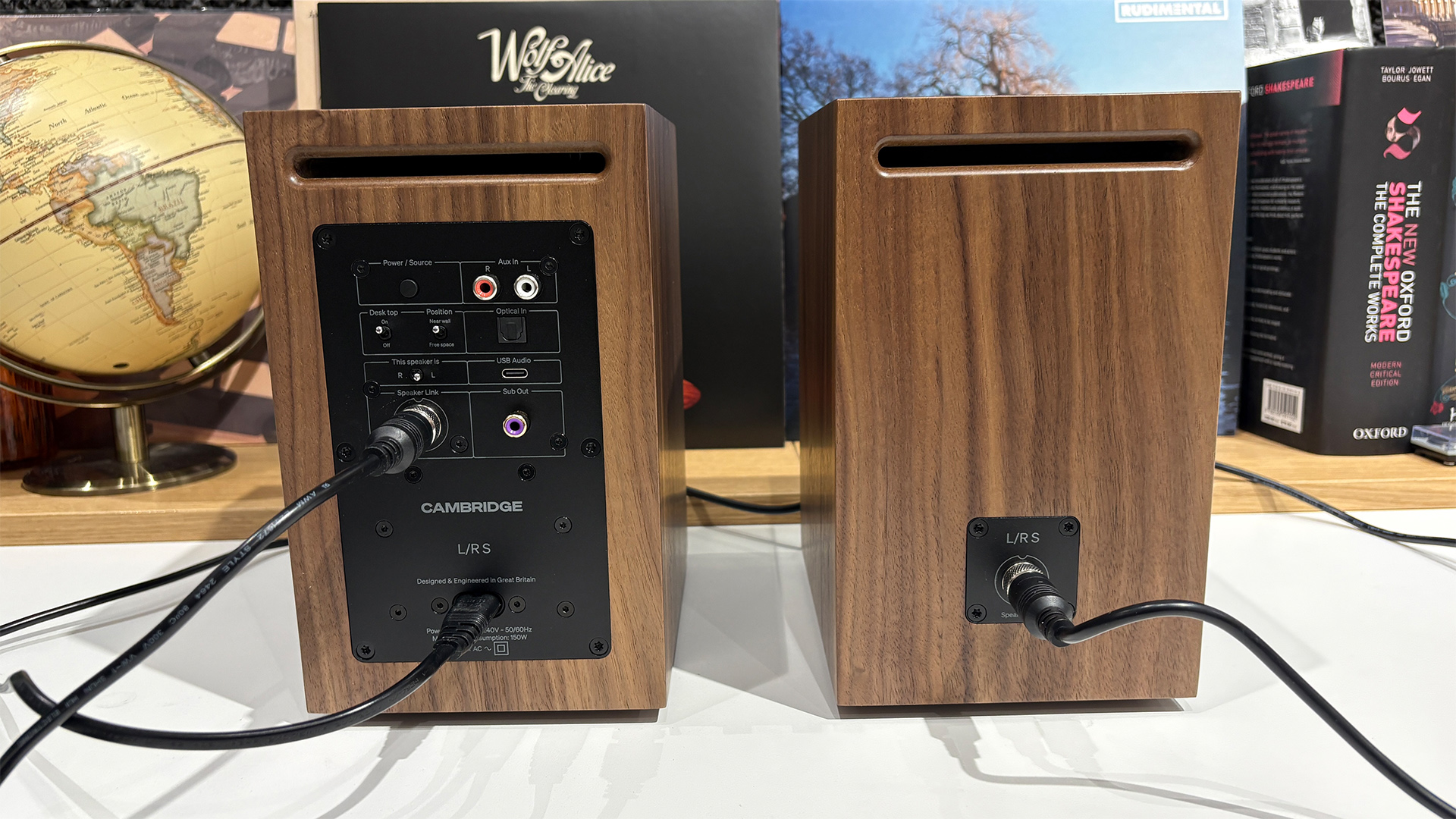
Whereas the bigger siblings – the L/R X and L/R M – boast full network streaming smarts, the baby of the family is once again keeping things pared down and uncomplicated by offering Bluetooth for streaming. Physical inputs on the L/R S include a pair of RCA line level, optical and USB-C, and there is a subwoofer output.
It’s worth noting that while the optical and USB-C both support hi-res audio files up to 96kHz, the speakers’ DSP will automatically resample/downsample all files to 24-bit/48kHz.
Perhaps surprisingly in this enduring age of vinyl popularity, there’s no built-in phono stage here, as you’ll find in the Ruark and Onkyo rivals. There’s no HDMI ARC input here either, which you will find on the cheaper Onkyo speakers.
Regardless, you can still connect a variety of products to these speakers, including a CD player, a TV, a smartphone/laptop, and even a phono stage-equipped turntable, such as the Sony PS-LX3BT. Bluetooth has the higher-quality aptX and aptX HD codecs on board, and pairing with our smartphone takes seconds.
Using these speakers is a cinch. Once connected, they’re easy to control using the supplied remote or with your paired phone when streaming from Tidal or Spotify.
Along with the toggles for adjusting the speakers’ sound depending on their position, there are also three sound modes to choose from: Normal (the default one), Voice (accentuates mids/voice) and Movie (increases in bass and treble frequency for more impact, and mids for clearer dialogue).
We appreciate that the EQ modes are rather subtle in action. Voices are a tad clearer and more prominent when deploying the Voice mode during podcasts, and the Movie mode doesn’t overdo the peaks in frequencies, but we prefer the more balanced, solid sound of the Normal mode for all kinds of audio.
Sound
(Image credit: What Hi-Fi?)
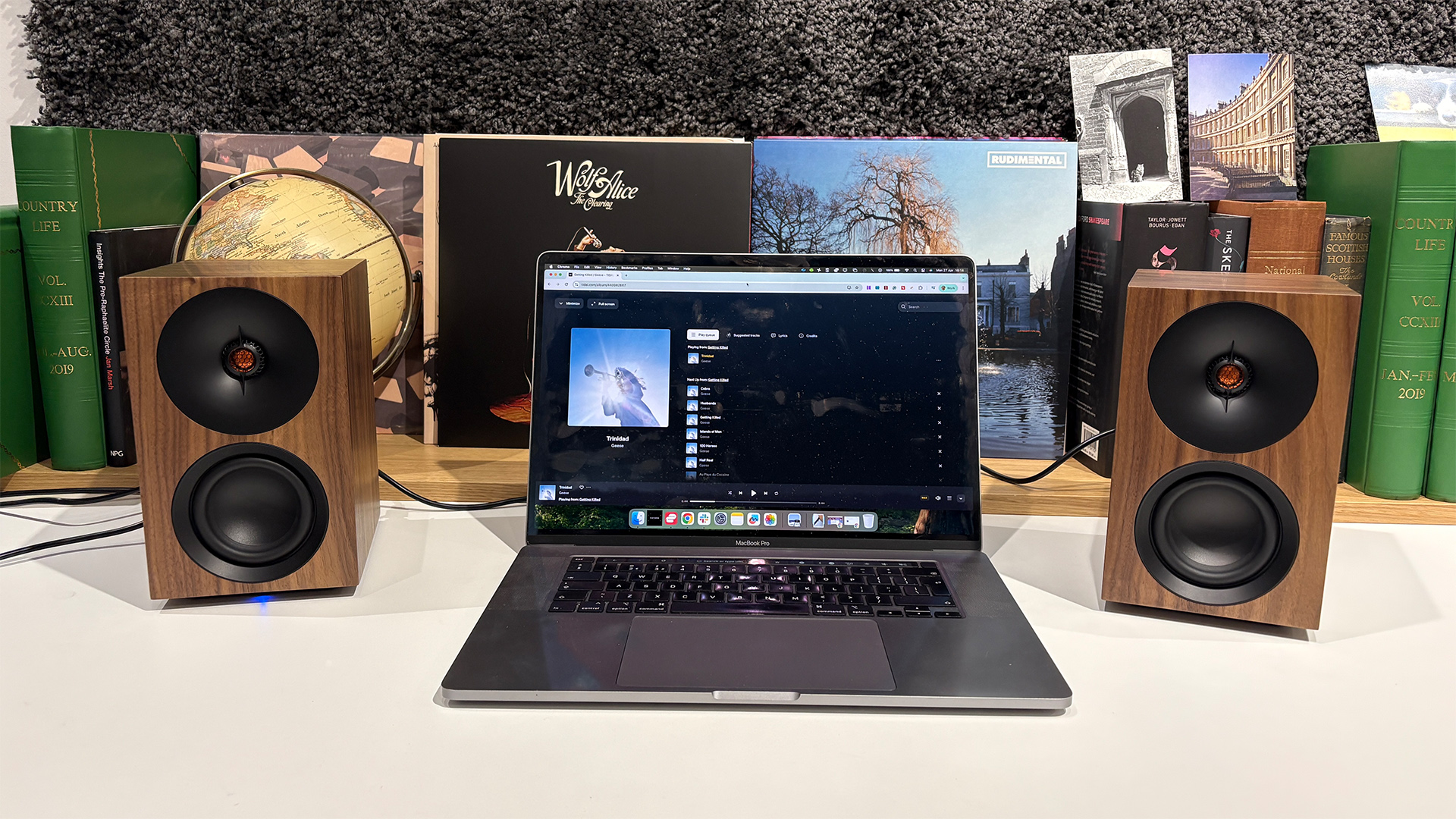
We set up the L/R S speakers on the desk in one of our listening rooms, flanking our laptop, connected to Bluetooth, and leave them running in while we do some work. This allows us not only to run the speakers in, but also to gauge how they behave when used exactly the way we imagine most people will. Will the speakers sound too boomy on the desk? Will they sound too powerful and distracting, or will they fade into the background? Is there any peakiness in the treble to annoy us?
As we listen to Rosalia, Eminem, Waxahatchee, Geese, Rachmaninoff and more, we find ourselves living rather harmoniously with these compact Cambridge speakers. What’s impressive is just how nice and even they are throughout the frequencies – it allows for a very easy-going listen, and one you could listen to for hours without getting fatigued.
There is no discernible peakiness in the treble, which sounds rather civilised and cultured even when hitting the brash, brazen highs of Fontaines D.C.’s Starburster. The bass is rather taut and nimble but not overpowering, which is welcome if you’ll be listening to the speakers up close and on resonant surfaces. There is less bass weight on the L/R S compared with the more exuberant Ruark MR1 Mk3 rival, and it doesn’t sound as muscular when faced with the brooding bassline in Massive Attack’s Angel. But it nips along at a good pace.
There is a good amount of detail on offer, thanks also in part to a clean, low-distortion background. Whether we listen to these speakers using Tidal via Bluetooth or USB, or CDs on a connected Cyrus CDi disc spinner, the presentation is consistent. From Waxahatchee’s honeyed vocals to Geese’s more discordant and laconic tones, we find the speakers create a rather lovely solid sweet-spot for voices, too.
Listening at low volume doesn’t quite give us a full picture of the speakers’ abilities; turn up the volume, and you’ll find them spark into life. If you reach your smartphone device’s maximum Bluetooth volume limit and wonder if that’s all they can do, reach for the remote control and turn it up some more. These speakers can go pretty loud. Just be wary of going too high, as things do start to get unwieldy and shouty.
(Image credit: What Hi-Fi?)
Even as we admire their evenness and orderliness, we find the L/R S speakers can be a touch reserved at times. On some tracks – such as on Eminem’s The Way I Am and Forget About Dre – we find ourselves willing the speakers on, to tackle the propulsive rhythm with more punch and panache. The piano notes in Game Of Thrones’ Light Of The Seven glide along smoothly, but they could do with a greater degree of precision and urgency to better impart the ratcheting-up of tension in the piece.
In comparison, the rival Ruark MR1 Mk3 speakers have the upper hand when it comes to rhythmic impetus and dynamic expression. They are able to deliver a bigger and more open sound too, with a greater amount of space in between the instruments and voices.
We find that the Ruark speakers sound clearer throughout the midrange, too, which reveals a greater degree of subtlety and insight. In comparison, the Cambridge sounds as though there is a cloudy veil over the mids, which we would love to hear scrubbed clean so that textures and subtleties can be unleashed. Bon Iver’s voice on Exile is layered with rich textures and full of personality and emotion through the Ruarks – this effect is a little muted through the L/R S.
We would recommend investing in the optional desk stands for the L/R S, as physically tilting the speakers towards your listening position results in a clearer, more solid sound. Listening significantly off-axis changes the balance somewhat, so we would take some care when positioning the speakers and experiment with the various toggle modes to find the ideal sound for you.
Verdict
(Image credit: What Hi-Fi?)
As Cambridge Audio’s first-ever active stereo speakers, the L/R S are off to a great start. It’s a confident design with thoughtful consideration for how people will use them in the real world. And they look stylish, too.
That even-toned, refined and easy-to-listen-to sound is impressive for a product of this type and price, and we think a sprinkle of energy, precision and insight could well catapult these compact Cambridge speakers to stardom. The Ruarks and Onkyos of this world might rest easy for now, but they’ll certainly be keeping an eye on this new contender.
Review published: 15th May 2026
SCORES
MORE:
Read our review of the Ruark Audio MR1 Mk3
Also consider the Onkyo GX-30ARC
Our guide to the best desktop speakers for hi-fi fans, tested by our experts
Cambridge Audio L/R S: Price Comparison