
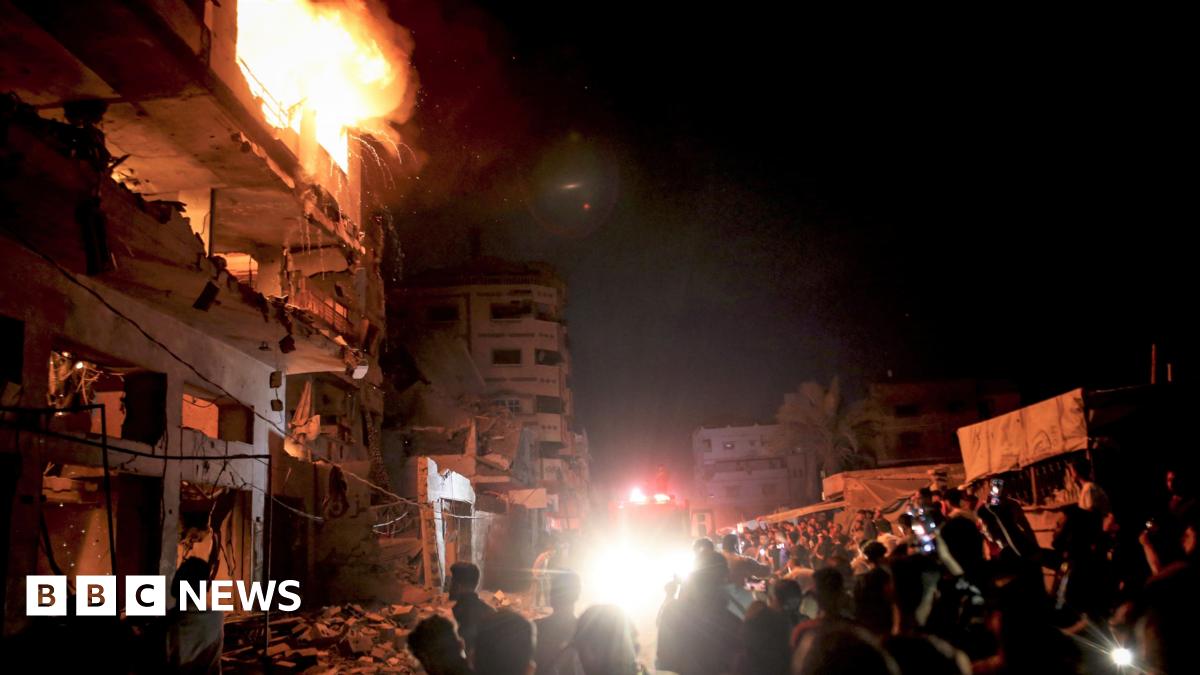
A ceasefire in Gaza came into effect on 10 October, but Israel has conducted regular strikes across the Palestinian territory since then.
Hamas has repeatedly accused Israel of breaching the terms of the ceasefire and attacking civilians. The Israeli government maintains it has license to target Hamas members.
It, in turn, accuses Hamas of refusing to disarm in breach of the ceasefire agreement.
Meanwhile, US-led peace efforts have stalled since the start of the Iran war, with latter phases of the plan yet to come into effect
The US announced the start of the second phase of the plan in January, with governance of Gaza assumed by a transitional, technocratic administration alongside the demilitarisation and reconstruction of the territory.
However, talks on disarmament remain deadlocked, while Hamas has since reactivated its police force and appears to be reasserting its authority.
Netanyahu and Katz said Haddad had “refused to implement the agreement led by US President Trump to disarm Hamas and demilitarise the Gaza Strip”.
They added: “We will continue to act forcefully and decisively against anyone who took part in the October 7 massacre.”
The two-year-long Gaza war was triggered by the Hamas-led attack on southern Israel on 7 October 2023, in which about 1,200 people were killed and 251 others were taken hostage.
Israel responded by launching a military campaign against Hamas in Gaza, during which more than 72,744 people have been killed, according to the Hamas-run health ministry. Of these, 857 have been killed since the ceasefire began, it says.