
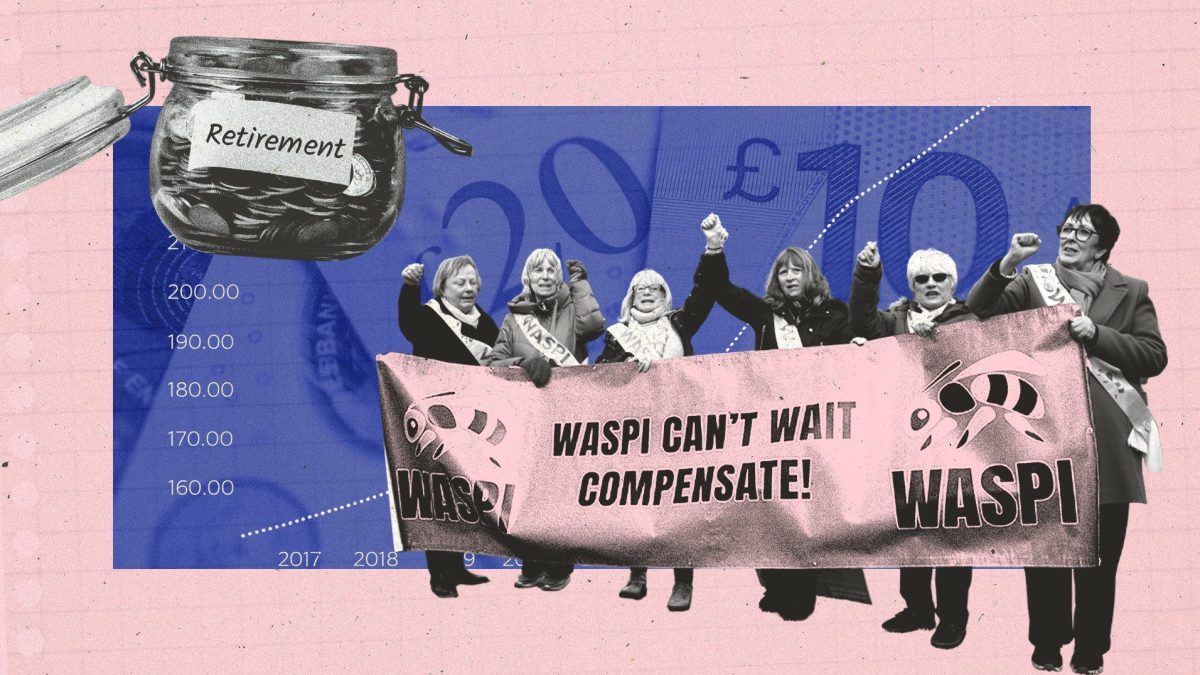
Last year, the UK government’s petition website received a new submission to increase the state pension, proposing a 143 per cent rise.
The petition called for the state pension to match working 48 hours at the National Living Wage – an increase from £241 to £586 per week – and for the age at which it can be claimed to drop from 66 to 60.
The petition received 20,000 signatories and, as a result, had to receive a response. Unsurprisingly, the government rejected it entirely.
The state pension currently costs the UK £146bn each year. Increasing it by 143 per cent, as the petition proposed, would take its cost well over £350bn, before even considering the millions more people that would receive it if the age dropped.
Any proposal costing this much is, off the bat, unworkable – £350bn is over six times the UK’s entire defence budget – but the fact it got enough support to warrant a response is important.
It shows that swathes of the UK feel the state pension is not serving them well and will not be enough for them if they are not already retired. At the heart of that feeling is the belief that the pension is not generous.
Financial experts and educators say this sort of belief is rife but betrays a misunderstanding of the purpose of the pension, or at least its intended purpose from the Government.
“I hear from many people who wrongly believe that the state pension should be enough for them to live off and are shocked when they discover it isn’t,” says Antonia Medlicott, founder of finance education platform Investing Insiders.
The UK Government makes its position clear. A guide on its website states: “The state pension is intended to be a part of your retirement income.”
It is supposed to be supplemented by extra income – from private sources or public sector pensions – but this is far from the only element where the public’s perception does not align with the state’s policy.
Graham Nicol, a financial planner at NCL Wealth Partners, says there are “many misconceptions” that he encounters when speaking to clients about the state pension.
Among the most prevalent is the idea that the state pension is a “personal pot” that retirees have saved into.
There is often a belief that, because people collect qualifying years that entitle them to the state pension by paying national insurance (NI) – or by collecting benefits that replace these contributions – all their years of tax contributions are put into some sort of pot, set aside for them.
“The link between NI contributions and state pension entitlement has resulted in a number of misconceptions about how the system works, including the idea that because you have paid in, your entitlement should be guaranteed,” explains Tom Selby, director of public policy at investment platform AJ Bell.
“The reality is that the state pension is legally classed as a benefit, with today’s taxpayers funding the entitlements of today’s pensioners.”
As a benefit, rather than money you have saved yourself, this pension can be altered at any time.
Where do these perceptions come from?
There are multiple reasons for some of the misunderstandings of our state pension system.
Medlicott feels that, in recent years, politicians have perhaps not been as clear as they could have been about the limitations of this system.
Its cost is huge, which is what prompts the regular debates about the continuation of the triple lock – the mechanism that ensures it rises by the highest of inflation, average earnings, or 2.5 per cent each.
In cash, if you were to rely on it, it would be far below a comfortable income at a maximum of around £12,500 per year for those on the new state pension. Those on the older state pension who retired before 2016 receive a smaller amount.
As an example, Pension UK’s Retirement Standards say that a single person needs £31,700 for a moderate retirement – something that doesn’t include mortgage or rental costs. This is more for those looking for a comfortable retirement.
“I do feel that politicians should be clearer about the limitations of the state pension so people are aware that they need to bridge that gap, although I recognise that this probably won’t win them any votes,” Medlicott says.
“The triple lock probably compounds the problem, as it provides a sense of security. The messaging should be more that ‘yes we will provide a foundation that will rise with inflation or wage, but this will need building on’,” she explains.
The Government said that when the triple lock increased this April, its commitment was to “boosting financial security for millions” – yet made no mention that, without extra income, this boost would not go a long way.
With regards to the “paying in” system, experts believe there are a number of reasons this myth has continued.
Firstly, that is initially how the state pension was intended to work. In the 1940s, when the state pension as we know it was launched, NI was paid at a rate that was needed to fund the pensions of current pensioners.
Over time, that link between NI and pensions has been weakened. Now, the state pension is funded from general taxation, with the NI rate set to match overall budget needs rather than those of the state pension specifically.
Selby says a second factor is that retirees also expect state pensions to work similarly to older defined benefit pensions that were commonly offered by companies in the 20th century, and gave guaranteed payouts in return for years of contributions.
Tom McPhail, a retirement expert who conducted a 2021 review of the Money and Pensions Service for the Government, believes that politicians are not entirely blameless for this misunderstanding either.
In one recent example, back in 2024, the Conservative Party hatched a plan to cut NI and merge it with income tax to create one simpler super tax. Labour accused them of threatening the state pension.
“I think that story was just Labour playing politics, but it was an example of politicians misleading the public for low political purposes,” McPhail says.
“Undoubtedly, politicians exploit this complexity at times. I think we’d all benefit from a simpler, more transparent system,” he adds.
Are they creating barriers to reform and what is the answer?
Most experts believe that, at some point, the triple lock will need to be reformed due to ballooning costs, but the public is less sure.
Polling for The i Paper last year showed a majority supported it.
McPhail says the lock has become “totemic”.
Since its introduction in 2011, politicians have been under almost constant pressure to commit to it, with each party doing so at the last general election.
Its defenders “think anyone who wants to change it must hate pensioners,” McPhail says, making it difficult to win over support for change.
Politicians, instead of fighting to keep the lock, need to lean into other aspects of the system and their success more, he said.
The auto-enrolment policy, rolled out since 2012 and ensuring most workers pay into private pensions by default, has done part of that, but McPhail says its importance to retirement saving needs to be highlighted.
“We have one of the largest funded private pension systems in the world. Policymakers need to lean in to this and emphasise both the importance and the benefits of building up adequate private pensions alongside the state pension. This is achieved largely through the workplace,” he says.
But McPhail also feels that long-term, wider reform is needed.
“We have both pensioner poverty and also some fortunate pensioners with significant financial security, final salary pensions, good houses and so on. In this context, the argument in favour of some element of means testing looks increasingly difficult to ignore,” he explains.
It’s an idea that has been touted across the board over the past few years, including by former Bank of England economist Danny Blanchflower.
Whether there is the political capital for this remains to be seen.