
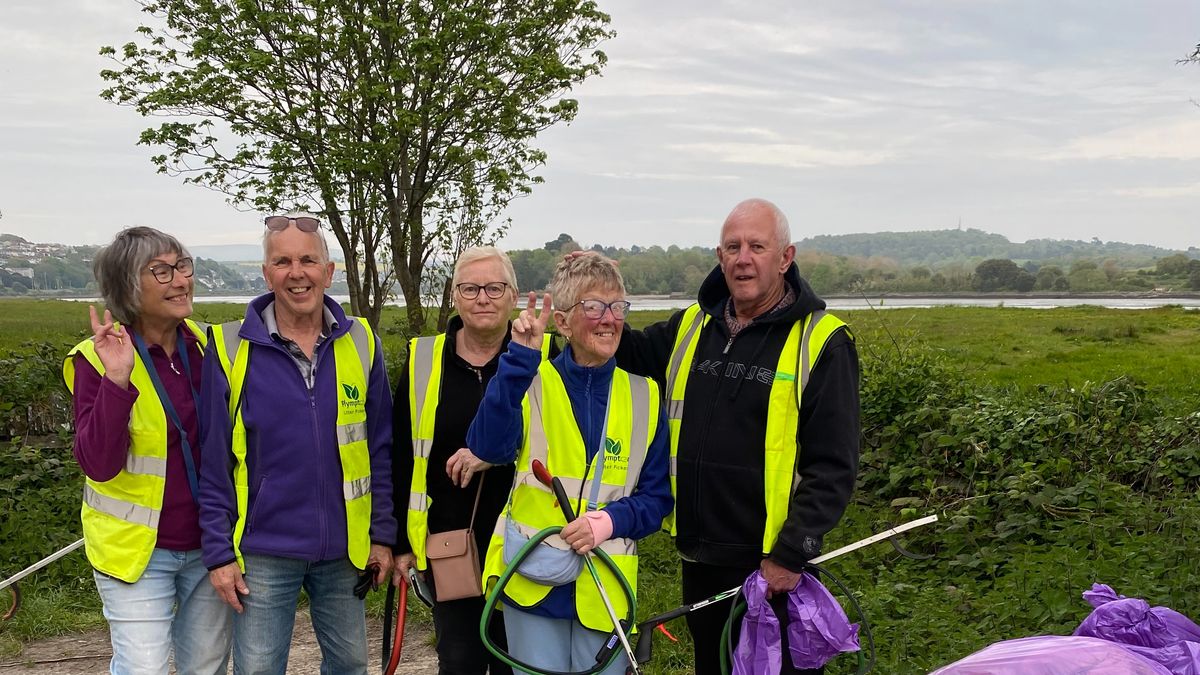
Three bags of used wet wipes and sanitary products were collected within 100 yards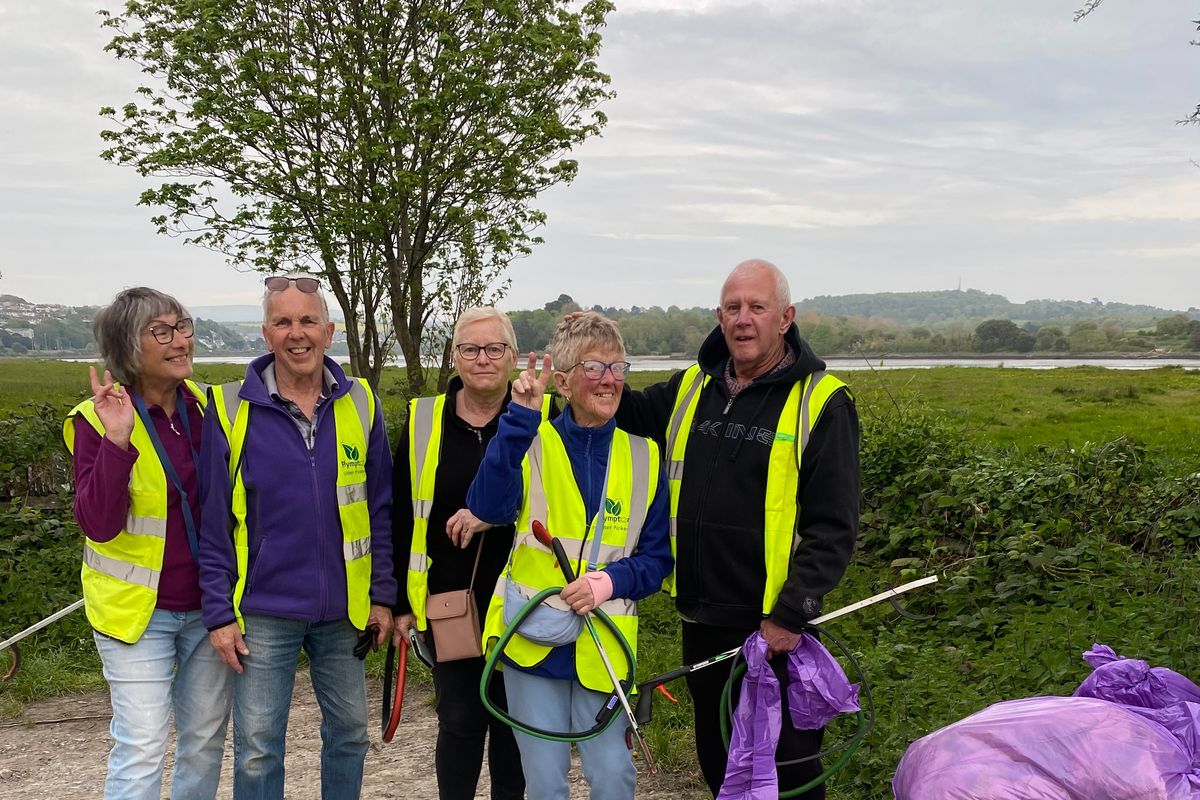
The Plympton Litter Pickers with the rubbish they collected at Blagdon Meadow.(Image: Plympton Litter Pickers)
Shocked litter pickers have collected bagfulls of used wet wipes and sanitary products strewn across the tide line at one of Plymouth’s beauty spots noted for its environmental value.
In the space of 100 yards the Plympton Litter Pickers filled three bags of the rubbish from Blagdon Meadow, a four acre site of reclaimed grassland and wildflower meadow which borders the intertidal River Plym and can be seen from the busy Embankment Road.
Cathy Loft said she and her group found the rubbish there “quite shocking” “disgusting” and “unacceptable” posing a huge threat to the environment and birds and marine life as well as being unslightly.
“It’s not the first time we have seen something like this when there is heavy rain,” she said, claiming it came from the South West Water wastewater and sewage treatment plant up the road at Marsh Mills.
She said the group had reported it to the Environment Agency.
“Dumping sewage in any of our waterways is totally unacceptable. We know it’s not just a local problem but something needs to be done about it.”
Wet wipes and sanitary products flushed down the toilet can get caught in pipes and trap other waste, causing blockages in the sewerage system. When the system is blocked it is designed to release this untreated sewage directly into rivers and seas.
South West Water said: “Wet wipes, sanitary products and other items that are incorrectly flushed can cause significant problems in the wastewater network, as they do not break down in the same way as toilet paper. In some circumstances, including during storm overflow operation in periods of heavy rainfall, these items may enter watercourses.
“While we are unable to confirm the source of the items found at Blagdon Meadow, our teams work proactively to maintain the wastewater network, reduce blockages and protect the environment, and households play an equally important role in keeping our sewers flowing smoothly.”
The water company said it continued to encourage customers to only flush the three P’s – pee, poo and paper – and to place items such as wet wipes and sanitary towels in the bin.
More than 90% of wet wipes contain plastics which break down into smaller microplastics that pollute oceans and rivers
Plymouth City Council has also been contacted for a comment.