
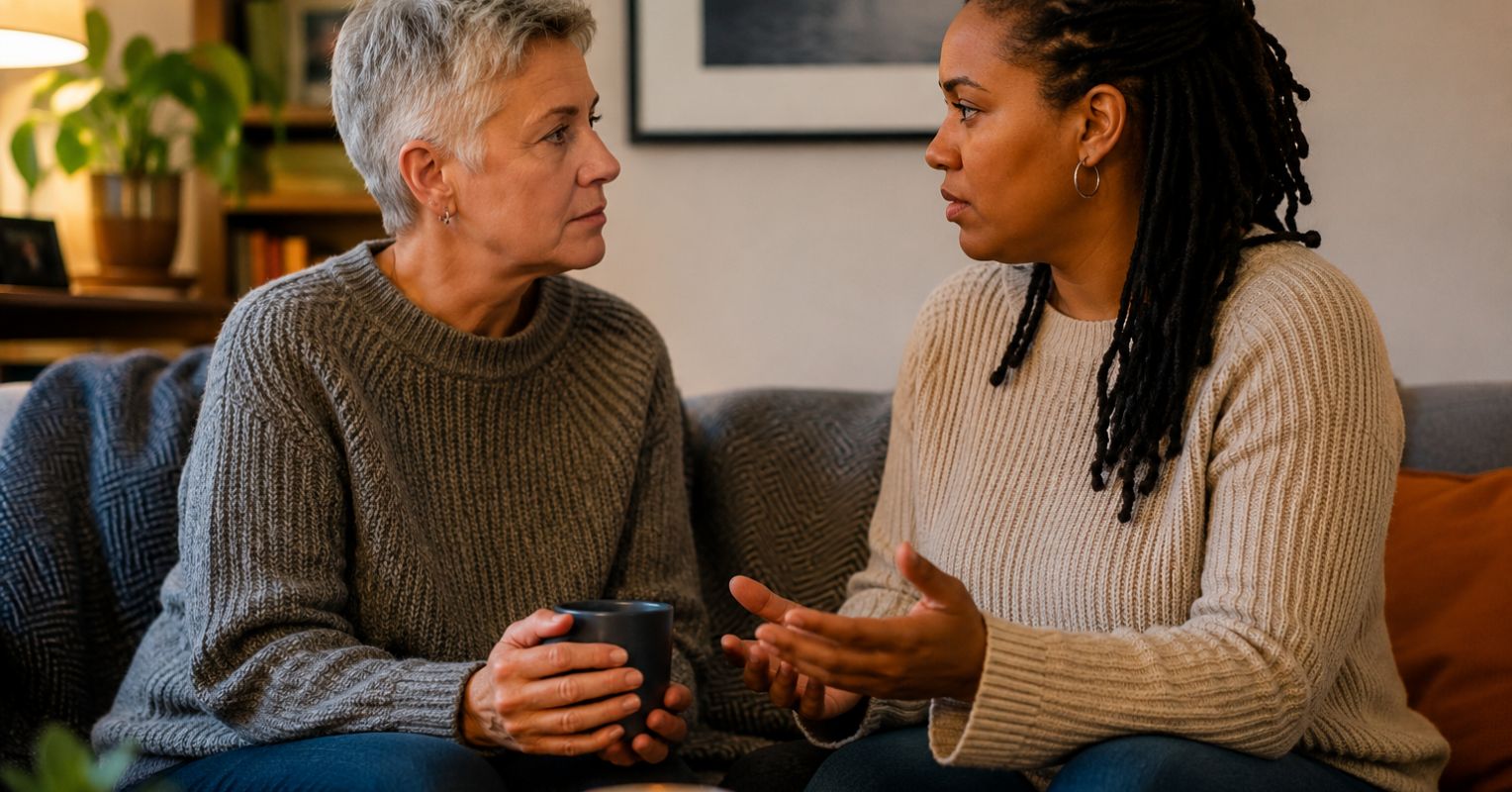
Sharon, 62, and Alana, 32, present to therapy describing escalating conflict around political engagement and media consumption in their home. They are in a committed partnership and are parenting two daughters, ages 12 and 6. Both describe their relationship as loving and values-driven, yet say they feel “constantly at odds” about how to respond to the current political climate.
Alana reports feeling deeply compelled to stay informed and involved. Since the racial justice uprisings of recent years, she has attended protests, and closely tracks anti-LGBTQ+ and anti-Black legislation, and frequently discusses current events at home. She describes her engagement as both moral responsibility and parental duty.
“I don’t want our girls growing up disconnected,” she says. “They need to understand what’s happening and how to fight for themselves.”
Sharon, however, avoids news media and discourages protest participation. She becomes visibly anxious when Alana attends large gatherings and often asks her to stay home or “be careful.” She prefers limiting political conversations around the children and describes the constant news cycle as overwhelming and destabilizing.
“I just want our home to feel safe,” she says. “Not like we’re always bracing for the next threat.”
Alana interprets Sharon’s withdrawal as apathy or privilege. To her, disengagement feels like denial of what is going on. “It feels like you don’t care,” she says. “Like you get to look away.”
Sharon experiences Alana’s activism as risky and frightening. To her, protest participation feels like exposure to violence. “I’m scared something will happen to you,” she admits. “I can’t lose you.”
The same argument repeats: Alana pushes for more engagement; Sharon pulls back for safety. Both feel misunderstood and alone and both want their partner to understand where they are coming from.
Distinct Historical Experiences
LGBTQ+ couples may span generations or carry distinct historical experiences that shape relational expectations of safety and visibility.
Due to the history of oppression and trauma against the queer community, these experiences can often impact couples differently based on generational differences. LGBTQ+ couples may carry very different historical experiences of visibility and safety depending on when they came of age. Those who lived through criminalization, the AIDS crisis, or widespread discrimination may experience public visibility very differently than younger generations raised during the era of marriage equality and increased representation. Still, the trauma from minority stress, and from facing layers of biases and discrimination, affects all members of the queer community, no matter the age.
In my work, I notice that many older adults carry trauma related to the AIDS crisis, criminalization, or societal rejection. Younger generations, on the other hand, often have greater access to affirmation and visibility but face different stressors such as heightened backlash, online harassment, and pressure to publicly perform identity. These differences may produce misunderstandings around activism and vulnerability that can come up for couples.
How Therapists Can Support
During assessment, Sharon shares that she came out in the 1980s. She lost multiple friends during the AIDS crisis and experienced workplace discrimination and threats to her safety. She remembers a time when being publicly queer carried extreme danger. Visibility meant risk and danger, not empowerment or a chance for advocacy. Even decades later, her body still braces for consequences when she feels “seen” or visible.
Alana, on the other hand, came of age in a period of expanded LGBTQ+ visibility and rights. For her, public engagement has often meant empowerment and resistance. At the same time, she carries racialized trauma related to policing, surveillance, and state violence, and watching people in her family and in her community harmed by policies and police actions. Staying silent feels unsafe in a different way for her.
When they first came to me, I helped them unpack this through their respective lenses, which both hold validity. I did this by gently naming what I saw as the difference: “It sounds like visibility carries very different meanings for each of you. Sharon, safety meant staying quiet. Alana, safety sometimes means being visible and vocal.”
We worked together to help them see that both partners were responding to threat, just in opposite ways. Sharon copes by reducing exposure, while Alana copes through action and vigilance. Each response is understandable individually, but together they create relational tension. Sociopolitical stress follows them into the home, leaving little room for emotional rest or safety. The partnership then becomes the battleground for managing collective trauma.
Treatment Focus: Externalizing Systemic Trauma and Minority Stress
The therapeutic work centers on externalizing sociopolitical stress and historical trauma as a third force in the relationship, which helps them understand that both are responding adaptively to different lived experiences of danger. Naming this reduces blame and reframes the problem as contextual rather than personal. Both partners’ responses can be honored without either being positioned as wrong.
The goal is not deciding which survival strategy is “correct,” but helping both partners understand the fear, love, and protection underneath each other’s responses. And then they can work together with this understanding.
To find a therapist, please visit the Psychology Today Therapy Directory.