
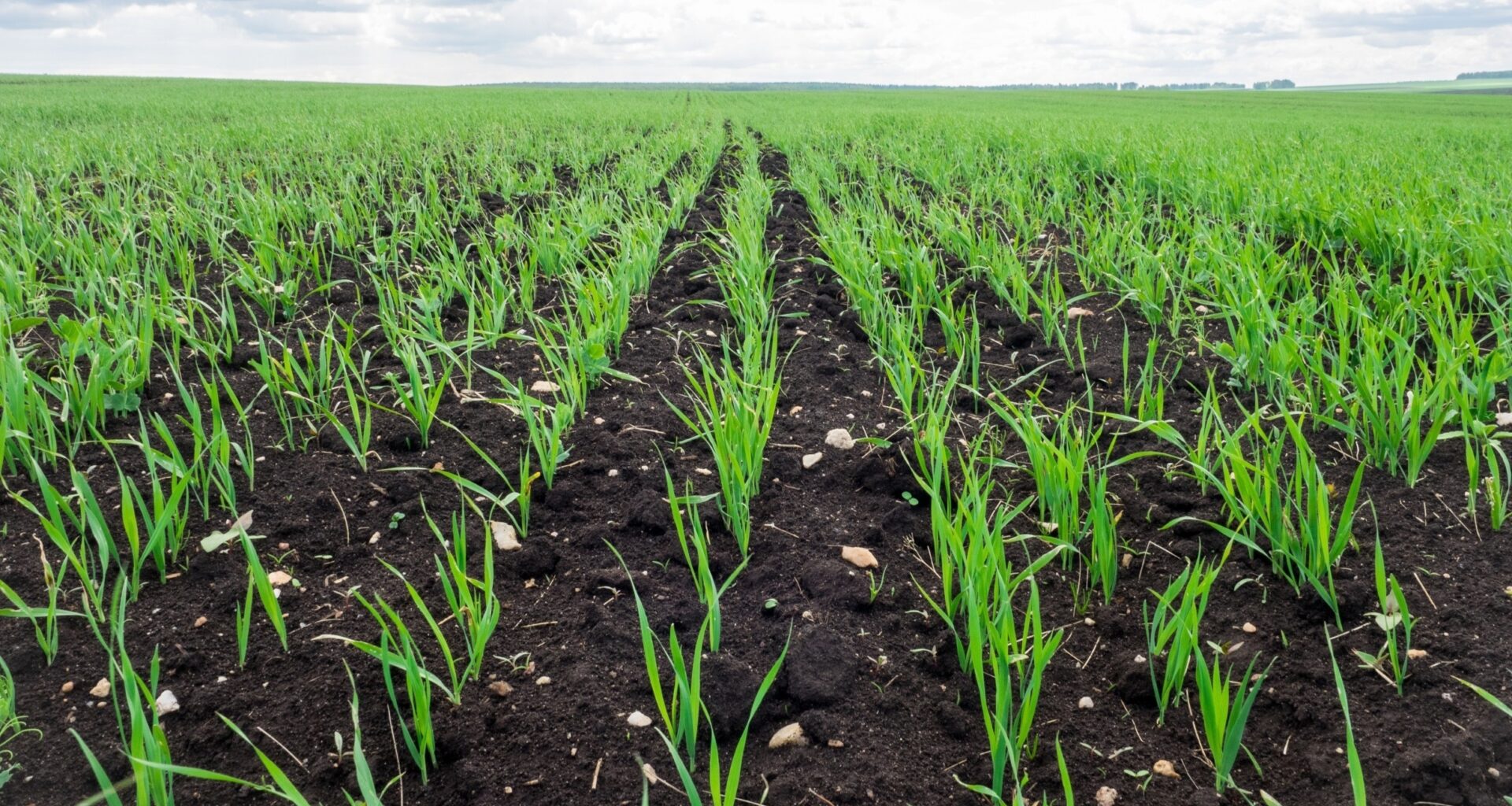
Most countries measure soil carbon by drilling down to about a foot. That’s the plough layer – where crops are seeded, where tillage churns things over – and it’s been treated as the whole ledger for decades.
A major new review says the ledger has always been missing the bigger half.

Below that 12-inch limit sits a reservoir so large it holds the majority of the world’s soil carbon – and it operates by entirely different rules.
A vast hidden pool
A new review led by Professor Nanthi Bolan at the University of Western Australia (UWA) pulls together global data on what scientists call deep soil carbon – the carbon stored more than about a foot below the surface.
The numbers tell a different story. Worldwide, this deeper layer holds more than 850 billion tons of carbon. That’s 50 to 60 percent of all the carbon in the top three feet of soil.
The standard accounting depth, set by the IPCC and used by most national carbon markets, stops at roughly 12 inches. Anything below has been ignored in most surveys.
Why the cutoff exists
The 12-inch line comes from history, not biology. Traditional ploughing mixes the soil down to roughly that depth, so it became the convenient layer for tracking how farming changes carbon stocks.
But carbon doesn’t stop moving where the plough does. Roots push past it. Water carries dissolved organic carbon downward.
Earthworms, termites, and tree channels drag fragments through the profile, year after year.
Carbon that’s locked in for centuries
Deep carbon behaves differently from the surface kind. It’s a slow-cycling reservoir, holding organic matter in place for thousands of years.
A paper cited in the review puts the age of some deep carbon at 2,000 to 10,000 years.
What appears to keep it there is mineral chemistry. Clay minerals and iron oxides bond with organic molecules, forming complexes microbes struggle to break apart.
Add in lower oxygen and far fewer microbes, and decomposition almost stops.
A sink with weaknesses
That stability isn’t permanent. Warmer temperatures now reach deeper than they used to. Zones once too cold for active microbial life are starting to stir.
Heavier rainfall can flush oxygen and fresh material into protected layers. Deep tillage is another vulnerability.
Farmers sometimes break up subsoil to relieve compaction, ripping open the very aggregates that shielded the carbon.
The review describes deep soil carbon as a sleeping giant – vast, stable, and quietly vulnerable to the same disruptions climate change is already producing.
The priming surprise
One of the more counterintuitive findings was that fresh carbon added to deep soil can backfire.
When deep-rooted plants pump new organic compounds into the subsoil, the local microbes get a sudden energy supply.
Instead of just working through the fresh input, microbes end up breaking down the ancient carbon nearby as well. Old material, once safe, begins venting back to the air.
This is the priming effect. Researchers described it for decades, but the review pulls together recent evidence showing how strongly this effect can flip the bottom of the soil profile from a sink into a source.
Crops with longer roots
Most of the review’s management ideas circle back to root depth. Deep-rooted pasture species, perennial grasses, and trees deposit carbon directly where conditions favour long-term storage.
A long-term study on vertical carbon distribution shows how much of a plant’s contribution to the deep pool depends on where its roots actually end up.
Breeding crops with longer roots is on the table. So is rotating perennial grasses into systems built around shallow annuals, which gives the soil a more permanent reach into its own subsoil.
Burying carbon on purpose
The review covers more direct techniques too. Mechanical soil inversion flips carbon-rich topsoil into the subsoil, parking it in a layer where it’s less likely to be lost.
Researchers have tested deep placement of biochar, compost, and chopped straw at trial sites.
Some studies reported subsoil carbon gains of 29 to 51 percent within just a few years.
Mixing clay into sandy subsoils could give buried carbon something to bond to, mimicking the natural protection that soil organic matter receives from clay-rich profiles.
The economics are still uncertain, and so are the long-term effects.
What the field gains
What’s new in this review is the global picture. About half of the world’s soil carbon sits below the layer almost everyone has been measuring, and its fate depends on factors very different from what controls topsoil.
“For decades, our carbon accounting has been surface-level, often stopping at 30 centimeters,” said Bolan.
His team argues the missing half has been doing the work of long-term storage unseen.
For carbon markets, that means systems built on 12-inch sampling miss huge stocks of stable carbon.
The research raises the question of whether deeper sampling and deeper-rooted crops change the math on soil-based climate strategies.
For climate models, the study challenges the assumption that the soil carbon most exposed to warming sits nearest the surface. Instead, deeper carbon stores may be more vulnerable than scientists once believed.
The findings are published in the journal Carbon Research.
—–
Like what you read? Subscribe to our newsletter for engaging articles, exclusive content, and the latest updates.
Check us out on EarthSnap, a free app brought to you by Eric Ralls and Earth.com.
—–