
The decision was announced at a press conference in Stockholm by Prime Minister Ulf Kristersson and Defence Minister Pål Jonson, alongside Supreme Commander Michael Claesson. Jonson cited rapid delivery, technical maturity, cost-sharing with France and Greece, and the inclusion of a proven air defence system as the reasons for selecting the French offer.
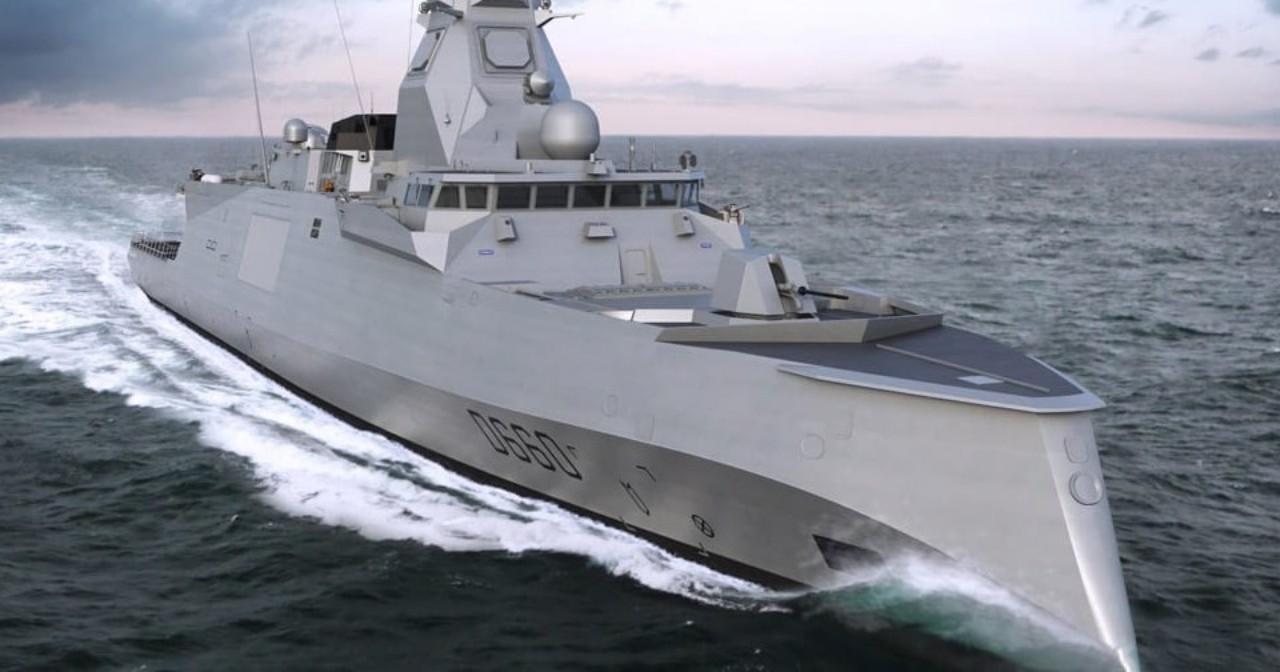
The four ships will be based on Naval Group’s Frégate de Défense et d’Intervention design, already in service with the French Navy and on order for Greece. Displacing around 4,000 tonnes, the vessels are designed for air defence and anti-submarine warfare. The first fully equipped frigate is planned for delivery in 2030, with the remaining three following by 2035. The four ships will be named HSwMS Luleå, Norrköping, Trelleborg, and Halmstad.
The Swedish government intends to equip the frigates with systems from domestic industry, including Saab’s RBS15 anti-ship missile, Torpedo 47, G1X radar, and Trackfire weapon stations, alongside a 57mm gun and 40mm cannon from BAE Systems Bofors.
The vessels will also carry the Aster 30 air defence system, capable of intercepting ballistic missiles, and the CAMM-ER medium-range air defence missile currently being fitted to Sweden’s Visby-class corvettes.
The loss represents a significant blow for Babcock, which had been bidding with Saab on the Arrowhead 120, a design derived from the Arrowhead 140 pedigree that underpins the UK’s own Type 31 frigate programme.
The Arrowhead 120 proposal envisaged steel hulls built at Babcock’s Rosyth yard with composite superstructures constructed by Saab Kockums in Karlskrona, before final integration and outfitting in Sweden. Had it succeeded, the programme would have created a degree of surface combatant interoperability between Sweden, the UK, Poland, and potentially Denmark, all of which are either procuring or considering Arrowhead-family vessels.