
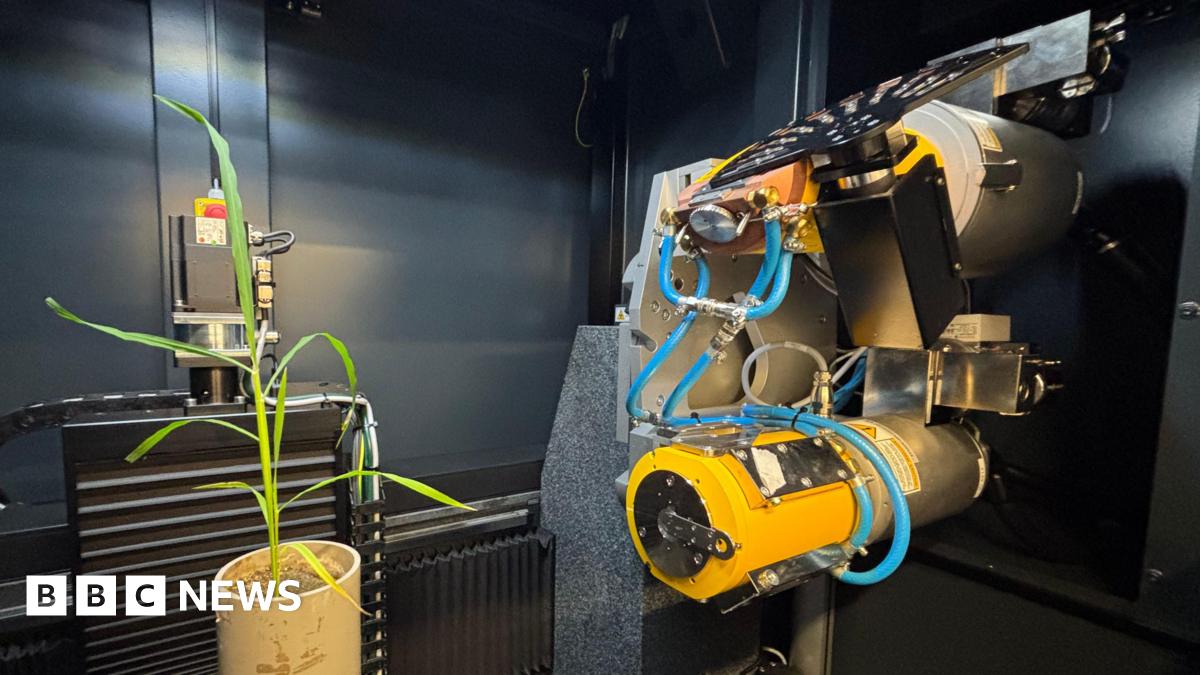
The researchers are experimenting with rice plants with climate-resilient gene variants in special “growth rooms” at the university’s Sutton Bonington campus.
Professor Ranjan Swarup said the rooms allowed them to simulate conditions and see how different plants responded to heat stress and drought.
“In this day and age, when global food security is a big issue facing world agriculture and we have to improve food production in a sustainable way, we are looking at root traits which can improve resilience,” he said.
The rice plants are also analysed in a micro-CT scanner at the university’s Hounsfield Facility.
Hounsfield director Professor Craig Sturrock said it allowed researchers to visualise how roots responded to changes in climate without damaging them.
“There might be a deeper, steeper root angle that gives that plant a benefit to capture more water that’s deeper into the soil profile, and we can then identify which gene controls that and use it in a breeding programme,” he said.
The Nottingham team has been working with other scientists and rice breeders at the International Rice Research Institute (IRRI).
Plants with the identified gene variants are due to be tested under “field conditions” for three years in the Philippines, where the IRRI is based.
“We’re working with them to measure the right things so we can understand the biological origins of heat stress tolerance and drought tolerance,” Murchie said.