
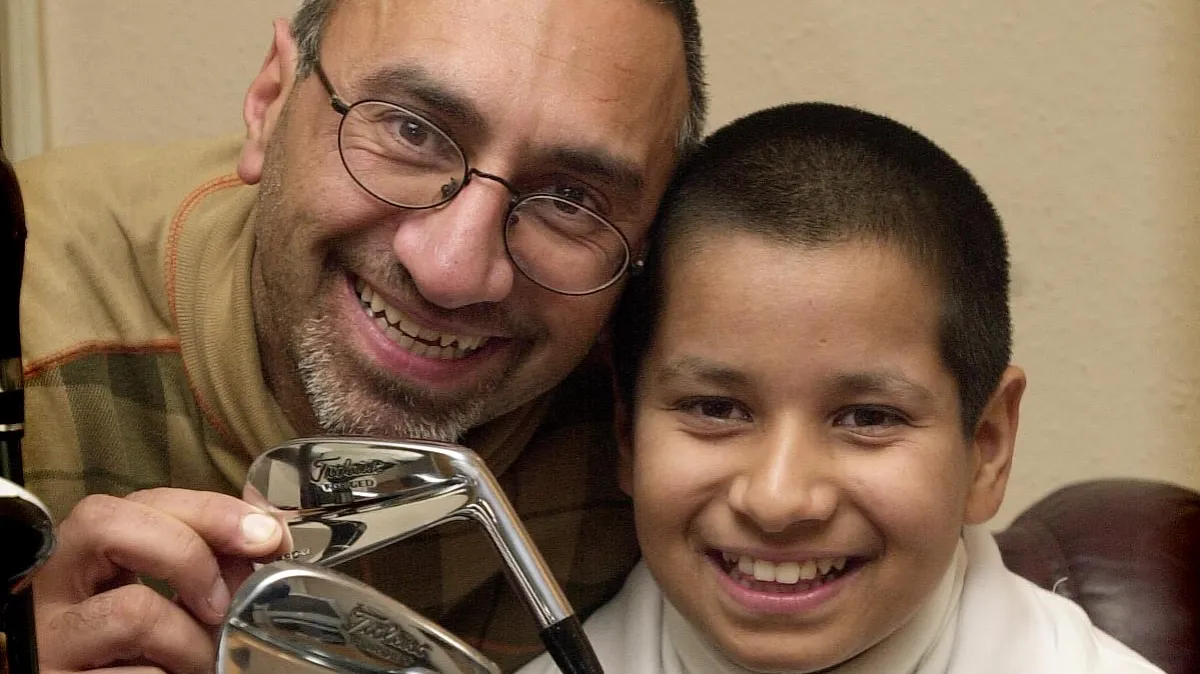
I have to confess that I knew nothing about the backstory of Aaron Rai as I settled down to watch the final round of the US PGA Championship, one of golf’s majors and a competition wreathed in history. This is the tournament where Walter Hagen made his name; where Jack Nicklaus won five times across three decades; where Bob Tway chipped in from the bunker on the 72nd hole to defeat Greg Norman in 1986; where Tiger Woods and Bob May contested one of the most electrifying play-offs in history in 2000, Woods putting like a demon and May refusing to blink. Woods running after his birdie putt at the 16th will for ever be carved in the memory.
But nothing, for this viewer, is likely to ever eclipse the sight of an Englishman — the son of an immigrant from Kenya and one whose parents hail from India, whose father spent hours cleaning his irons with a pin head and applying baby oil to prevent rust, whose mum worked all hours as a mental-health nurse, who continues to wear two gloves because as a lad he was asked to by a local sponsor, who uses covers for his irons because his dad bought him a set of Titleist clubs when he was seven — making that monster putt at the 17th, a shot of mettle, composure and unadulterated joy.
Only after that putt, as the world rushed to figure out who on earth this guy is, did we find out about the facility in Wolverhampton where he learnt his craft, a place where the intimidatory effect of golf clubs — which I remember so vividly growing up, nervous even to go to pay for my green fees in case my collar wasn’t of the right size and shape — was deliberately put to one side. Talking to John Westerby for The Times, Ian Bonsor, the former owner of 3 Hammers Golf Complex, said: “We set the place up in 1986 and I wanted it to be an inclusive place. Golf could be a closed shop at the time, you had to wear the right clothes and that sort of thing. We said from the start that if you want to play golf in a T-shirt and trainers, that’s fine by us.” Amen.
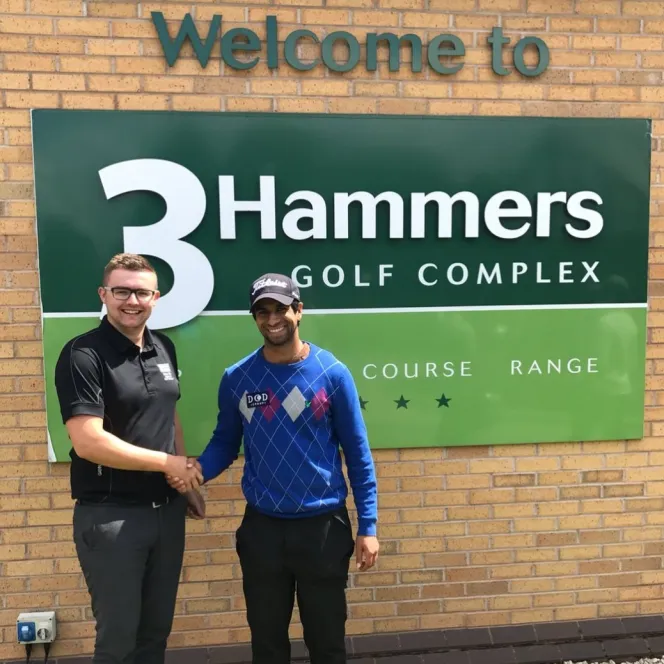 Rai describes the 3 Hammers Golf Complex as his “happy place”
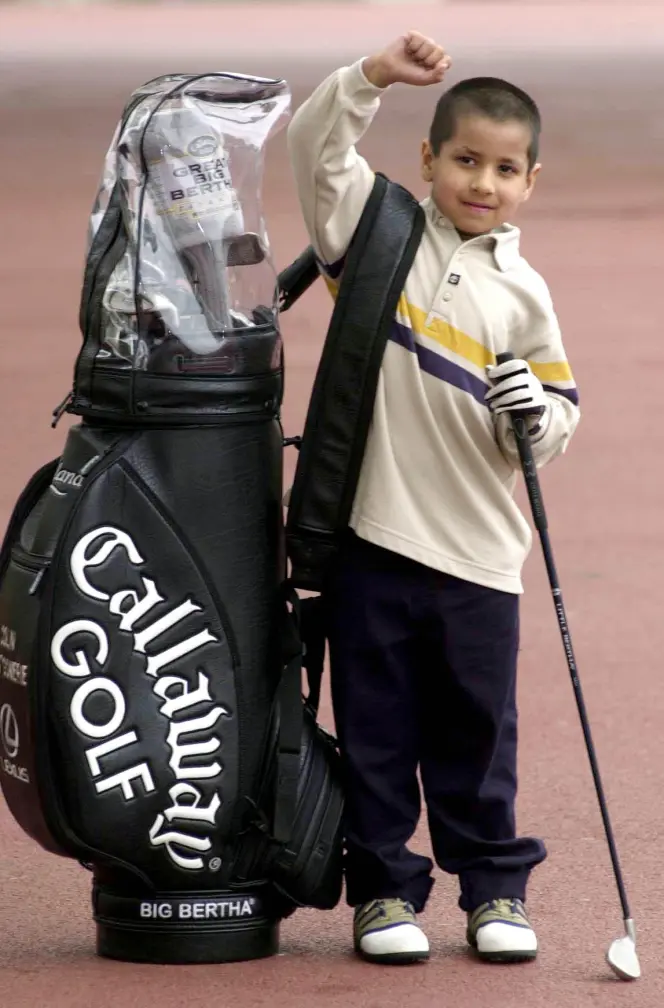 Rai’s talent was clear before he had even left primary schoolAlamy
We learnt, too, that Rai was four years old when he first started going to Hammers, that the work ethic of this youngster was evident before he had even left primary school and that he still likes going along to his “happy place” because the hustle and bustle of the environment teaches him to sustain his concentration when he’s on the putting green. Such is the methodical nature of this singular player that he once made 207 ten-foot putts in a row, a feat that, if you stop and think about it, almost defies credibility. I guess I am not alone in glimpsing the influence of his parents on this feat of patience and sustained concentration.
And perhaps I may say this too. We are inclined to give credit to the parents and support team when a guy like Rai succeeds; when they lift the trophy; when they pocket the winner’s cheque. But I can’t help thinking of the hundreds, perhaps thousands, of parents who put their lives into their children’s sporting careers, who woke up early, who went to bed late, who offered lessons on hard work and resilience, but whose kids never won a major title, or perhaps even turned professional. The duality of sport — both its grandeur and its beautiful cruelty — is that many aspire yet precious few succeed.
But here’s a thought that I hope I can convey adequately: had Rai not won the US PGA, had he never even made it on to the PGA Tour, he would — I suspect, I hope not without reason — have become a valued member of whatever profession or community he had been a part of. With the love and example of parents like that — hard-working, diligent folk, who were widely admired in the local golfing milieu — he had a start in life that would have proved priceless whether he had gone on to become a coach, teacher, doctor or, like his mother, a superb nurse.
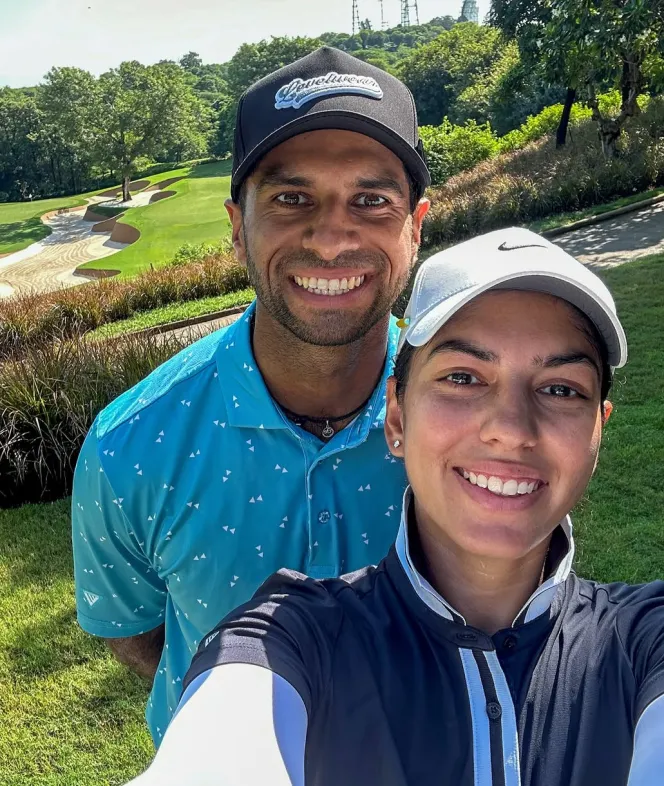 Bishnoi, Rai’s wife, was adamant that fame would not change them after his US PGA triumph
It is sometimes said that sport teaches character. I have never really believed that. I have seen sportspeople become selfish, venal and corrupt. What matters is the values to which young sportspeople are exposed, the culture in which they develop. Perhaps all quotations oversimplify the complexity of human life, but I have always been drawn to the Ancient Greek proverb: “Give me the child until he is seven, and I will show you the man.”
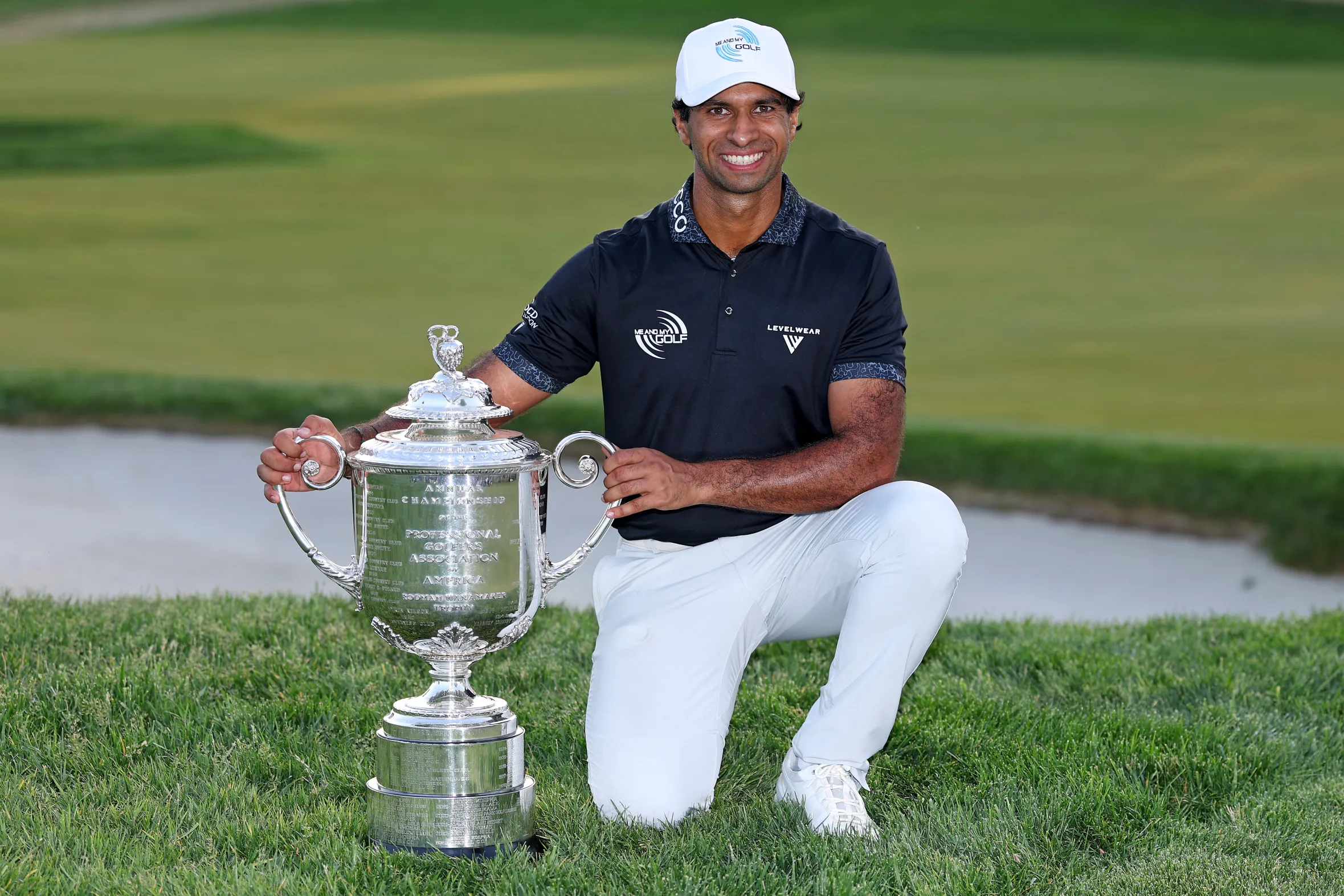 Rai became the first Englishman to win the US PGA Championship for 107 yearsRichard Heathcote/Getty
In the case of Rai, perhaps the most eloquent testimony to the values in which he was immersed came from his fellow professionals in the hour of his triumph. “You won’t find a person on the property who’s not happy for him,” Rory McIlroy said. Jon Rahm, who came second, said: “There’s very few people that are nicer and kinder human beings than Aaron Rai.” Ludvig Aberg, who played alongside the Englishman on Sunday, said: “If there’s one guy I’d love to lose to, it’s probably him.” Xander Schauffele put it simply: “[He is] an all-world gentleman.”
I suspect Rai’s parents — and perhaps his wife, Gaurika Bishnoi, too, who said that fame “won’t change us” — will take as much pride from that testimony as the victory itself, and quite right, too. In a rather dispiriting period of cultural fractiousness and political contention, this story has been like a ray of sunshine. As Rick Broadbent put it in a wonderful piece about Rai’s journey, as a golfer and a man: “He’s an all-world gent and a champ to cherish”. Hear, hear.