
The top neurosurgeon put his own career ahead of the woman’s health, a misconduct tribunal heard
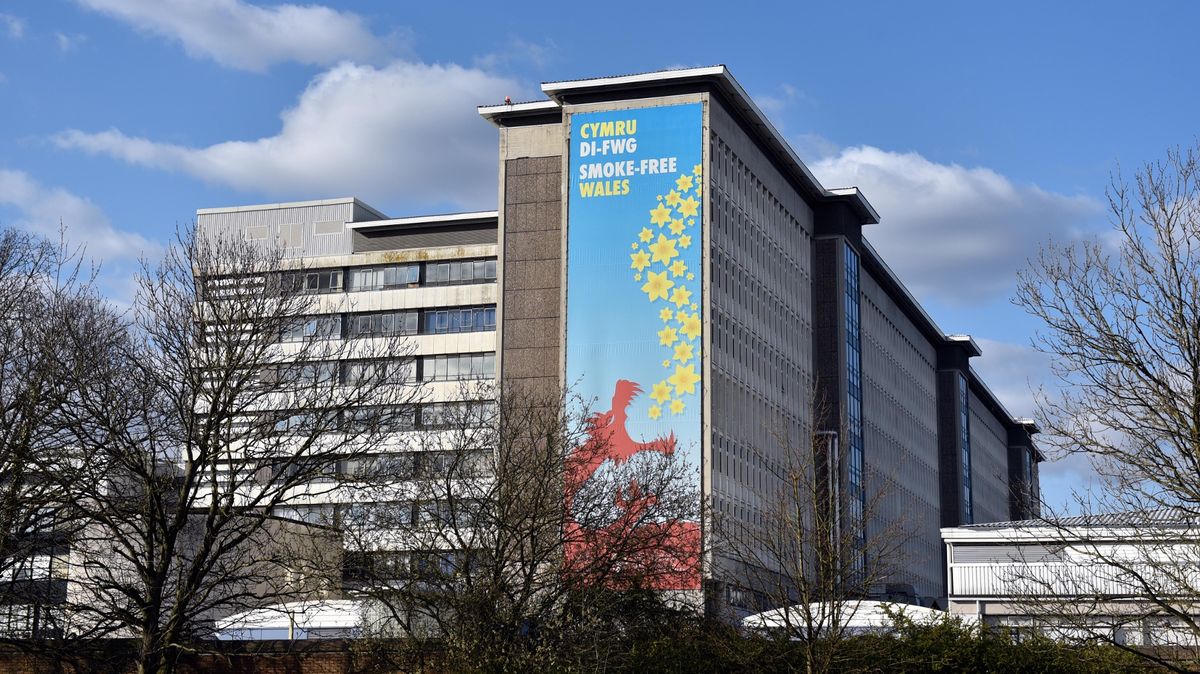
General view of University Hospital of Wales, Cardiff(Image: WalesOnline)
A surgeon was in a sexual relationship with a patient while prescribing her highly addictive painkillers under the counter. He claimed he was “blackmailed” into continuing the supply of drugs as he feared she would expose the relationship.
Dr Chirag Patel, a consultant neurosurgeon at University Hospital of Wales, qualified from an Indian university in 1994 and moved to the UK eight years later. He has worked at the hospital in Cardiff since 2015, his misconduct tribunal heard.
The panel was told Dr Patel first operated on the woman (Patient A) in February 2019, removing the damaged part of a disc in her spine, and then performed further surgery on her in August that year. The following month they began a sexual relationship.
He would go on to operate on the patient a third time, inserting a spinal chord stimulator in December 2021.
Tribunal chair Remi Alabi said: “By February 2023 the relationship had deteriorated. Patient A made accusations against Dr Patel to the police in February 2023.”
Police did not pursue the allegations but did notify Cardiff and Vale health board, which runs the hospital. A disciplinary investigation then began.
Up to January 2023, Dr Patel had prescribed the woman an opioid painkiller known as MST (morphine sulphate tablets) as well as an addictive muscle relaxant, diazepam.
He did this without informing her GP or making a note in her records, and he continued with the prescriptions even after she had missed appointments.
A barrister for the General Medical Council (GMC) argued the woman was vulnerable due to a previous drug addiction, although the doctor claimed he was not aware of any “ongoing dependency”.
Dr Patel admitted the sexual relationship and sending the patient “explicit images”. He was “going through some marital difficulties” at the time his relationship with the patient began, said Mrs Alabi.
The doctor said: “When I persisted in telling her that the relationship had to end, Patient A threatened to reveal our relationship to others, such as my employer and colleagues.
“I was afraid if she did so I could lose the job I so loved and had worked so hard to obtain. Given my speciality this would have a knock-on effect on other patients if I was unable to work.
“With the benefit of hindsight I know I should nonetheless have ended the relationship and been honest with my employer. However, at the time I felt panicked and unable to break it off – a decision I now bitterly regret.”
The panel concluded the patient was “vulnerable” and that her repeated requests for painkillers may have been the result of addiction – a risk the doctor should have recognised, said Ms Alabi, who added that he had shown “a reckless disregard for patient safety”.
“Dr Patel had put his personal interests – namely securing his career, reputation and family relationships – above Patient A’s proper care,” she said.
The panel heard a voicemail left for the surgeon by the patient, demanding she “have that prescription” and threatening to report him to police.
She went on: “Chirag, you had one chance, two chance, three chances and more chances. You’re in the country doing your job, I don’t want to f*** you over but my spine is f***ed, right?
“I’ve given you chance after chance after chance. Do you know what? I could just write a book on you, okay? You going to man up and meet me, or are you going to be a cowardly c***, like I think you are? You’re no God, love.”
In his evidence, Dr Patel claimed: “I would only see her under the threat of blackmail and to appease her. Any romantic or friendly relationship had completely ended at this point, and our ongoing relationship was based purely on hostility and blackmail by her towards me.”
He went on: “Patient A had asked for £11,000 previously, which I did not have, so I instead offered to give her £5,000 from my savings.”
Dr Patel claimed to be “deeply remorseful” for prescribing the medication while in the “personal relationship”, adding: “It is no excuse that I did this under the threat of blackmail and exposure.”
The tribunal was told the complaint against Dr Patel arose when the patient was in “a period of psychosis”.
The panel also heard from the hospital’s clinical director for neurosurgery, who said it would be “nothing short of a disaster for the people of Wales” if Dr Patel were to be barred from practising medicine.
Dr Patel was the only surgeon in NHS Wales able to carry out certain surgeries for neuropathic pain, the panel noted.
But the GMC barrister Robin Kitching argued he should be struck off, pointing to the panel’s own findings that there was a risk of him repeating his behaviour as he had not shown “sufficient understanding” of why he behaved as he did.
The panel took into account that the hospital would encounter “considerable hardship” should Dr Patel be struck off. They imposed an eight-month suspension, which they concluded was sufficient to “protect the public from the risks posed by Dr Patel’s misconduct”.
Get daily breaking news updates on your phone by joining our WhatsApp community here. We occasionally treat members to special offers, promotions and ads from us and our partners. See our Privacy Notice.