
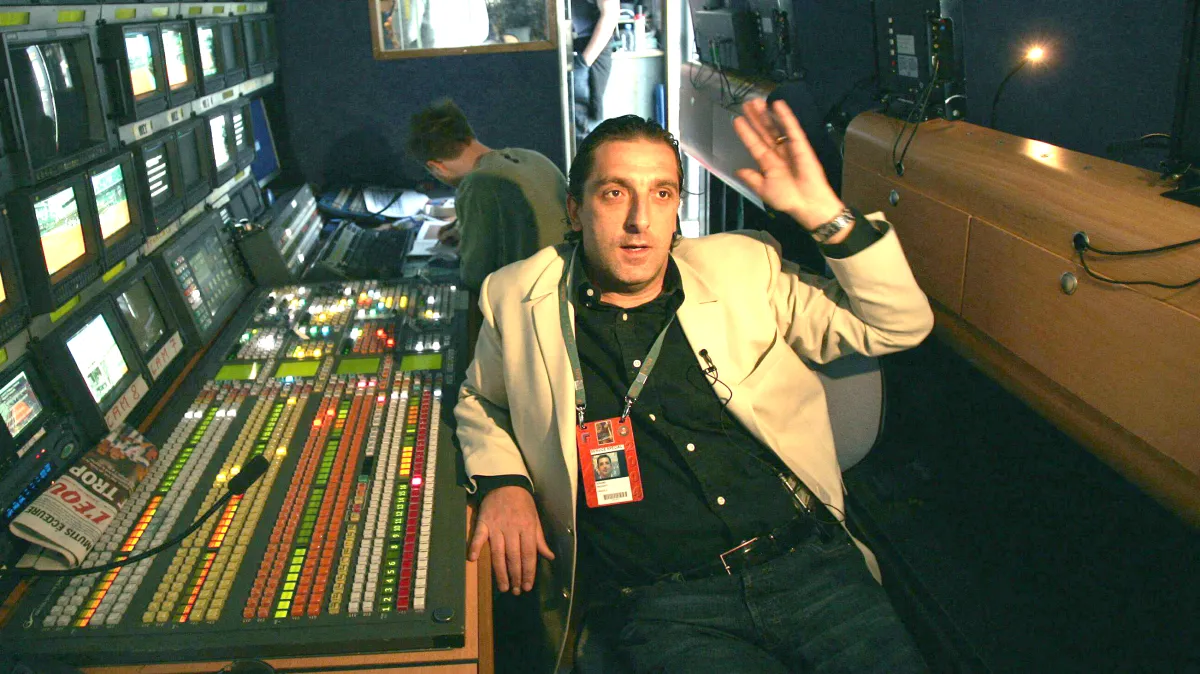
To enter the broadcast truck of a French rugby match, particularly as an overseas television match official, is to swing open the doors of a Wild West saloon.
There are walls of screens, buttons and sliders, headsets and countdown clocks, and as incidents flare on the field, there are eruptions of energetic chat between the on-field referee, his TMO and the most powerful man in the van: an infamous television director called Fred Godard, often clad in a leather jacket, puffing a cigarette. In these parts, Godard is seen as the sheriff.
“It’s a maelstrom of interaction,” says Rowan Kitt, a retired TMO who spent 30 years in and out of this partisan truck. As French tries go in, jubilant shouts go up. “I’ve been in Toulouse where I’ve not been shown a clear grounding, as the whole truck is celebrating the try,” another highly experienced TMO says. “I can personally vouch that they sometimes forget to speak English, when I know they can.”
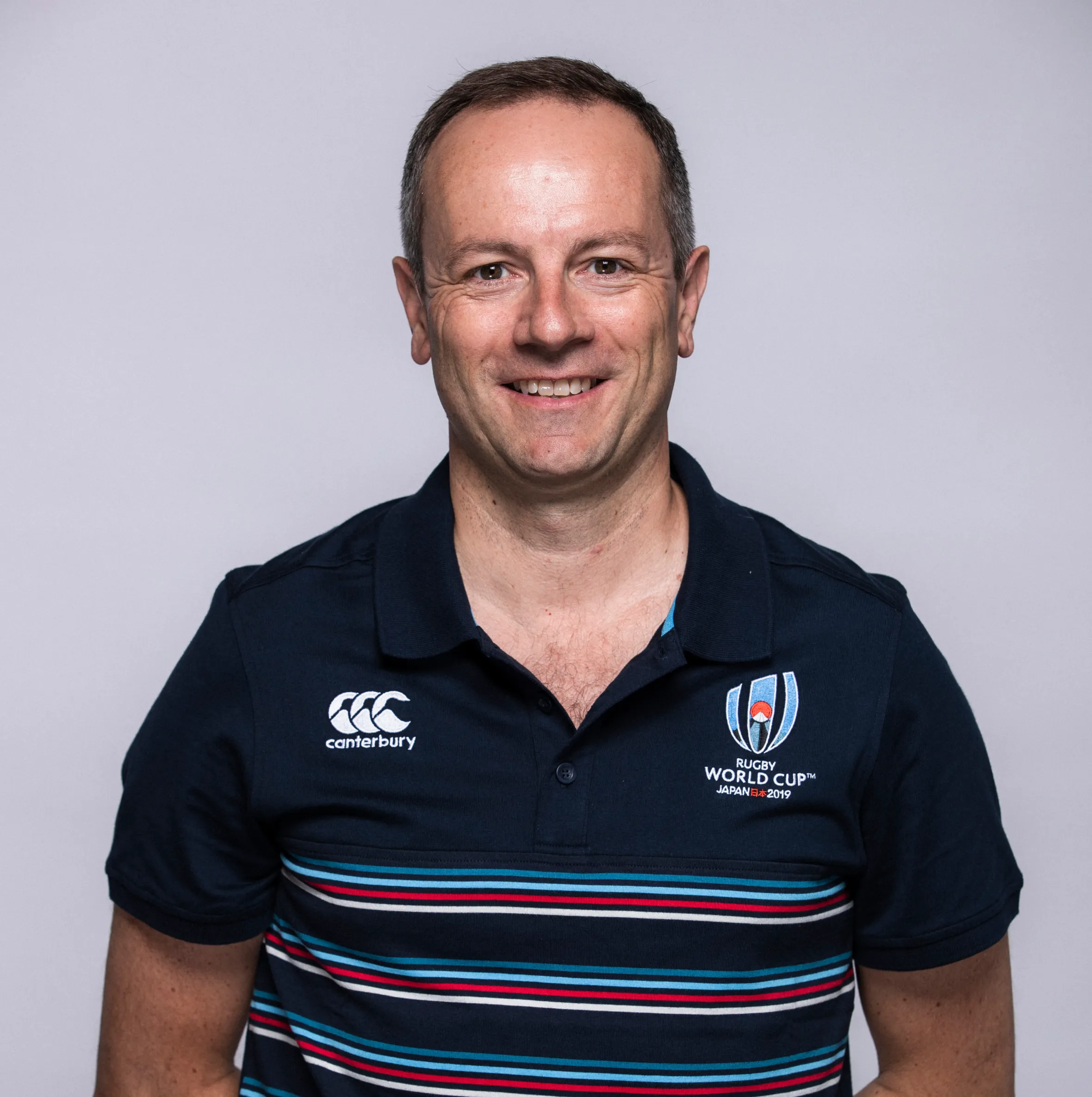 “When things got very patriotic, replays that clearly a TMO needs might be missing,” Kitt saysMichael Regan/World Rugby via Getty Images
The television truck serves a dual purpose. It is where broadcast directors and their production assistants sit, alongside the TMO. Often it is situated in an outside broadcast van in the stadium’s car park, or in a purpose-built room within the ground itself.
The television production system in France is more basic than elsewhere, comprising two screens — the live feed and a five-second delay. One director is in charge of all replays, often making them the sole arbiter of fairness and, sometimes, welfare.
“It’s absolute carnage,” Kitt adds. “When things got very patriotic, replays that clearly a TMO needs might be missing.”
Unwelcoming? Sure. Conducive to a productive day’s work? Unlikely. Fit for elite sport, where results have expensive consequences and player safety is paramount? Non.
Rugby’s “French television director” trope has endured through professionalism: the stereotype of a man, as one former official puts it, who is “looking at an attractive woman in the crowd, rather than someone taking a player’s head off”.
Sale Sharks, Northampton Saints, Harlequins and many other European clubs have lists of recent incidents they feel were ignored by monsieur le directeur. Bath were dismayed that Bordeaux Bègles got away with hitting Alfie Barbeary high in the French side’s home Champions Cup semi-final. Officially, none were deemed as red cards after the match, but the referees wanted more replays to review.
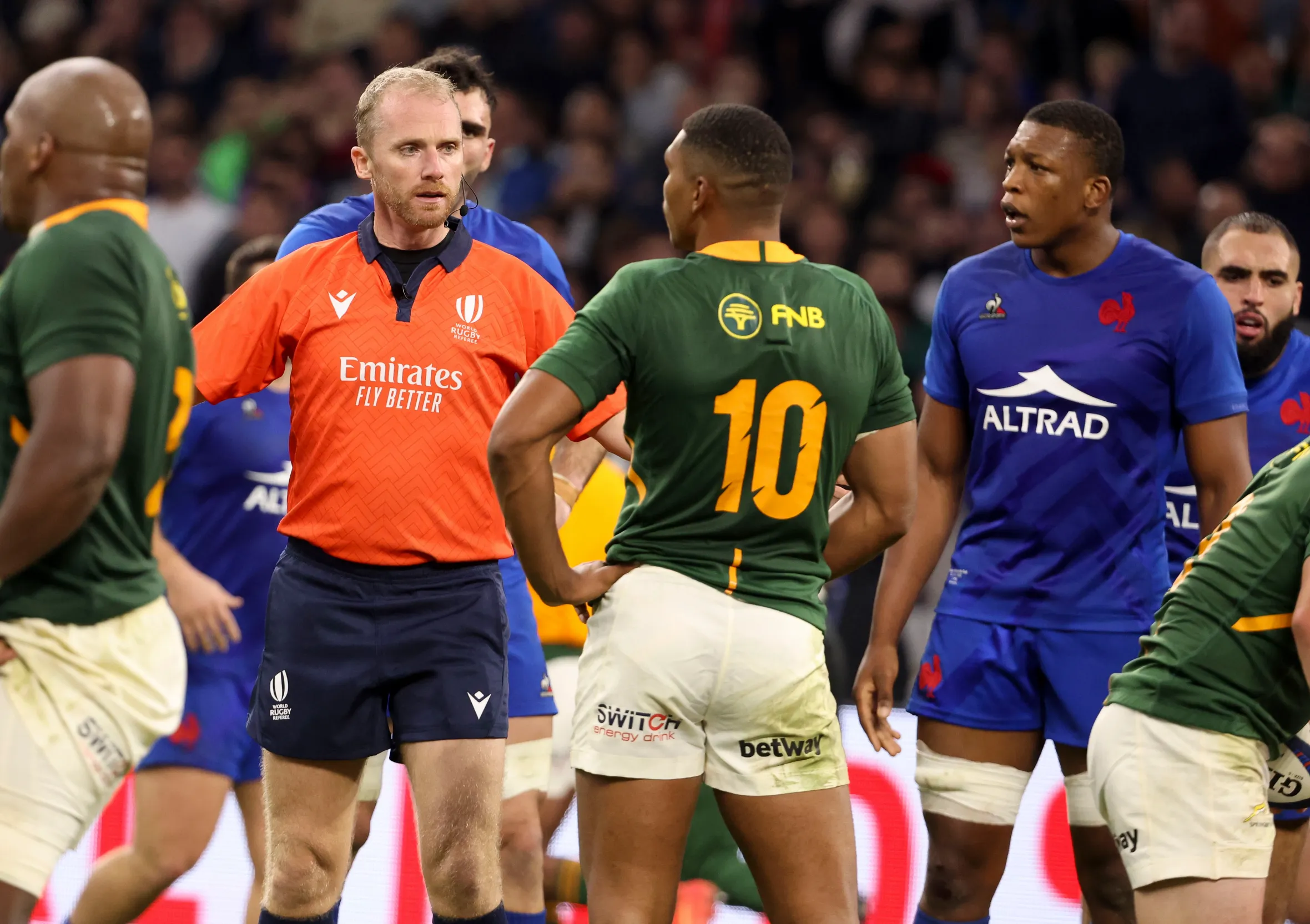 Barnes lost contact with his TMO in the final stages of a France-South Africa match, with France having just scored a tryJean Catuffe/Getty Images
In November 2022 Wayne Barnes lost communication with his TMO when France scored a 74th-minute try to beat South Africa 30-26. The line reappeared after Thomas Ramos had missed the conversion. A year earlier, in the Champions Cup semi-final between Toulouse and Bordeaux, the France hooker Julien Marchand flew into a tackle with no arms. Brian O’Driscoll described it as “the reddest of reds” and Marchand was later banned for four weeks. But at the time, there were no replays.
Like many before, Bath’s director of rugby Johann van Graan said that the failure to pick up Bordeaux’s high shot this month lay with the faceless French director. “We need to make sure the referees have got the footage they need,” he said. And yet he does have a face. For when you speak to referees, broadcasters and executives it becomes apparent that it is felt these potential issues often stem from one man: Fred Godard.
‘No one stands up to Fred in France’
Godard is a senior sport director for France Télévisions, the longstanding French rights holder of the European Cup and Six Nations matches on their soil. He directed Bath’s match in Bordeaux. “When I saw Fred’s name my heart would sink,” a TMO says.
He is described by colleagues as “highly strung”, “a powerful man” and an “old school” director. “No one stands up to Fred in France,” one industry insider explains.
Even Godard himself has declared his biases. In an article published by Télérama, a French cultural magazine, before the 2019 Six Nations, Godard proudly showed his hand. “The referees of an England-France match don’t see the same replays as those of a France-England match. I’m a bit of a patriot,” he said.
He then explained how he had hidden a hit from a Castres player during a European game. “The video referee asked me for the footage… Ah! I didn’t have it. If I had been English, I would have had it.”
There are other French directors, who work well for Top 14 broadcaster Canal+, and beIN Sports, but Godard is the king of France TV. Although he has remained in post for Six Nations and Champions Cup matches in France, he was not selected to direct his home World Cup in 2023 when World Rugby spent thousands installing a system for TMOs and replays via HawkEye.
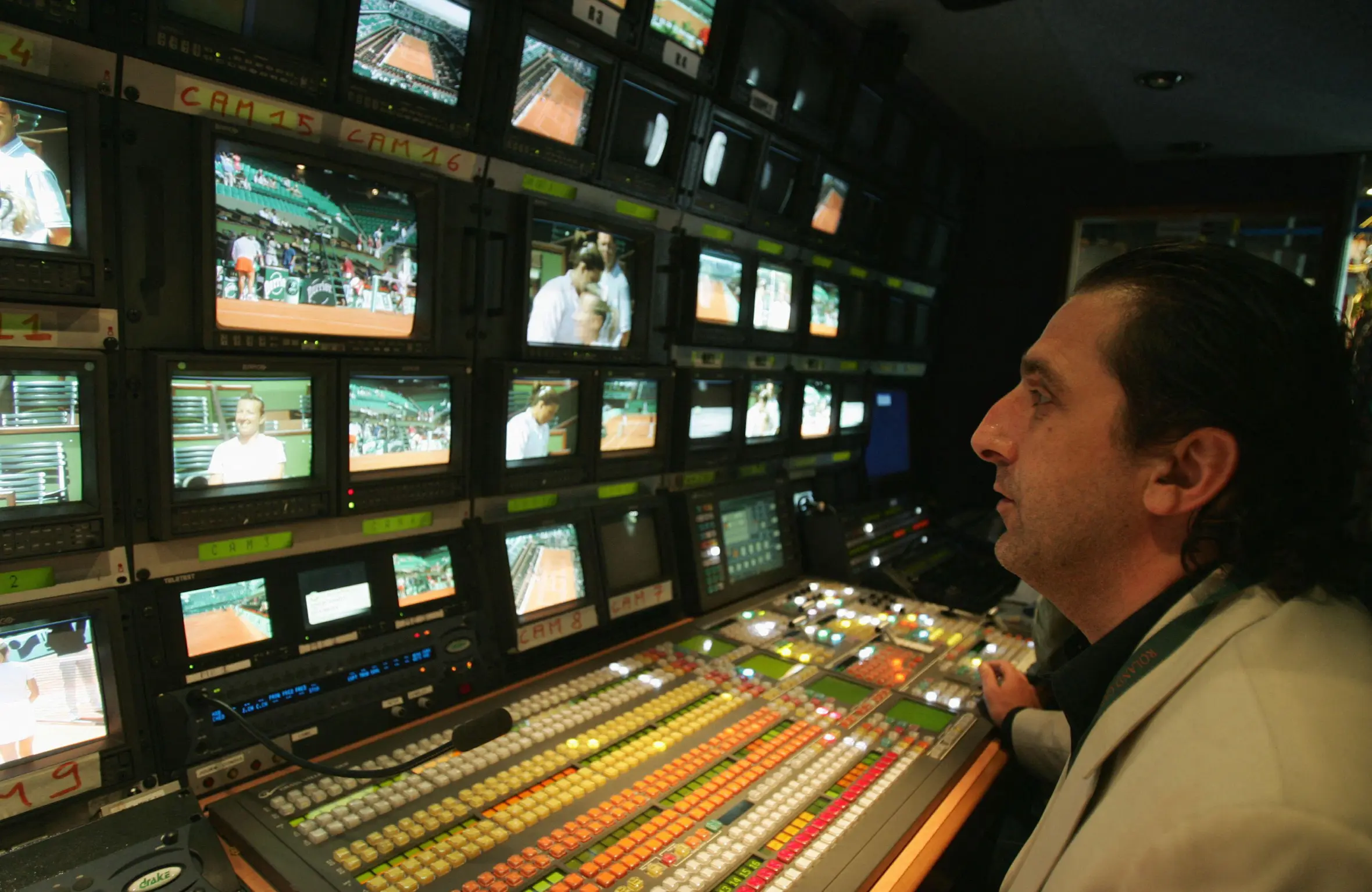 Godard was not chosen to direct in his home World Cup three years agoAlamy
The Six Nations has started producing more matches in-house, at a cost of about £200,000 per game. And for the Champions Cup final in Bilbao, between Bordeaux and Leinster next Saturday, European Professional Club Rugby (EPCR) has appointed an independent UK-based television director because there is no Spanish host broadcaster.
So could EPCR call time on France TV, who pay for the rights to the Champions Cup and Challenge Cup? “It would take a strong person to do that,” a source says. “But if I was the head of broadcasting there or at the Six Nations, I’d have conversations with France TV about whether Fred is the right man.”
Bath’s chief executive, Tarquin McDonald, wrote to fans last weekend to say they will challenge EPCR to “upgrade the technology it deploys to bring it in line with other global elite competitions”.
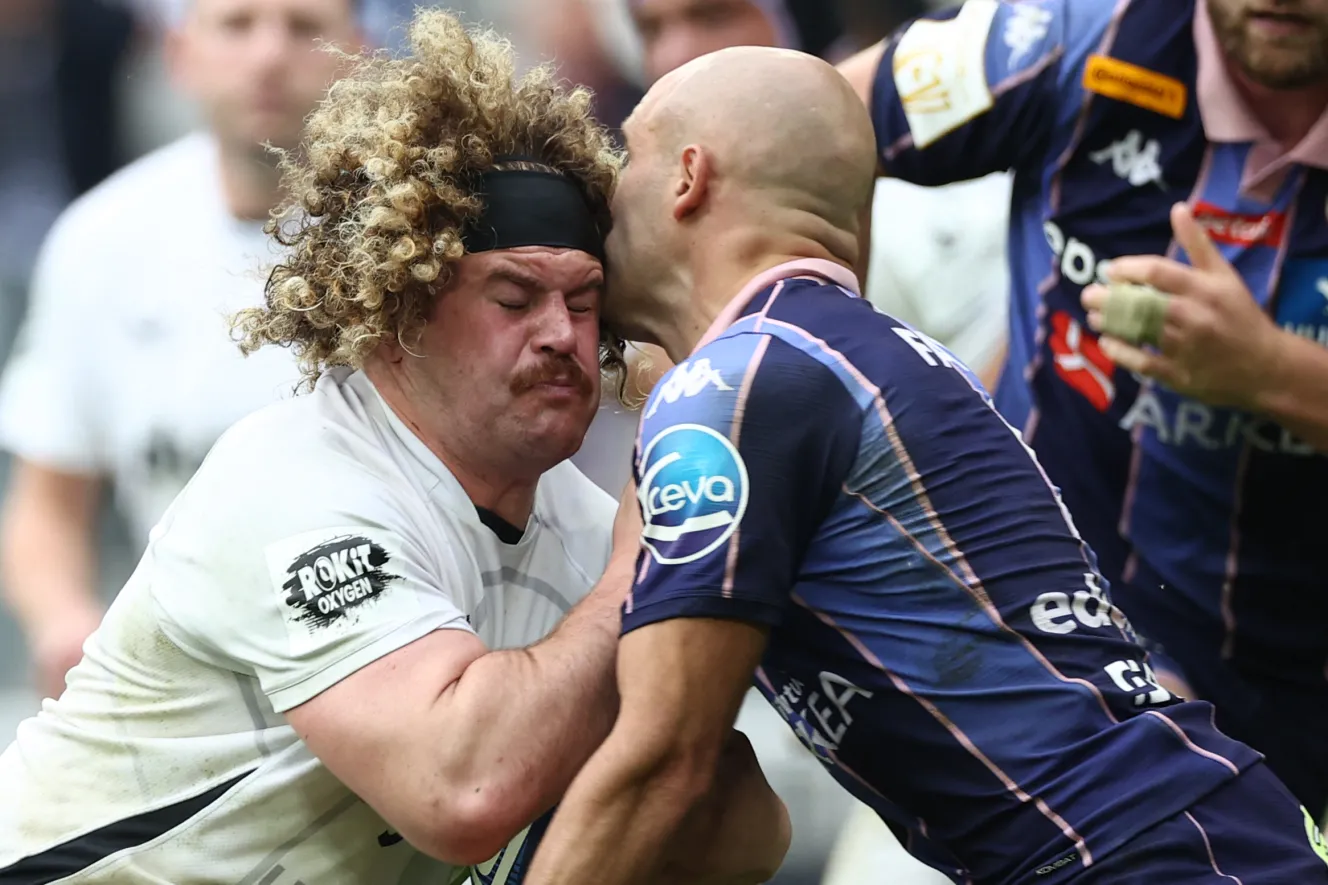 Bath want to challenge EPCR to upgrade its technology in the aftermath of the controversial Bordeaux gameROMAIN PERROCHEAU/AFP via Getty Images
Kitt says: “All this does is put fans off, through elongated processes, and it’s essentially unfair. Other countries might copy them and act in favour of the home team, which is unacceptable… in my view the referee should say, ‘The game will not restart until we see the correct angle.’”
EPCR sources remain confident in France TV’s ability to broadcast their matches, and believe they have had no major issues this season, despite the flare-up in the Bordeaux v Bath match. They are determined that France TV does adhere to their broadcasting standards. The Six Nations is happy to continue using France TV too.
Anonymity, accountability and accuracy
Generally, good people work hard in these television trucks despite viewing the system as “a mess”, with varying processes across competitions. It is not all bad news.
When England beat New Zealand 19-7 in the 2019 World Cup semi-final, Ben Youngs scored a legitimate-looking try, until the television director spotted a tiny knock-on and broadcast it to the referee, Nigel Owens, who struck off the try. That director was English.
The 2023 Six Nations produced a glaring error. James Lowe scored an acrobatic try for Ireland against France in a 32-19 win. With a directive to quicken the game ringing in their ears, the television crew missed broadcasting the vital angle which proved Lowe’s foot clearly was in touch. The responsible operator was stood down for 18 months.
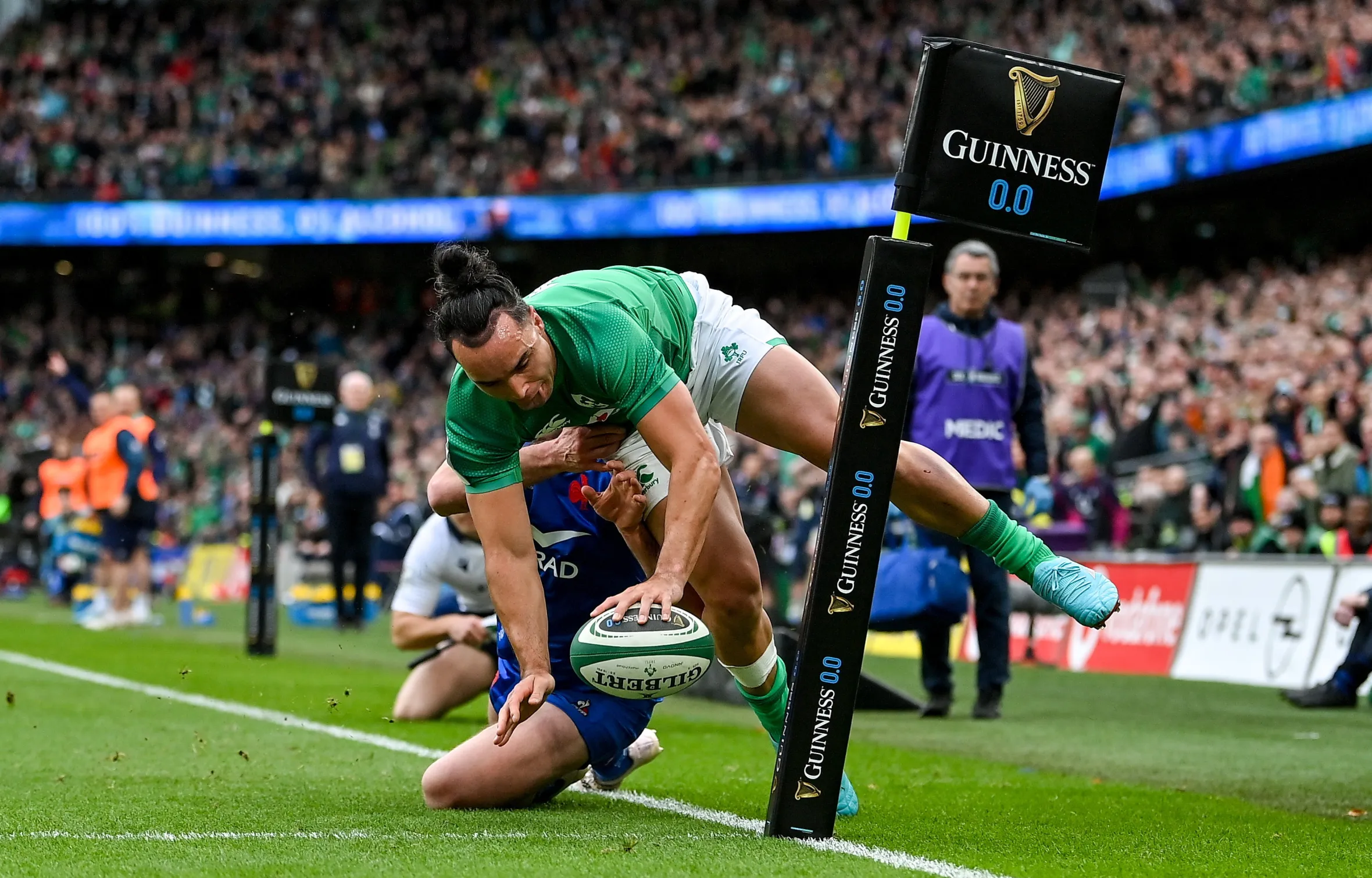 Lowe’s try against France was allowed to stand despite his foot being in touchBrendan Moran/Sportsfile
“They want their cake and to eat it; speed and perfection,” Kitt says. Is flow or infallibility more important? “We’ve stuffed the game with so much detail there’s almost no middle ground,” one top referee says.
Bordeaux v Bath had a sky-high 41 minutes ball-in-play time and yet many bemoaned a lack of TMO intervention, having also criticised last year’s Northampton v Bordeaux Champions Cup final for too many stoppages. Players appealing and dropping down after head contacts to force reviews challenge officials further.
Despite social media abuse, referees and TMOs do not want to be anonymous like VAR football operators, but say “we should not be held accountable when the system doesn’t allow us to do our job”.
TMOs asked to run their own replays, to cut out directors, but it was seen as too costly to send more of them to games. Clunkiness comes from huge variations in kit, so all they ask for is consistency — like teams do of them. Referees make far fewer mistakes than players.
“There’s still human fallibility,” Kitt says. “If you want AI refereeing, be my guest, but it’ll make it a different spectacle. There must be enough money to avoid these issues. If it’s more of a joke than in the Bath game, the sport is in big danger as the players won’t feel safe.”
France TV declined to comment.