
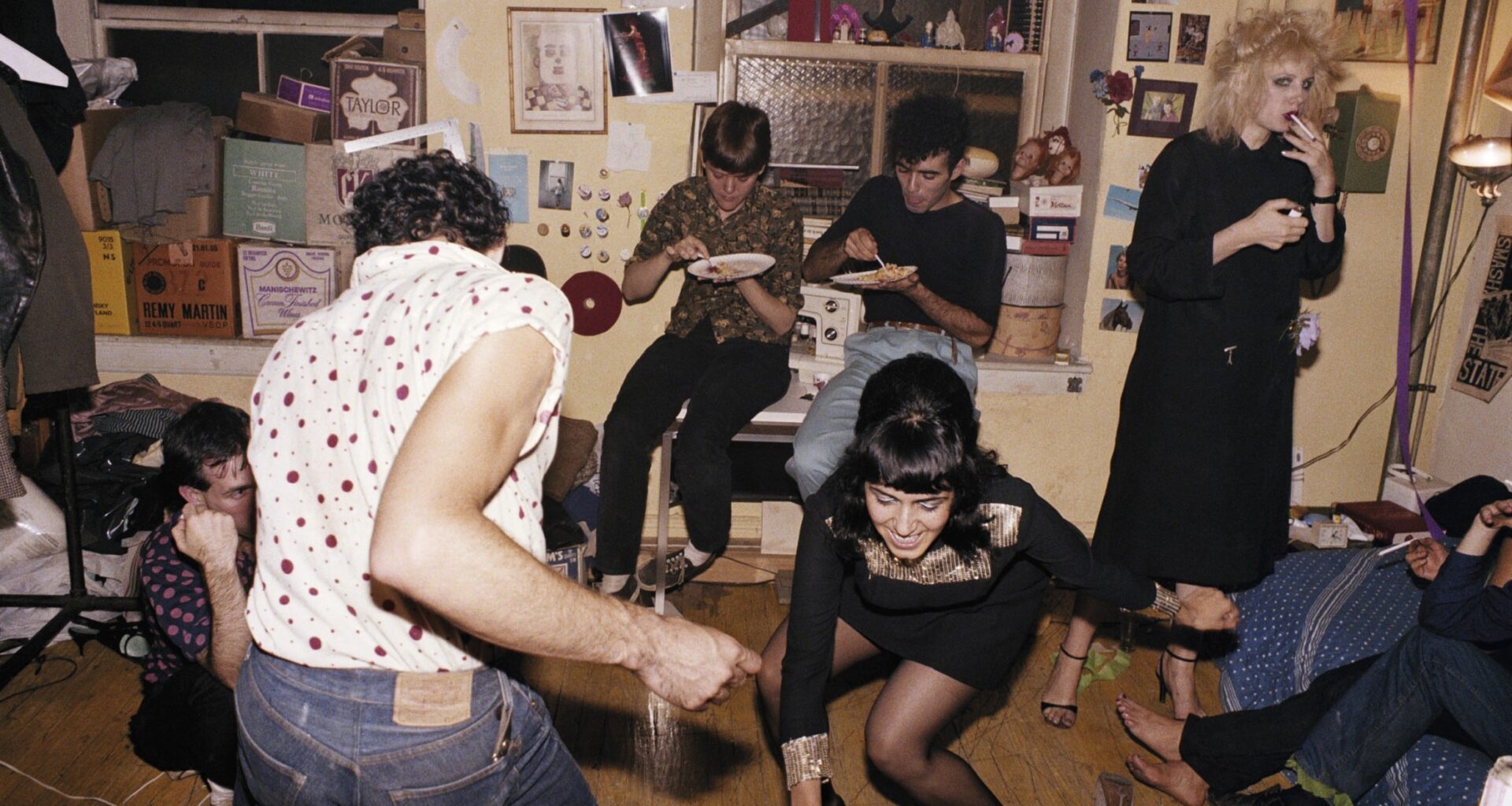
Five black pavilions, designed by the architect Hala Wardé, house her slideshows in the salon d’honneur of the Grand Palais. No path is imposed; one may as well enter by the beginning. “The Ballad of Sexual Dependency,” initiated in the late 1970s and first projected in New York nightclubs before making its mark at the Rencontres d’Arles in 1987, condenses 700 slides into 42 minutes.
The photographer celebrates her tribe: lovers male and female, drag queens, junkies, and other battered night creatures of the Berlin and Boston dawns. The soundtrack runs from the Casta Diva of Norma to the Velvet Underground, by way of James Brown; the title is borrowed from a song in The Threepenny Opera by Bertolt Brecht and Kurt Weill, premiered in 1928.
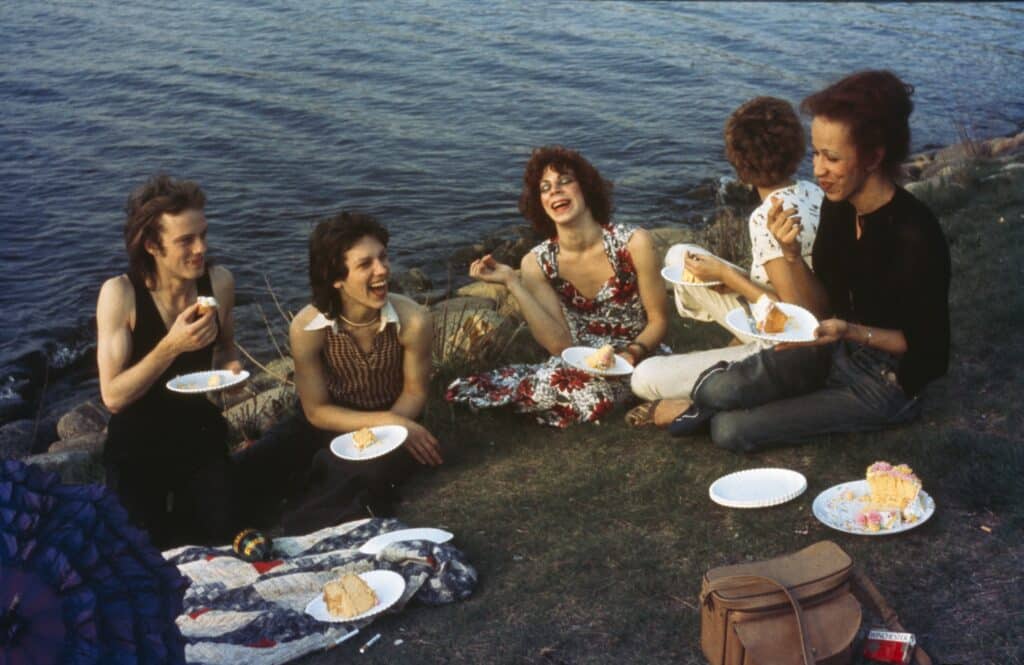
Picnic on the Esplanade, Boston, 1973. © Nan Goldin
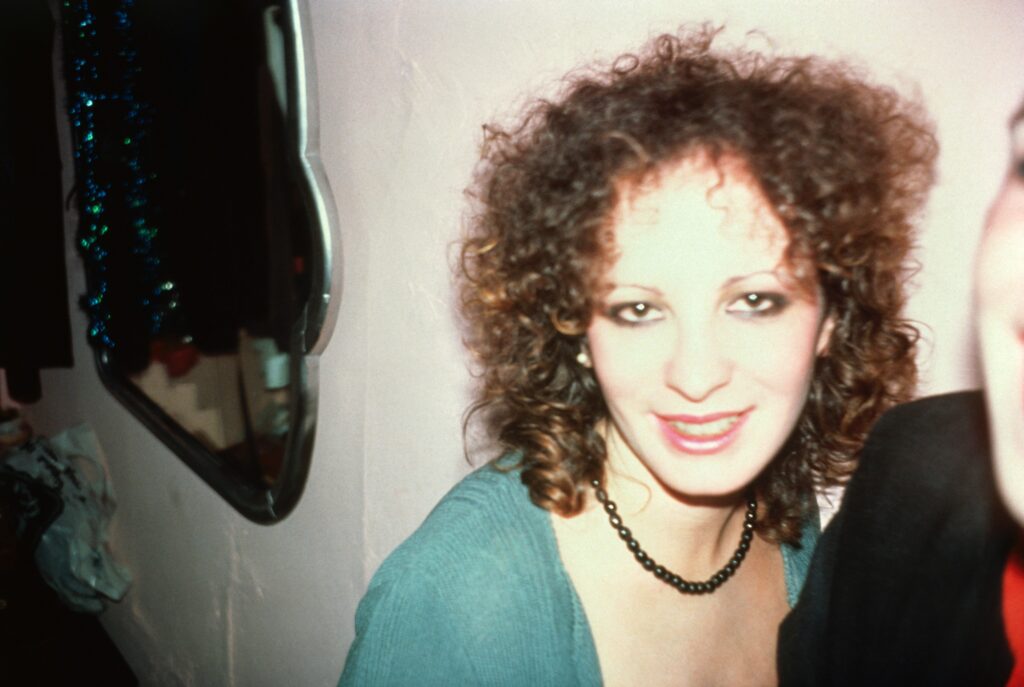
Untitled, 1982. © Nan Goldin
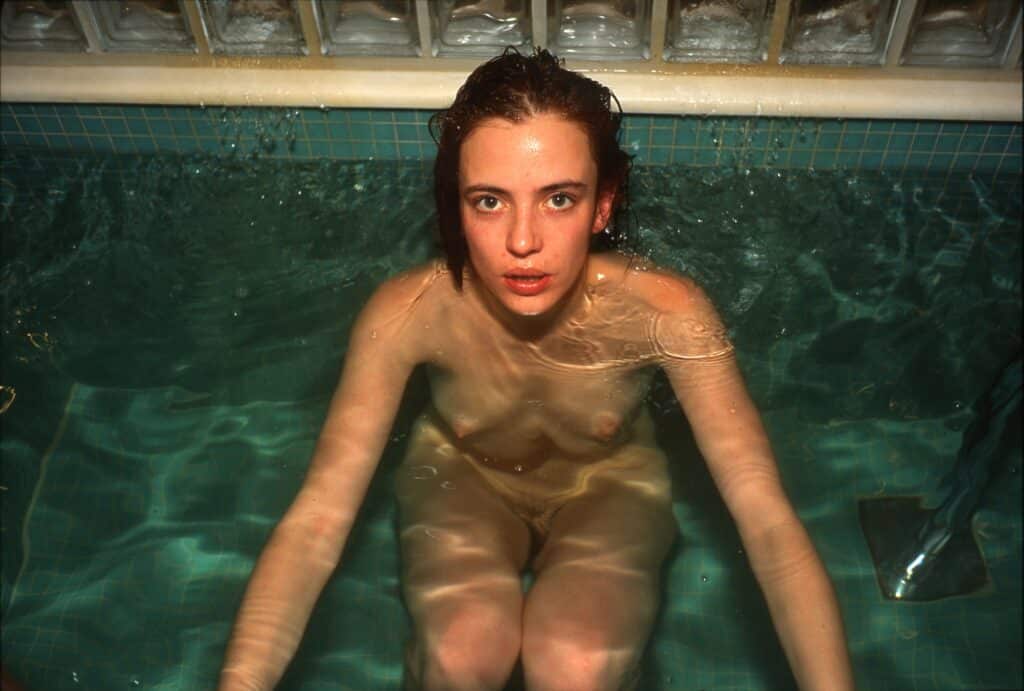
Amanda at the sauna, Hotel Savoy, Berlin, 1993. © Nan Goldin
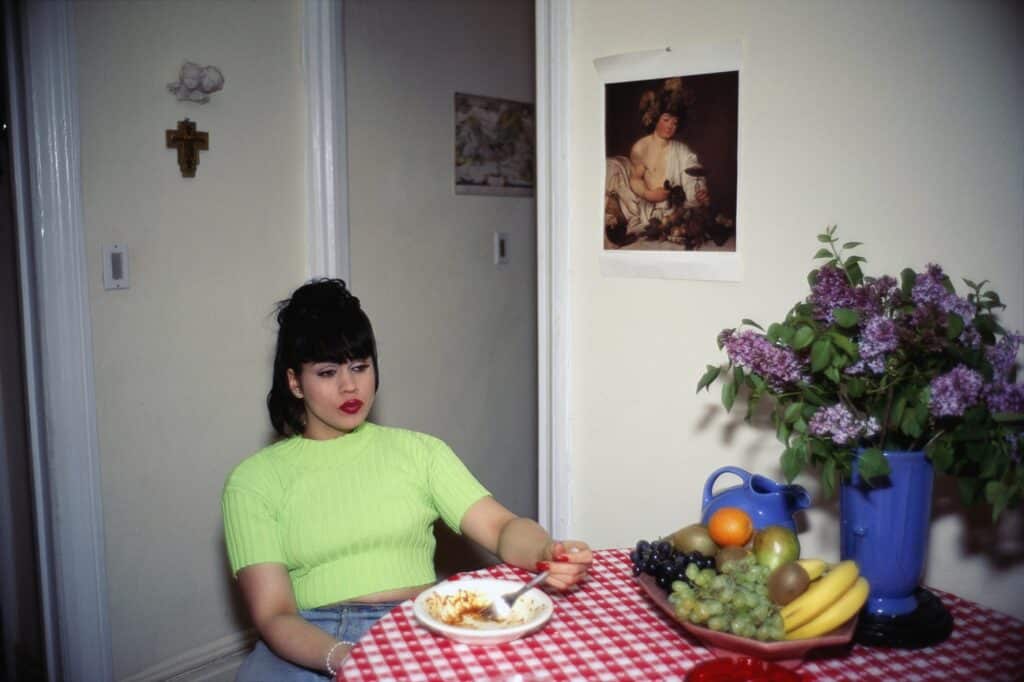
Gina and Bruce’s dinner party, NYC , 1991. © Nan Goldin
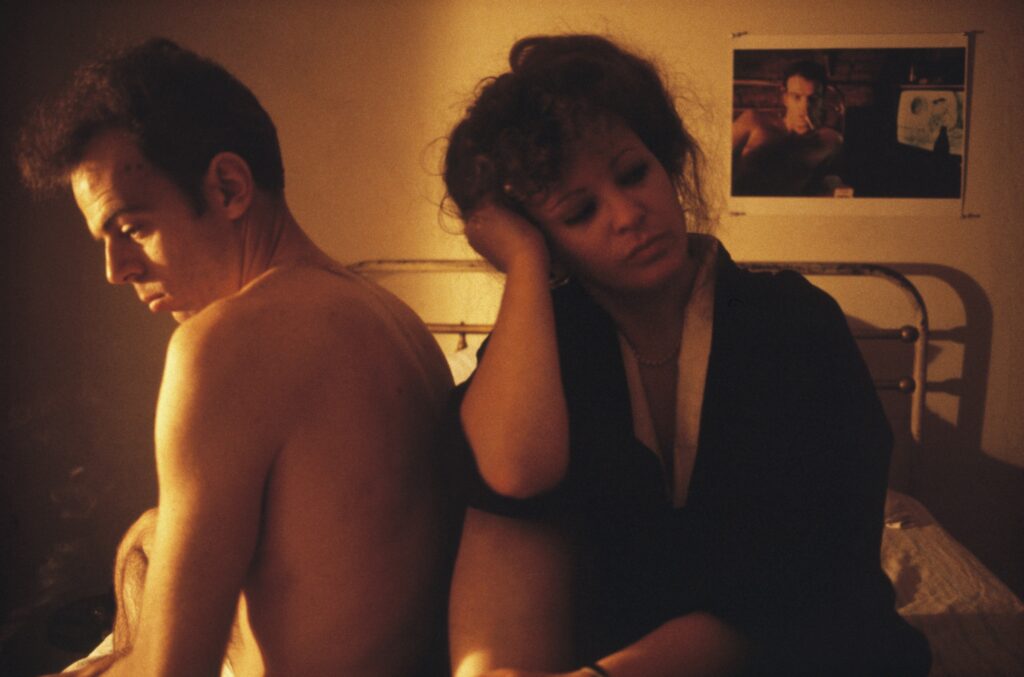
Brian and Nan in Kimono, 1983. © Nan Goldin
Forty years on, the very awkwardness of the editing still moves: blunt cuts, abrupt sequencing, the handmade charm of the mixtapes and Polaroids that were traded back then. Goldin tears away a veil, that of a marginal world as no one had ever seen it before, without glamour or distance. This is the door through which so many art students entered her work. This is the door one returns to.
“The Other Side” (1992–2021) extends that first shock. Named after a Boston bar where the young Goldin lived in the early 1970s alongside a group of drag queens, the slideshow celebrates, between 1972 and 2010, the gender euphoria of her trans friends. Teased beehives, gold bralettes, steel-blue wigs, motels, cabarets: pride stands in for a kingdom, and death already prowls.
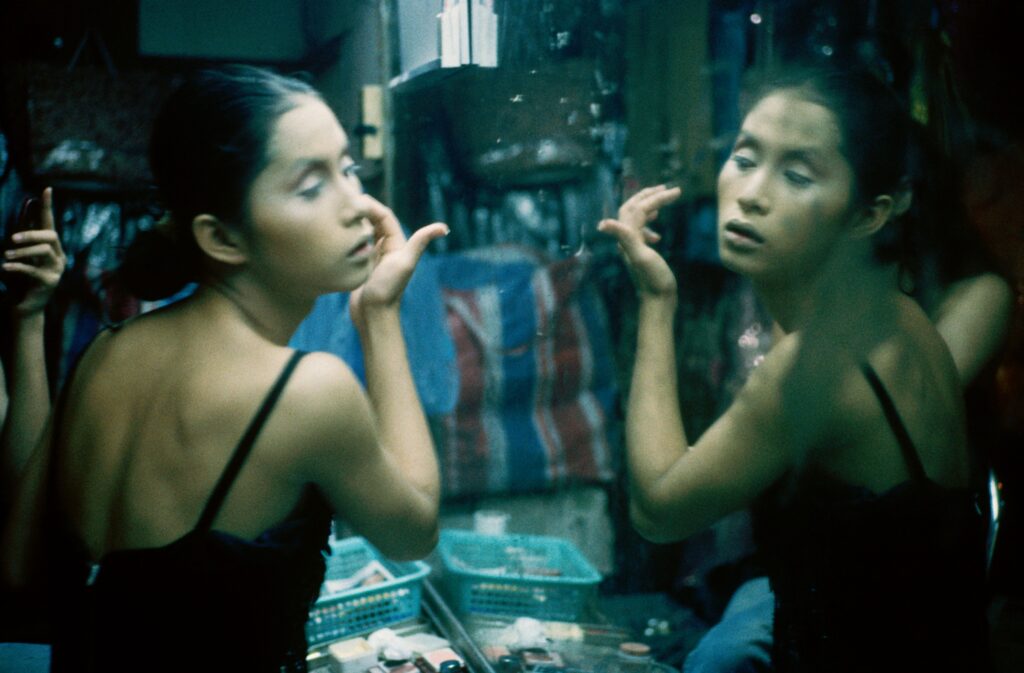
C putting on her make-up at Second Tip, Bangkok, 1992. © Nan Goldin
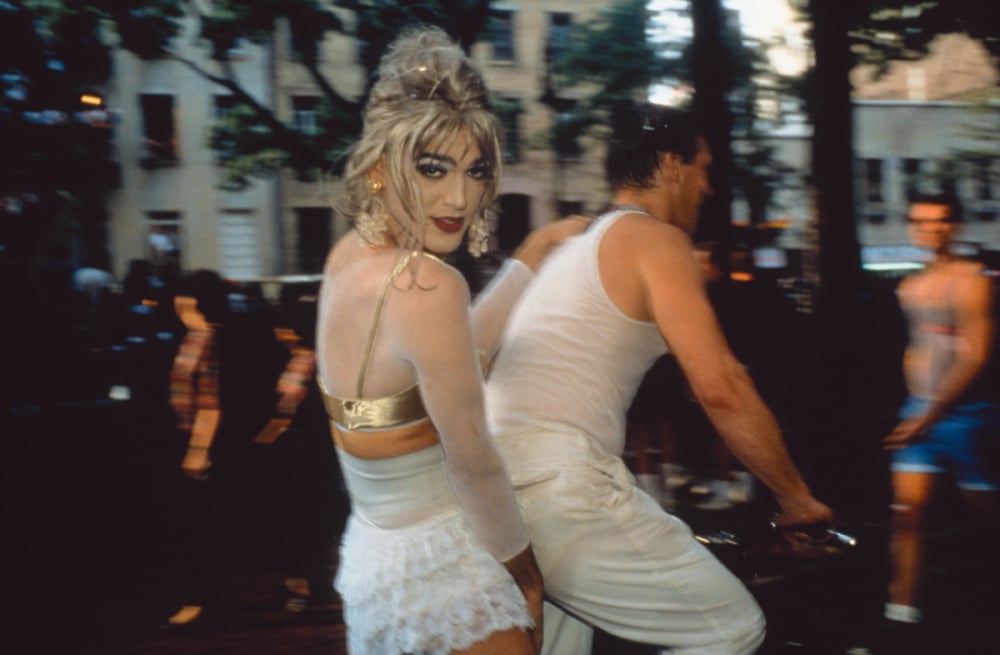
Jimmy Paulette on David’s bike, NYC, 1991. © Nan Goldin
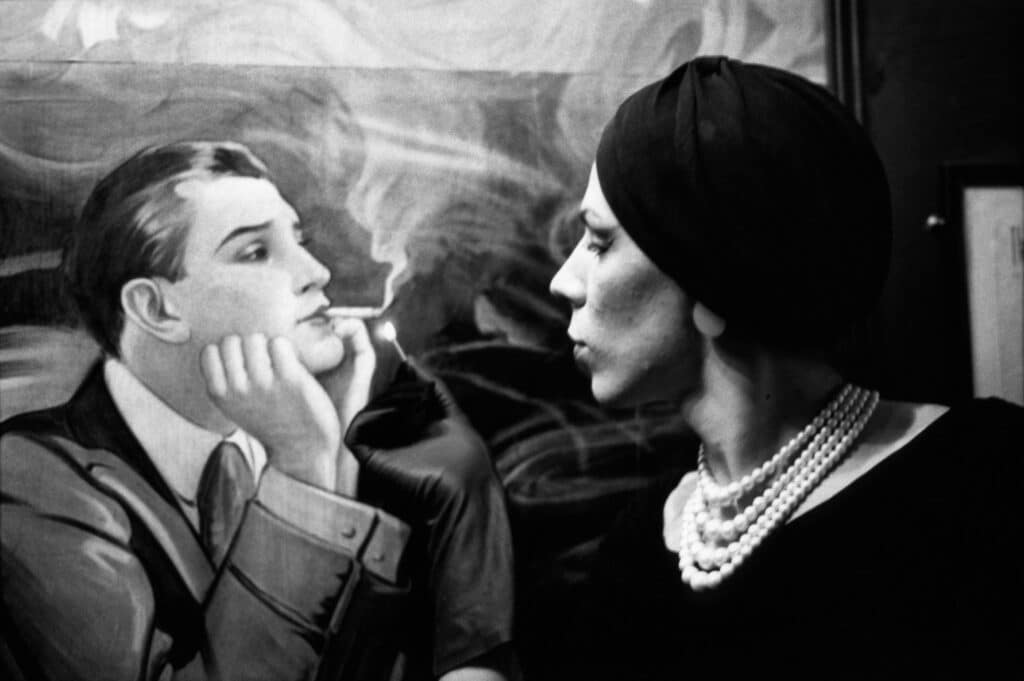
Christmas at The Other Side, Boston, 1972. © Nan Goldin
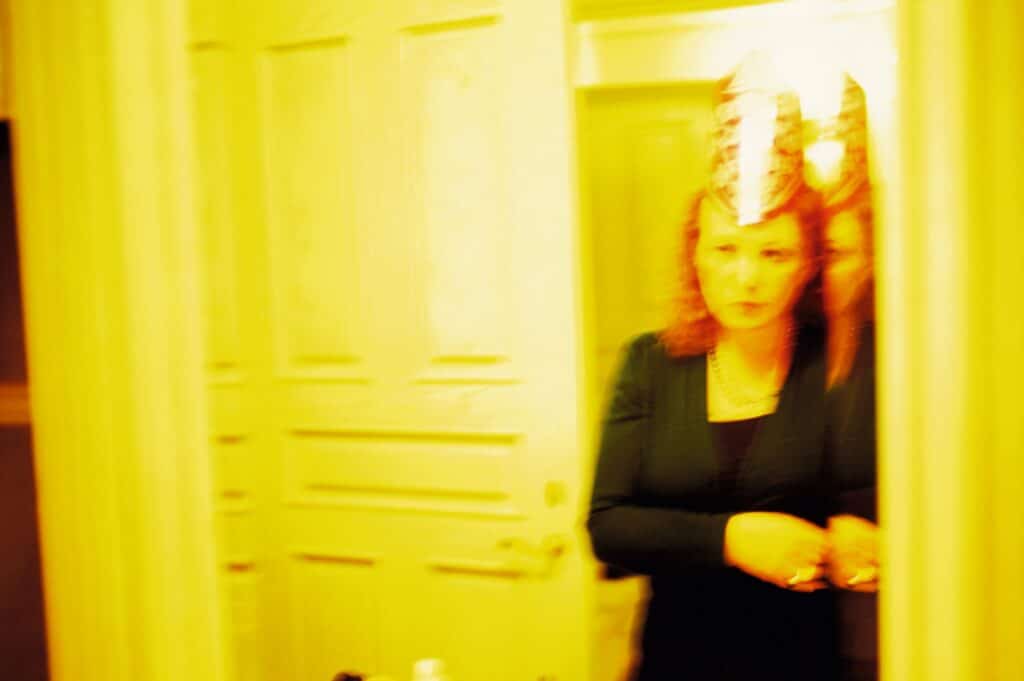
Self Portrait at New Year’s Eve, Malibu California, 2006.
© Nan Goldin
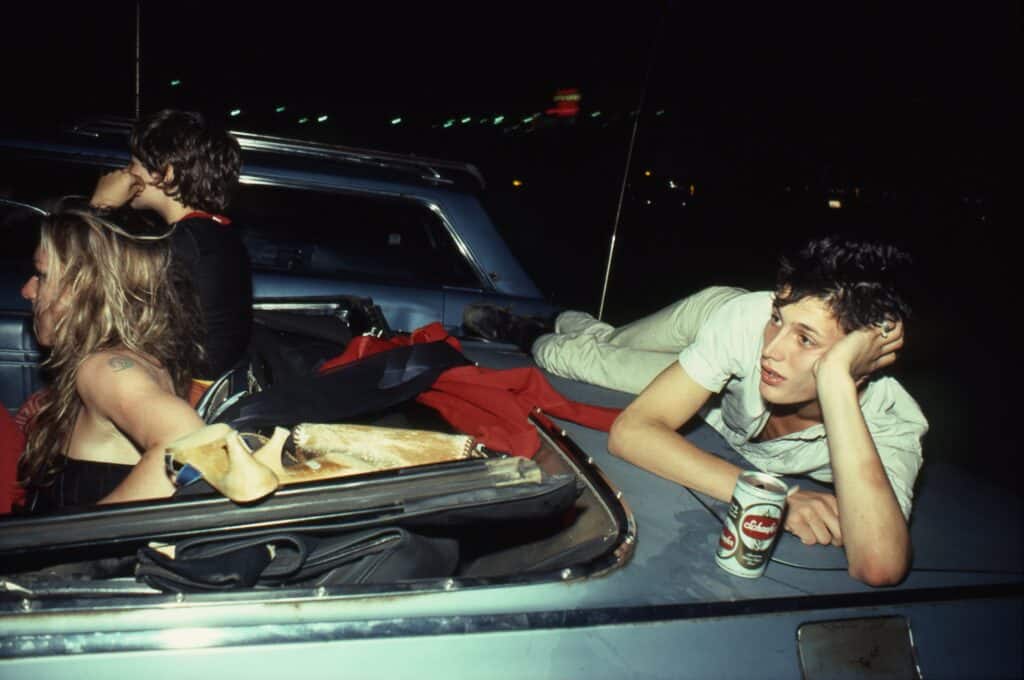
French Chris at the Drive-in, N.J, 1979. © Nan Goldin
“Memory Lost” (2019–2021), the third slideshow, plunges into the shadows of addiction: the images are blurred, punctuated by messages left on answering machines in the 1980s, the score by Mica Levi (the British composer behind the soundtracks of the films Under the Skin and Jackie) and pieces by Soundwalk Collective. One shudders hearing the voices of her lost friends; one shares her claustrophobia, that of a life on opioids. There, in the organic matter of lived experience, Goldin remains sovereign.
Then comes the other slope. With “Sirens” (2019–2020), her first work made entirely of found footage, the photographer arranges excerpts borrowed from some thirty films to evoke chemical ecstasy. “Stendhal Syndrome” (2024) sets portraits of her loved ones against masterpieces from the Louvre, with passages from Ovid’s Metamorphoses read in voice-over and a symphonic score.
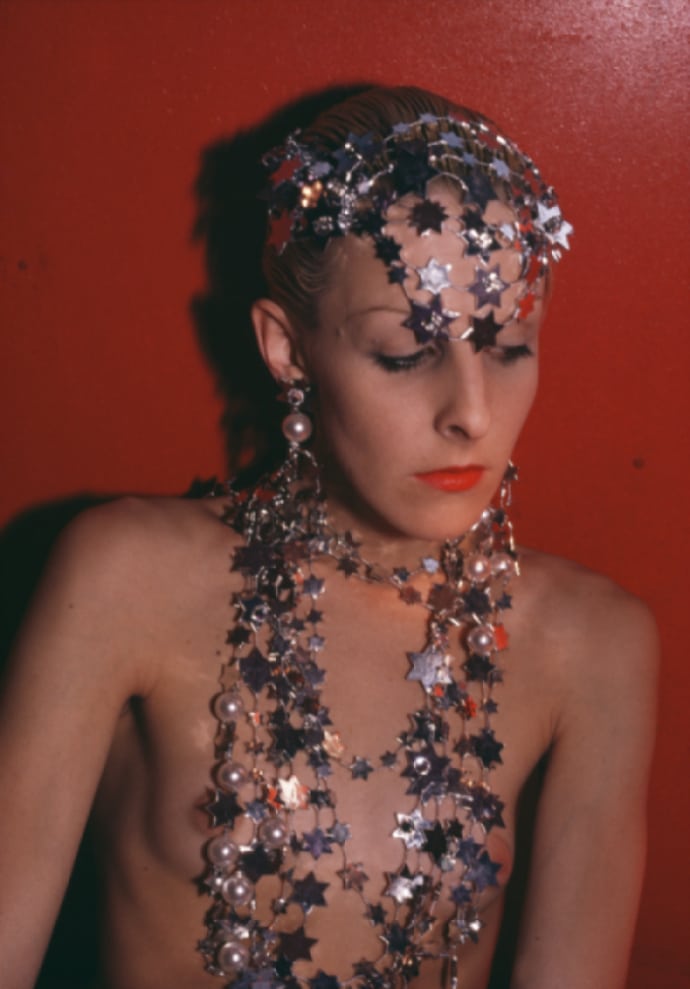
Greer modeling jewelry, NYC, 1985. © Nan Goldin
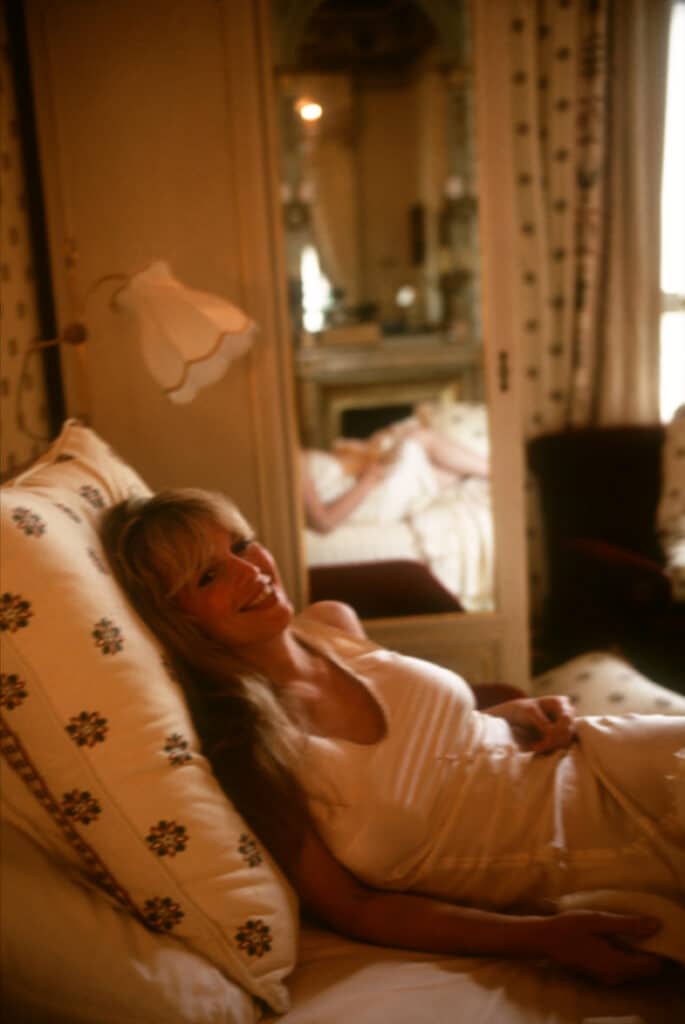
Joey laughing, Hotel Ritz, 2001. © Nan Goldin
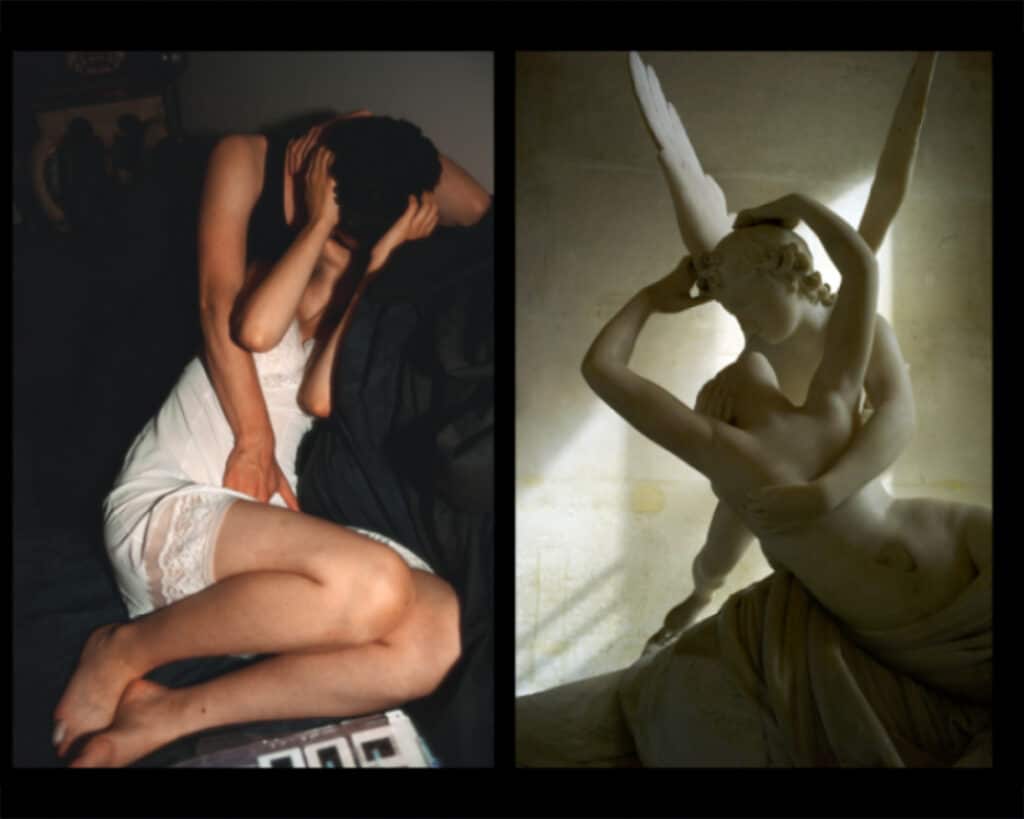
Young Love, 2024. © Nan Goldin
The images answer one another in a play of echoes between Caravaggio’s canvases, Bernini’s sculptures and Goldin’s intimate circle. A cold beauty, perhaps, but one that completes a logic: by editing and re-editing the same body of work, Goldin has made repetition a method, and it is precisely that obstinate revisiting her admirers come looking for. The same faces return from one slideshow to the next, in another order, set to other music. The work folds in on itself like a scratched record that is also a spell.
Then, at the end of every slideshow, something breaks the loop. Each montage now closes on a tribute to Gaza, which Goldin says has haunted her work for more than two years. The piece in progress, presented in draft form, assembles sequences shot on the ground by journalists most of whom were targeted, by friends who managed to travel there, by the inhabitants themselves. Some of the images are unbearable: lifeless children’s bodies, ruins, hollow-eyed faces, overwhelmed hospitals.
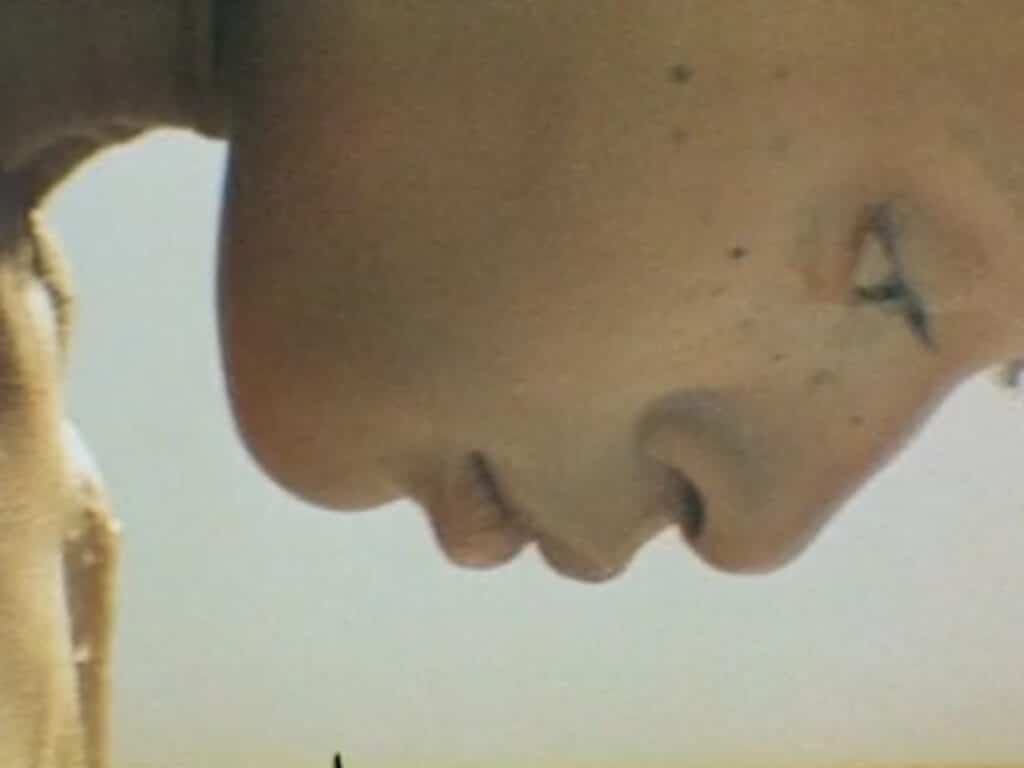
Still from Sirens, 2019-2020. © Nan Goldin
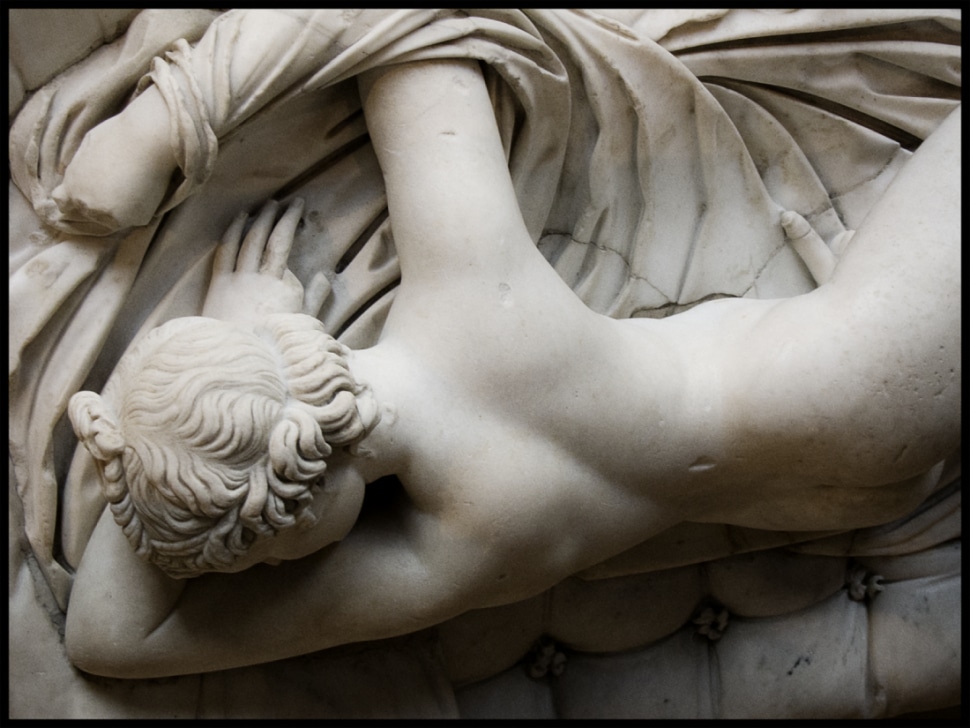
Young hermaphrodite sleeping, Le Louvre, 2010. © Nan Goldin
“It’s not the time for denial and amnesia. We can’t look away from the suffering of Gaza,” the artist states. This eruption of the present extends an older commitment. In 2017, the photographer founded P.A.I.N. (Prescription Addiction Intervention Now), a direct-action group targeting the Sackler family, owners of Purdue Pharma and held responsible for the opioid crisis that has killed more than 700,000 people in the United States since 1999.
Laura Poitras’s documentary All the Beauty and the Bloodshed, winner of the Golden Lion at Venice in 2022, brought that fight to the screen. The actions staged inside museums have led most major institutions to strip the Sackler name from their walls. With Goldin, activism never settles into doctrine: it proceeds through acts, through denunciation, through the sheer insistence on showing.
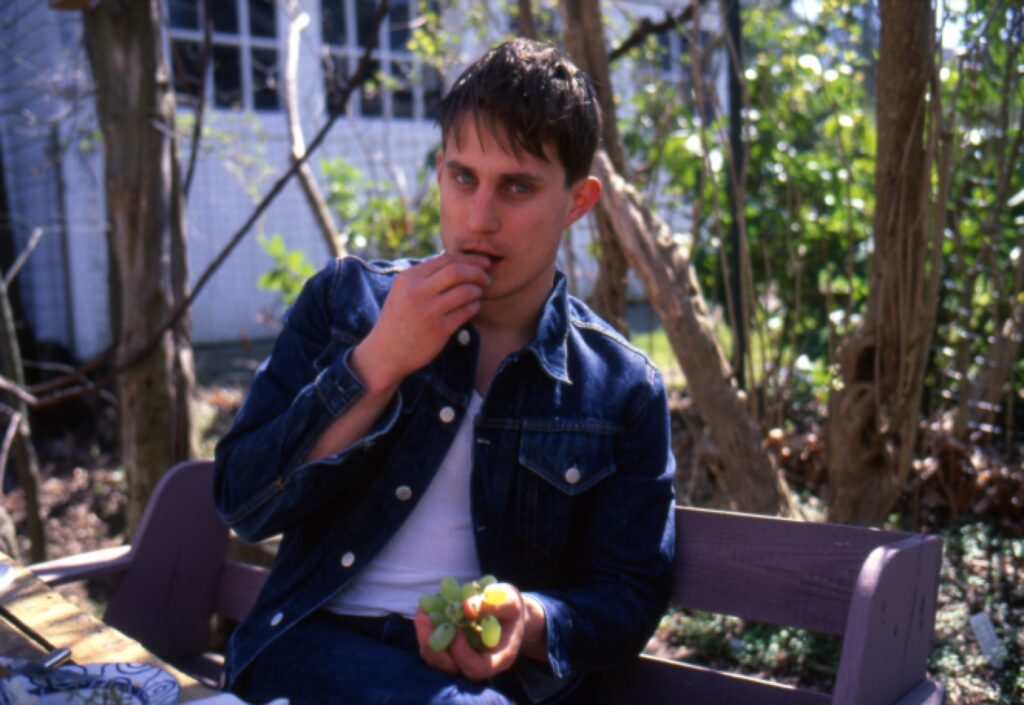
Clemens eating grapes under my arbour, Sag Harbor, NY, 2001. © Nan Goldin
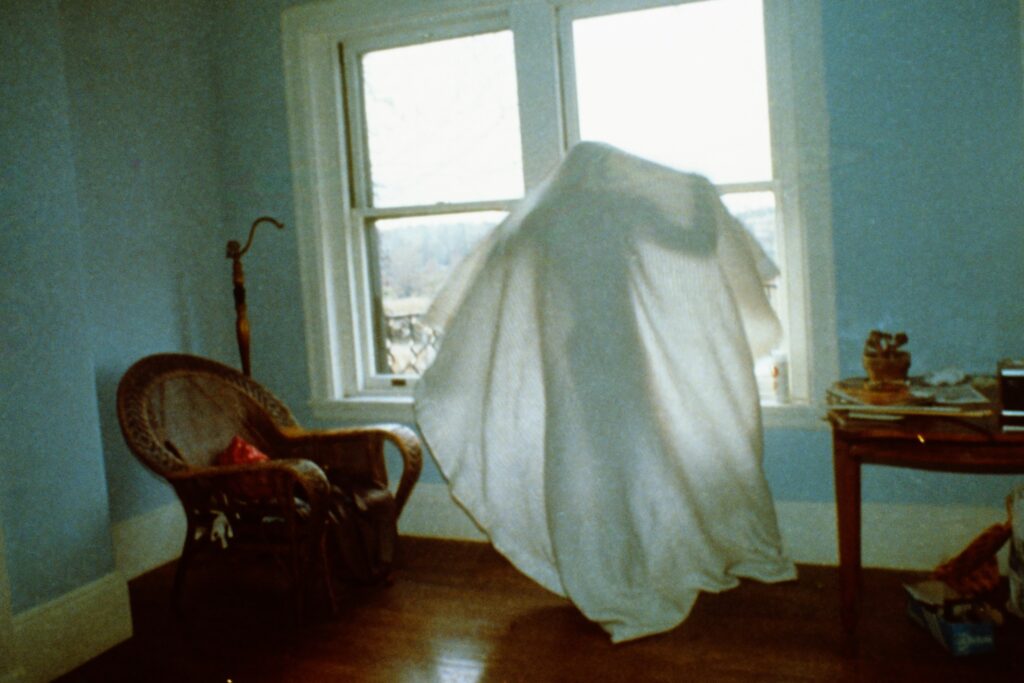
Thomas as a ghost, Boston, 1977. © Nan Goldin
The route ends at the Chapelle Saint-Louis de la Salpêtrière, in the 13th arrondissement, where “Sisters, Saints, Sibyls” (2004–2022) returns to its place of origin, conceived for the Festival d’Automne in 2004. The hospital precinct, which long confined women deemed mad, takes in the elegy devoted to Barbara Holly Goldin, Nan’s older sister, institutionalized in adolescence and then dead by suicide on a railway track in April 1965, at eighteen. Nan was eleven.
The three-channel video weaves together three female narratives: that of Saint Barbara, beheaded by her father; that of Barbara Goldin; and that of the artist herself, who recounts her own commitments. A tribute, Goldin says, to all the rebellious women who fight to survive within society.
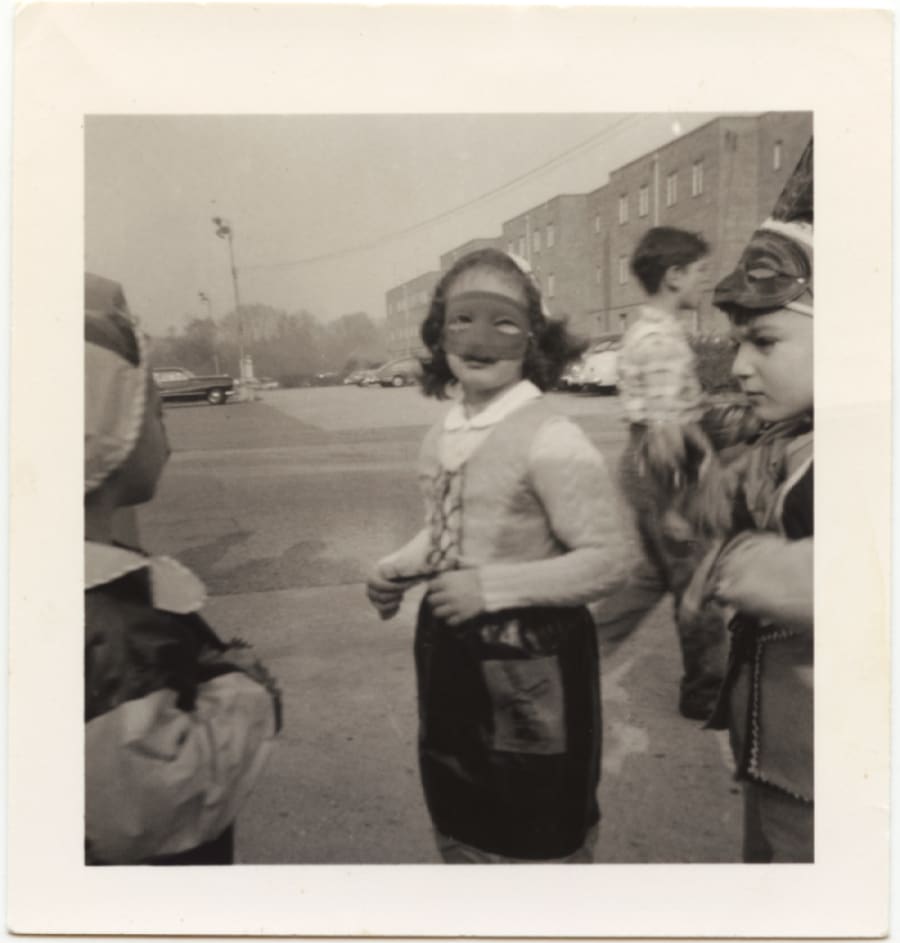
Barbara in Mask, Washington D.C. © Nan Goldin
There, in this echo that runs back to the inaugural wound, one understands why the slideshows serve the two facets of a single life: photography as a bulwark against disappearance and as a political summons.
The loop and the breach.
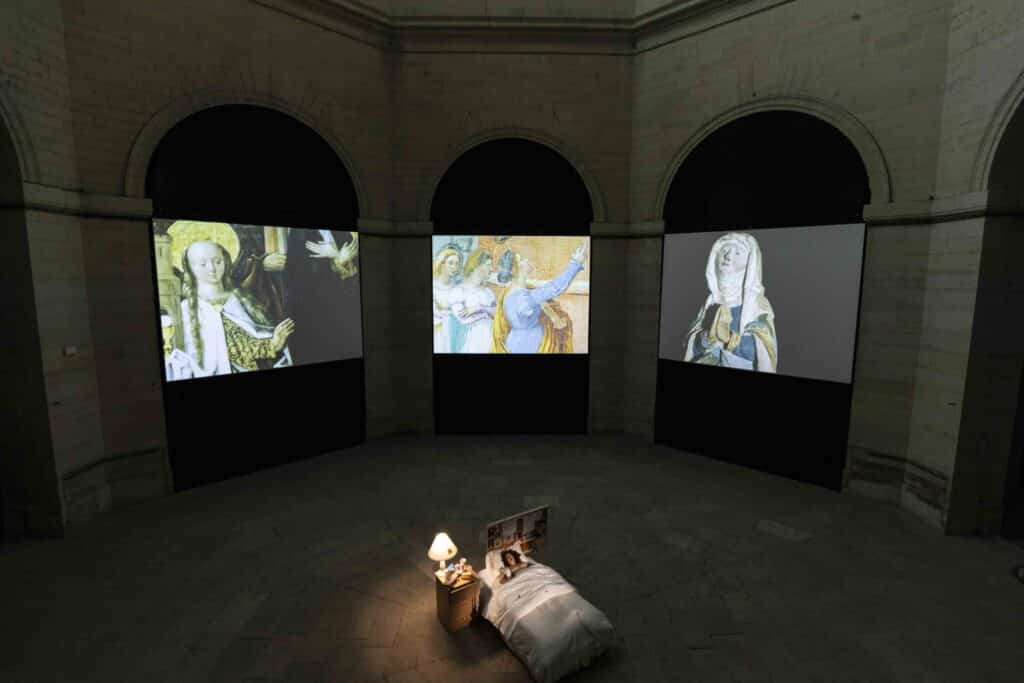
Sisters, Saints, Sibyls, chapel st Louis © Courtesy of the artist. Photo Simon Lerat for the GrandPalaisRmn 2026
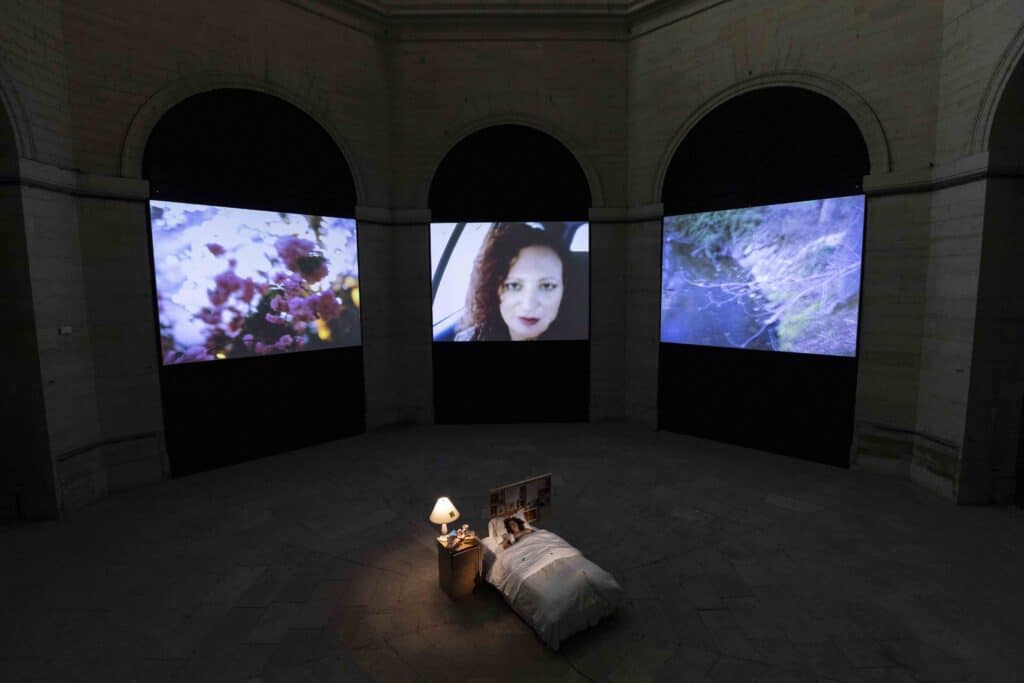
Sisters, Saints, Sibyls, chapel st Louis © Courtesy of the artist. Photo Simon Lerat for the GrandPalaisRmn 2026
Nan Goldin’s exhibition “This Will Not End Well” is on show at the Grand Palais (17, avenue du Général-Eisenhower, Paris 8e) and at the Chapelle Saint-Louis de la Salpêtrière (47, boulevard de l’Hôpital, Paris 13e) through June 21, 2026.