
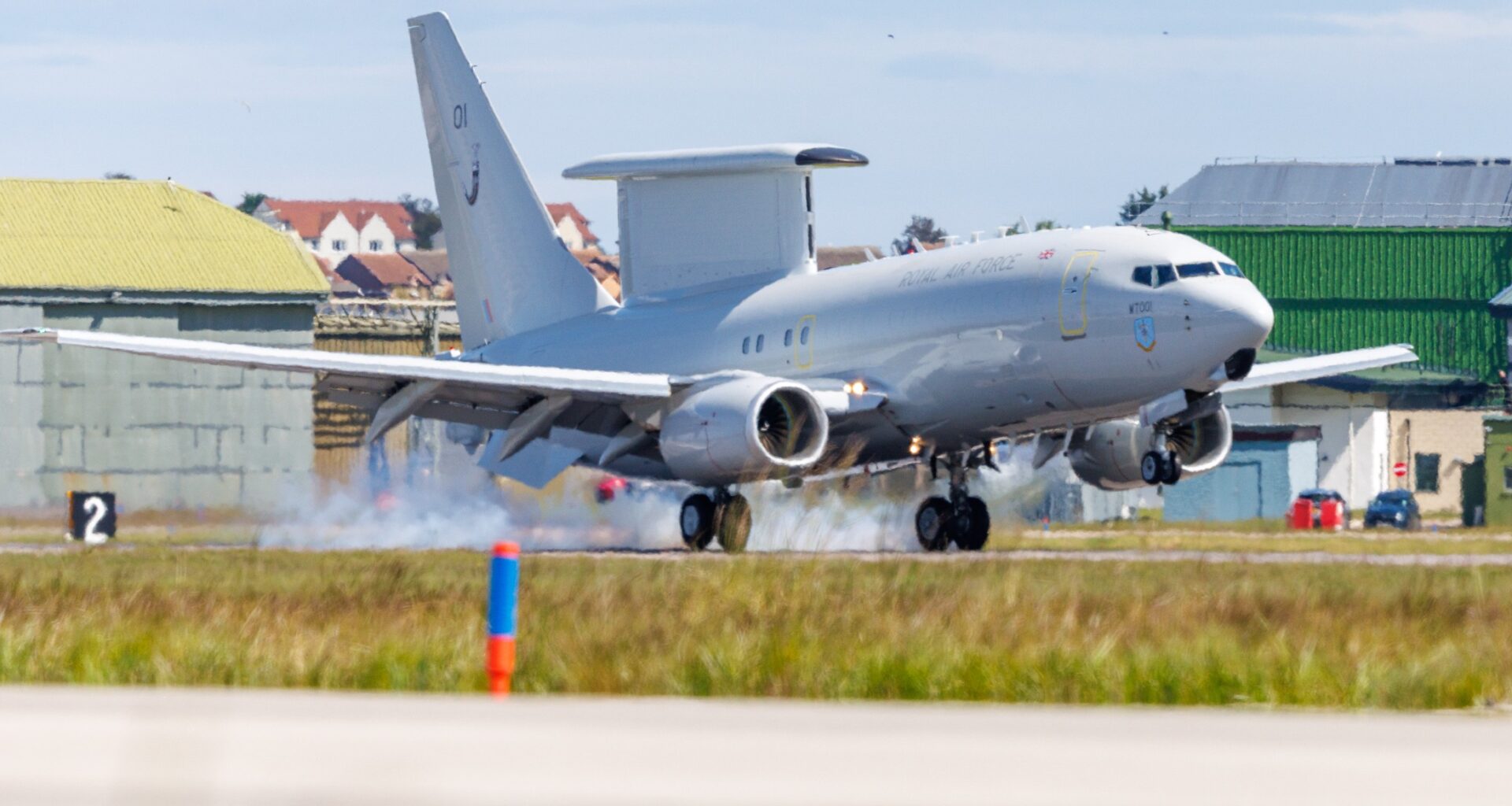
The aircraft, registered WT001, flew to Lossiemouth on 21 May from STS Aviation Services at Birmingham Airport, crewed by a mixed team of Boeing UK and RAF personnel. Test and evaluation is split between MOD Boscombe Down and RAF Lossiemouth, with the phase designed to ensure safe and fully assured progression toward service entry. On completion, the aircraft will be formally transferred from Boeing UK to the RAF and operated by 8 Squadron.
Group Captain Sarah Brewin, Station Commander at RAF Lossiemouth, said the station had been working hard to prepare for the aircraft’s arrival. “This marks a significant step in delivering the Royal Air Force’s next generation of airborne surveillance and control capabilities that will support the defence of the UK for the years to come. RAF Lossiemouth has been working hard to get ready to operate these aircraft, and we are looking forward very much to this next exciting chapter in the Station’s history when the aircraft enters RAF service.”
Stu Voboril, Boeing E-7 Vice President and Programme Manager, said the platform would provide the UK with the world’s most advanced airborne early warning and control capability. “The E-7 will provide the UK with the world’s most advanced, capable and reliable Airborne Early Warning and Control platform, while supporting British industry through UK jobs and supply chain opportunities.”
The Wedgetail will serve alongside the nine Poseidon maritime patrol aircraft already based at Lossiemouth, both platforms sharing the Boeing 737 Next Generation airframe, which the RAF and Boeing say will allow synergies in maintenance, logistics, and support. The E-7 is already in service with the Royal Australian, Republic of Korea, and Turkish Air Forces.
The Wedgetail programme fills a capability gap left by the retirement of the RAF’s E-3D Sentry aircraft, which operated with the service for more than 30 years before being withdrawn from service in 2021 amid defence budget pressures.