Here’s what to know about UV as levels expected to be highpublished at 08:53 BST
08:53 BST
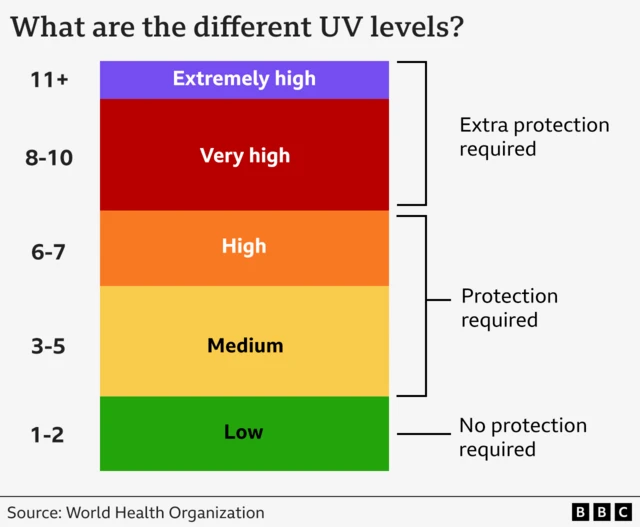
Throughout the long weekend, the ultraviolet (UV) levels will be very high for many places. High UV corresponds to an index of 6 or 7 on a scale from 0 to 11+.
During summer in the UK, that UV index would typically be around 5-6 with a maximum of 8 only in exceptional circumstances.
Is UV dangerous?
Warm weather can often bring high levels of UV radiation, which is emitted by the Sun and penetrates the Earth’s atmosphere.
UV is not always dangerous. It can be beneficial because it enables our skin to produce essential vitamin D.
This is important for the function of bones, blood cells and our immune system.
But every exposure can also increase the risk of skin cancer, which UV radiation can cause by damaging DNA in skin cells.
It also plays a substantial role in skin ageing, contributing to wrinkles and loosened folds.
What is the UV index?
Levels of UV radiation vary throughout the day. The highest readings occur in the four-hour period around “solar noon”, when the sun is at its highest – usually from late morning to early afternoon.
The higher the number, the greater the potential for damage to the skin and eyes – and the less time it takes for harm to occur.