
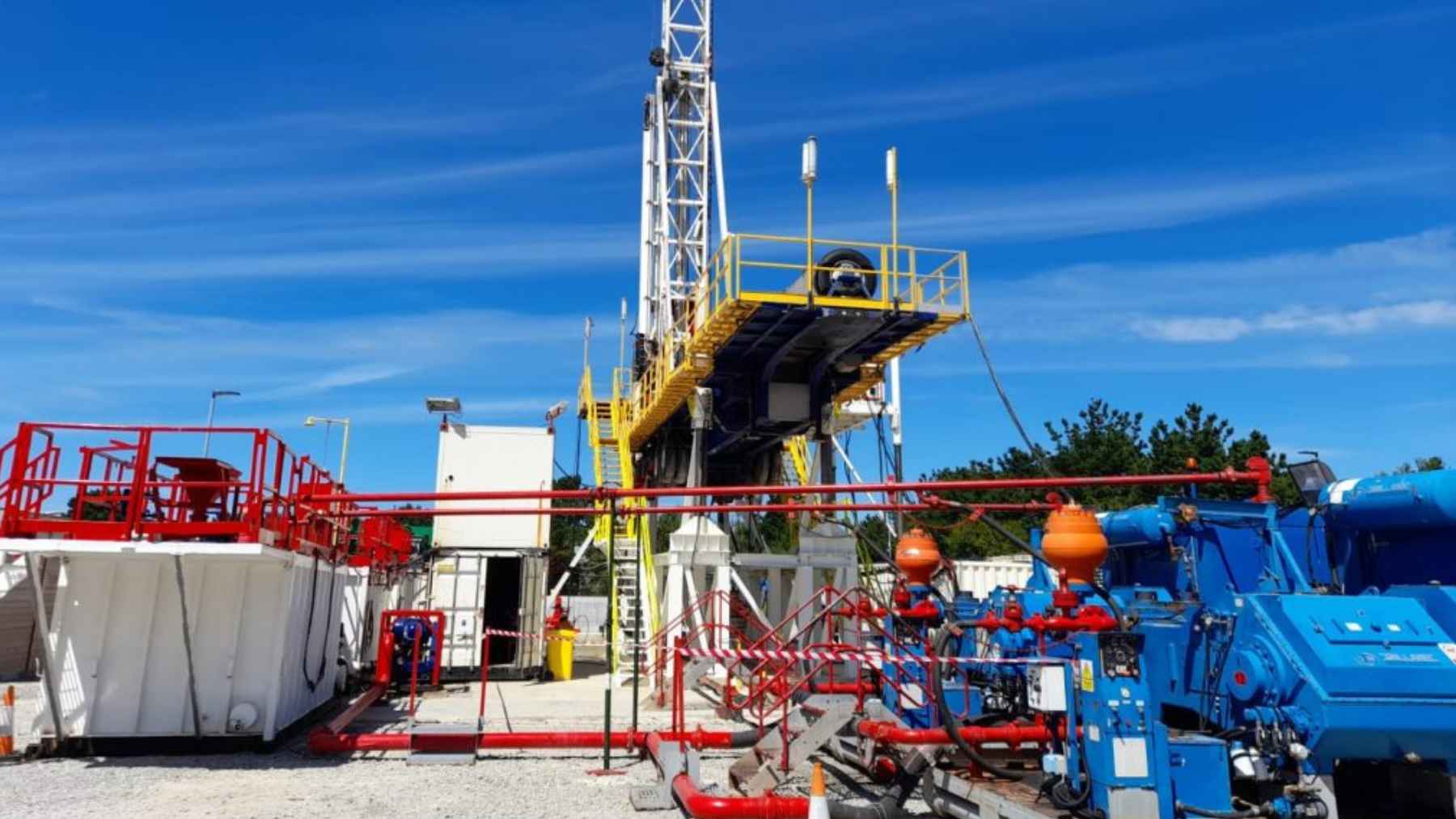
The U.K. has pushed an old energy dream a little closer to the surface. At United Downs near Redruth, Cornwall, Geothermal Engineering Limited says its plant is now delivering round-the-clock geothermal electricity and producing lithium carbonate from the same hot underground fluid. The idea sounds almost too neat. One-well system, two strategic outputs.
This matters at a moment when energy security is no longer just a phrase used in government reports. On April 29, Reuters reported Brent crude settled at $118.03 a barrel and U.S. West Texas Intermediate reached $106.88 as investors weighed supply risks tied to the Iran conflict.
United Downs will not replace oil overnight, but it shows how local underground heat can take pressure off the electric grid and the battery supply chain.
A well with two jobs
United Downs sits in Cornwall, a region where mining history is part of everyday identity. Now the valuable resource is not tin or copper, but hot granite, mineral-rich water, and a battery metal that automakers badly need.
GEL says the site reaches more than three miles underground, tapping naturally heated water above 374 degrees Fahrenheit. The company describes it as the deepest and hottest onshore well in the U.K., with the project targeting the Porthtowan Fault Zone beneath Cornwall.
The basic setup is simple enough to picture. Hot water comes up through one well, gives up its heat at the surface, and is sent back underground through another well. In practical terms, that means the same fluid keeps circulating instead of being dumped somewhere else.
Why the grid cares
Geothermal electricity is less flashy than a new solar field, but it has one major advantage. It can run day and night, regardless of the weather. No sunrise required. No lucky gust of wind needed.
Octopus Energy has signed a long-term agreement to buy at least 3 megawatts of constant power from United Downs, enough to supply about 10,000 homes. Greg Jackson, founder of Octopus Energy, said, “Bills are still too high, and the answer is more homegrown, renewable energy.”
That matters on days when the grid is under pressure. Think of that sticky summer heat we all know, the air conditioner running, and the electric bill creeping higher. Geothermal will not solve peak demand alone, but it can act like a steady layer beneath wind and solar.
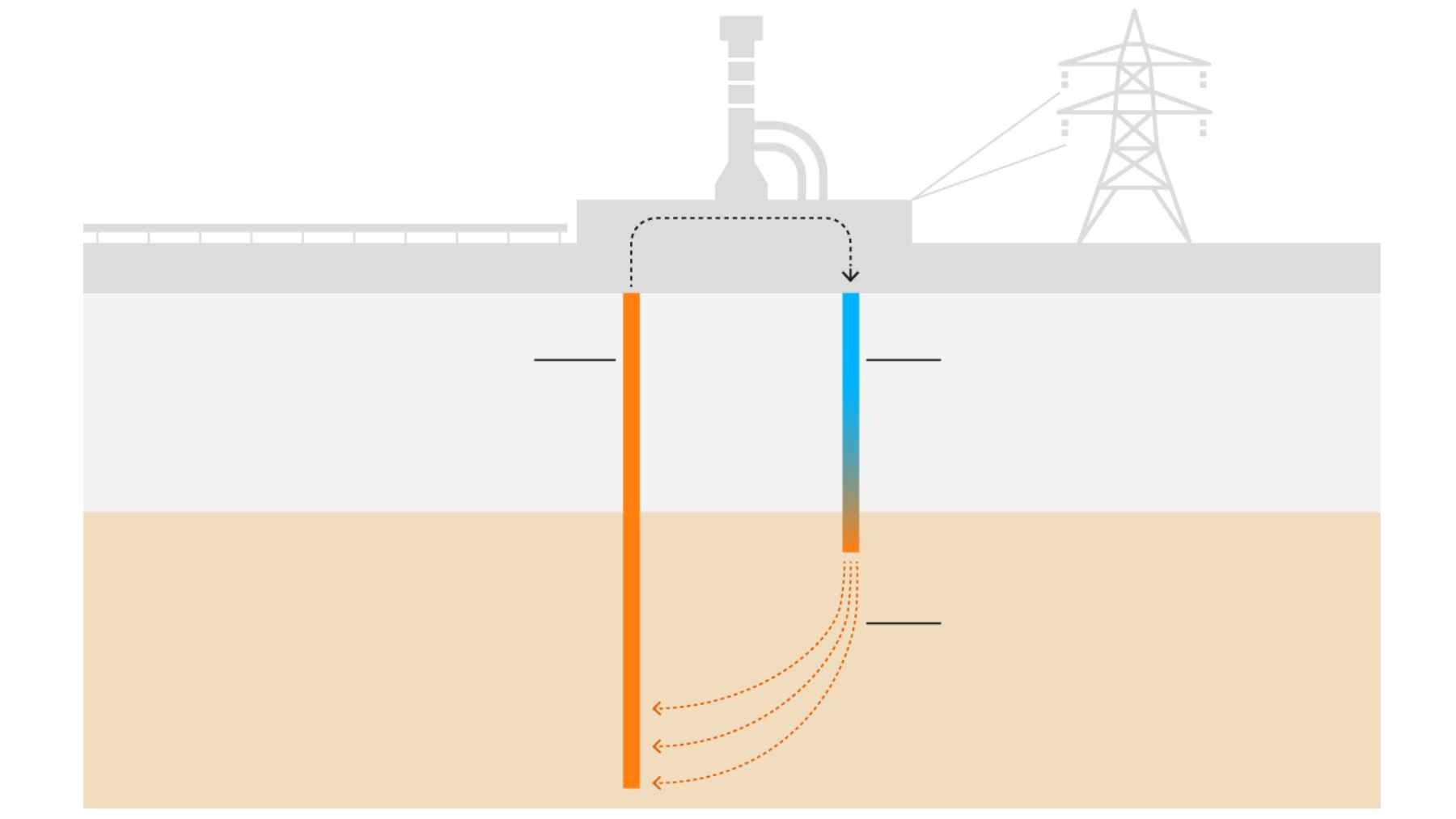 The United Downs project circulates hot underground fluid to generate electricity and recover lithium from geothermal brine.
How the plant works
Why not simply boil water like an old power station? Many geothermal plants at these temperatures use a binary system known as an Organic Rankine Cycle, where heat from the brine warms a second fluid that vaporizes more easily and spins a turbine.
Exergy supplied the power plant technology at United Downs, including its Organic Rankine Cycle system. That matters because the brine can stay contained while the heat does the work. It is not glamorous. It is careful engineering.
The closed-loop design is also important for the lithium side of the project. GEL says that after power generation, the fluid is processed to extract battery-grade lithium carbonate before being reinjected underground.
Lithium without a new pit
This is where United Downs becomes more than a power story. Hatch, which worked on the lithium facility, says the water brought to the surface contains more than 340 parts per million of lithium. The plant is expected to produce about 110 U.S. short tons of lithium carbonate per year at its current stage.
That is not enough to transform the U.K. battery industry by itself. Still, it is a serious pilot for a different kind of mineral supply, one that does not begin with a sprawling open pit or long supply routes.
Dr. Ryan Law, CEO of GEL, put it plainly when he said, “geothermal energy and critical minerals extraction are naturally complementary.” The same hot, mineral-rich fluids that make electricity can also provide strategic materials.
A bigger mineral problem
Lithium demand is becoming one of the pressure points of the clean energy transition. Electric vehicles can reduce exhaust fumes in traffic jams and help clean up city air, but their batteries do not appear by magic.
The International Energy Agency expects lithium demand to grow fivefold by 2040 under today’s policy settings. It also warns that expected mined supply from announced projects falls short of projected lithium demand in 2035 by about 40 percent.
That is why countries are looking harder at brines, recycling, and local processing. Local supply does not make a battery automatically green, of course. The real question is whether each ton comes with lower land disturbance, lower emissions, and fewer geopolitical shocks.
The caveats underground
Deep geothermal power is low-carbon, but it is not impact-free. GEL says geothermal power projects can have a carbon footprint of about 0.011 to 0.033 pounds of carbon dioxide per kilowatt-hour, depending on design and geology.
There is also the issue of induced seismicity. GEL says geothermal testing and reservoir development in Cornwall can cause minor seismic events, although most are too small to be felt at the surface. The company says it uses seismometers, ground motion detectors, and operating limits to manage the risk.
For nearby residents, a faint rumble can still matter. That is why monitoring, clear reporting, and public trust are not side issues. They are part of whether geothermal can grow beyond one impressive site.
What success would mean
United Downs is not meant to be the finish line. GEL says two more deep geothermal sites are under development in Cornwall, with a goal of adding another 10 megawatts of baseload geothermal power by 2030.
ABN AMRO said in May 2026 that GEL aims to expand direct lithium extraction from about 110 U.S. short tons a year to nearly 2,200 U.S. short tons by 2028 or 2029. Over the next decade, GEL is targeting more than 19,800 U.S. short tons a year from multiple U.K. sites.
The hard part is repeatability. Drilling is expensive, and geology does not always cooperate. No map can guarantee that heat, fluid flow, and lithium concentration will line up neatly at every site.
Still, United Downs gives the U.K. a real-world test of a powerful idea. One compact industrial site could provide steady clean electricity and a critical battery material without building a new mine across the landscape.
The official statement was published on GEL Energy.