
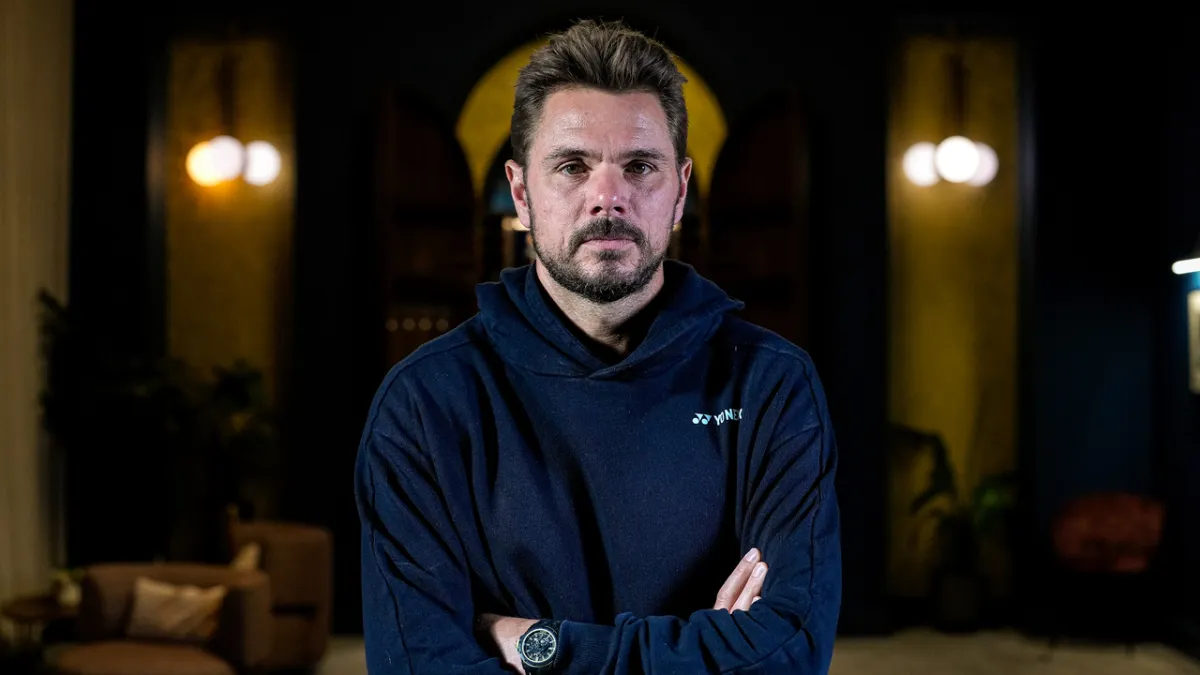
Stan Wawrinka knew that his farewell season would be one long, emotional joyride. What he didn’t necessarily anticipate was the extent to which he would be adding to his trophy cabinet. “I’m receiving more this year than in all my career for winning tournaments. [Each one] gives me a trophy for finishing. I’m going to have to explain to people they are all because I lost,” he says with a laugh.
Beloved for the never-say-die spirit and sublime one-handed backhand that forged a chink of light between him and the “big three”, he has remained competitive even at 41 years old, and there may be a few forlorn faces in the press box, too, at the loss of such a throwback.
One memorable anecdote — sadly before this correspondent’s time — involved Wawrinka bumping into a group of journalists in Miami in 2019 shortly after a disappointing second-round exit. Rather than duck for cover, Wawrinka invited them out for dinner and then drinks on a night so jovial it resulted in one member of the group falling unwell. “I’m not sure I’m allowed to tell that story. It was fun. We had a good time. I’m not sure everybody remembers,” he says, laughing again.
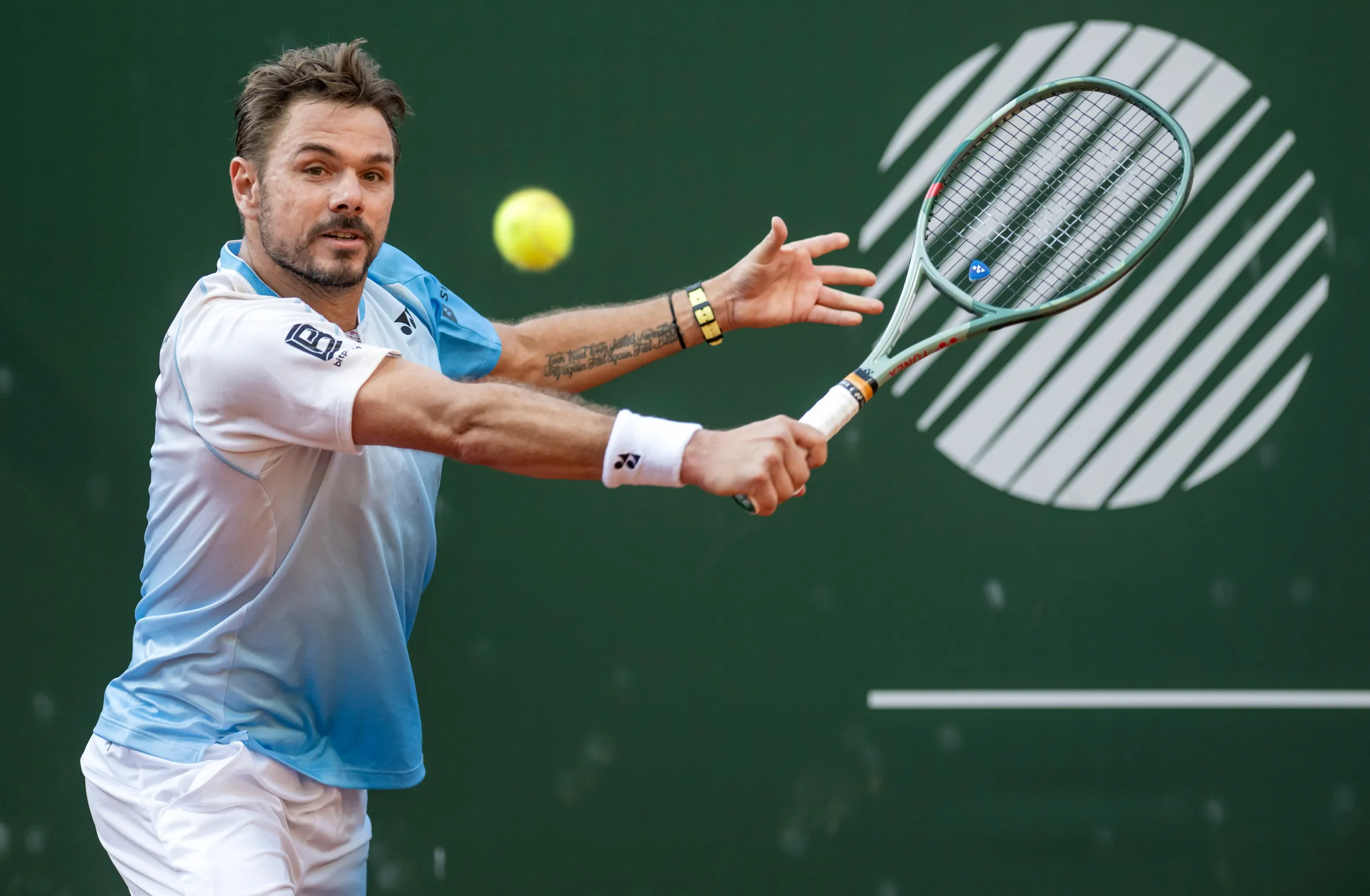 Wawrinka is retiring at the end of this season but his backhand will live long in the memory MARTIAL TREZZINI/EPA
A three-times grand-slam singles champion, a Davis Cup winner and an Olympic doubles gold medallist with his idol and friend Roger Federer, Wawrinka has left few stones unturned despite competing in the greatest era of men’s tennis. “The only regret I could have is if I knew I didn’t try everything to be the best player I could, and I know I did,” Wawrinka says.
There were still tears in the locker room after his final appearance at the Barcelona Open last month — “I spent quite a few months there when I was growing up, playing on clay, learning from the best Spanish players, so when I played the tournament it wasn’t easy” — but Wawrinka’s farewell at the French Open will be particularly poignant. Not only was it the nearest grand-slam to his childhood home near Lausanne, in the French-speaking part of Switzerland, but he ranks his victory over Novak Djokovic in the 2015 final as the greatest of his career.
The toughest defeat that finally propelled Wawrinka from the fringes of the top ten into rarefied air also came against the Serb, in the semi-final of the Australian Open two years earlier, when he lost 12-10 in the fifth set of a marathon match. Up until that point Wawrinka had lost ten consecutive matches against both Djokovic and Federer, but he left Melbourne convinced the gap was bridgeable.
“It was a really key moment in my career,” he says. “It was really painful, that’s for sure, but it made me realise that I could be at that level, that I had everything in me to beat the best player in the world — not all the time, but I was capable of doing it.”
The following year Wawrinka beat Djokovic in the quarter-finals and then ended his 13-match losing streak against Rafael Nadal to clinch his maiden grand-slam title. “If you don’t celebrate when you win a slam, you never celebrate in 30 years of tennis,” he says of a sleepless night. “The media [event] the next morning was early. I was still smelling of champagne.”
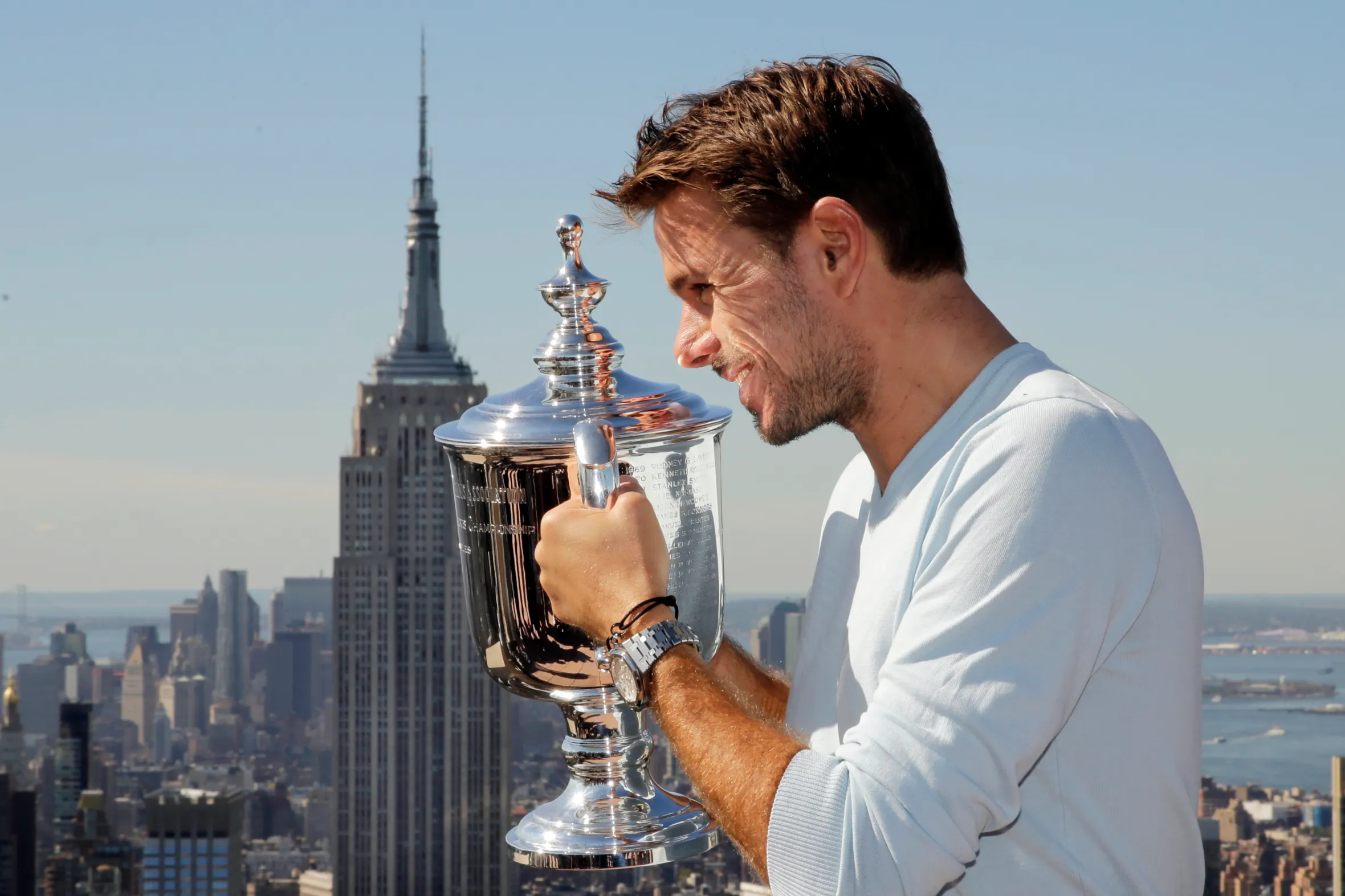 The Swiss was the king of New York in 2016 after beating Djokovic to seize the US Open trophy Richard Drew/The Associated Press
The French Open in 2015 was followed by the US Open in 2016 when Wawrinka felled Djokovic in the final again. “Mentally, the toughest one for me was Roger because of all the history we had together, but also his game style was not my favourite to play [against],” he says. “We knew each other exactly. We shared so many moments and his level and way of making you feel uncomfortable put me under pressure [from the first point].
“Rafa on clay was always the biggest challenge for me. One, [because of] his level, of course, but also the intensity he was putting [on every shot]. You always felt like you’re going to drown underwater, so my favourite to play was Novak. I lost more than 20 times against him, but he’s still someone, compared to the others, that it was OK.”
The careers of Wawrinka and Andy Murray shared certain parallels in their efforts to overthrow giants. A column in The Sunday Times before their fourth-round match at Wimbledon in 2009 described Wawrinka as “a strange player, clearly talented but short of match fitness and as clumsy on court as Federer is graceful”.
“Are you sure it was [about] me?” Wawrinka says, laughing. That, needless to say, did not age well and their head-to-head record was much tighter, finishing 13-10 in Murray’s favour — though his body was never the same after losing to Wawrinka in an extraordinary near-five-hour French Open semi-final in 2017.
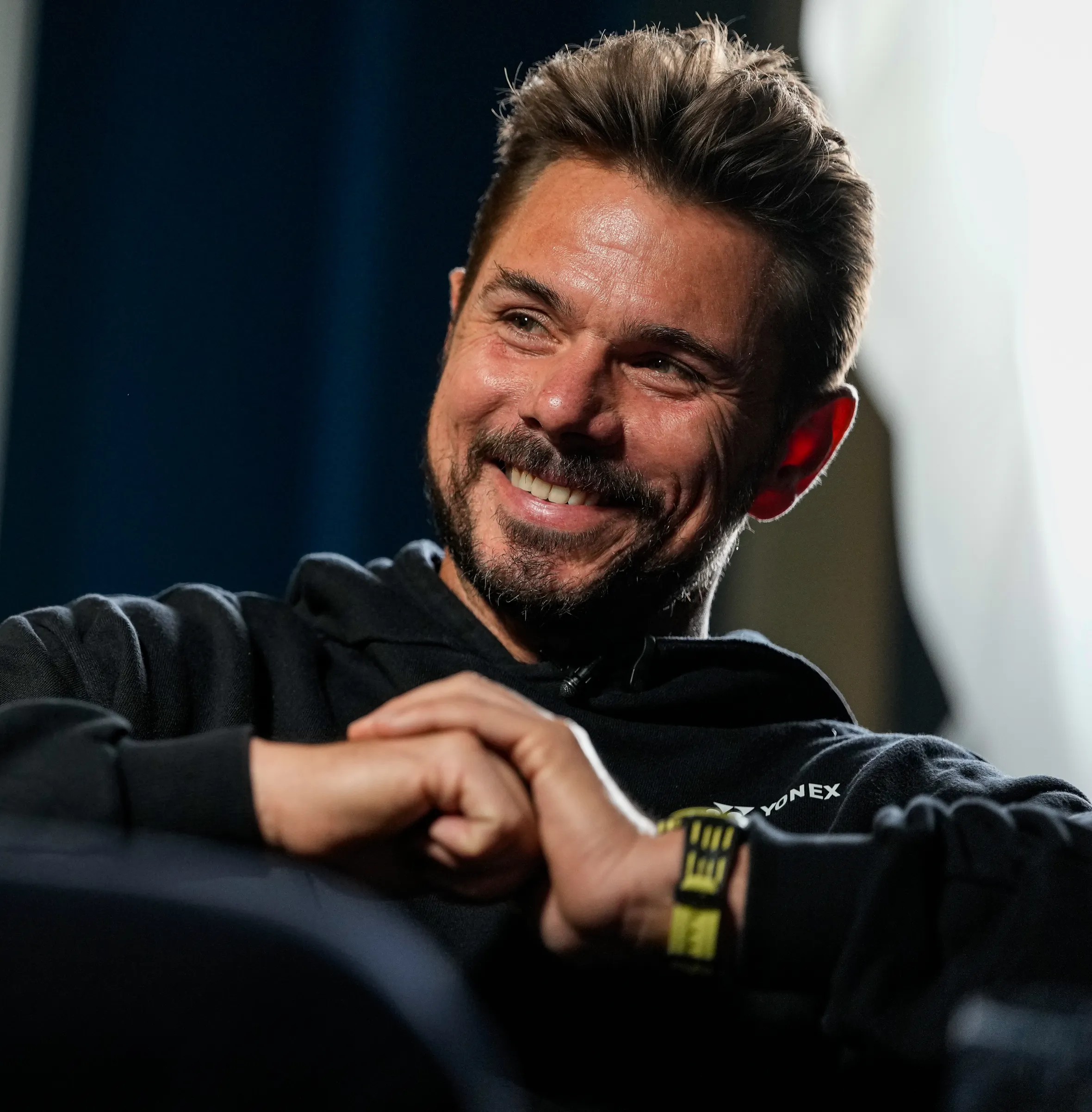 Wawrinka, speaking at the Hotel Metropole in Geneva, says he has “made peace” with retirement Kjetil Waber/steinsiek.ch
Wawrinka is unequivocal, though, that the big four never threatened to become five. “I had four or five years that I could crack the top five in the world and win slams. He [Murray] was top four for 15 years or more. He was with them, constantly in the semi-finals, finals, winning slams, Masters 1000s, 500s. He was part of that group,” he says.
Wawrinka’s humble nature made him popular among fans and his peers alike and stemmed from working-class roots. His parents, Wolfram and Isabelle, ran a farm in Saint-Barthélemy, where the workers were adults with intellectual disabilities or were recovering from mental health issues and addictions.
Wawrinka grew up alongside them and understood early on that tennis was not life and death. “In the end, how you grew up shapes you. That’s how you start coming into the world,” he says. “When there was no school, we had lunch all together. When I started to play tennis and started to be better, I would come back to see my parents and they were always coming up to me and saying, ‘We saw you on TV,’ and this and that.”
The enormous shadow of Federer, who was born four years earlier in 1981 and won his first grand-slam title at Wimbledon in 2003 — a month after Wawrinka had won the boys’ singles at the French Open — also played its part. The pair’s teams famously clashed backstage at the ATP Finals in 2014 after Federer’s wife, Mirka, called Wawrinka a “cry baby” following a spurned match point, but the row was quickly smoothed over and they won the Davis Cup final together a week later.
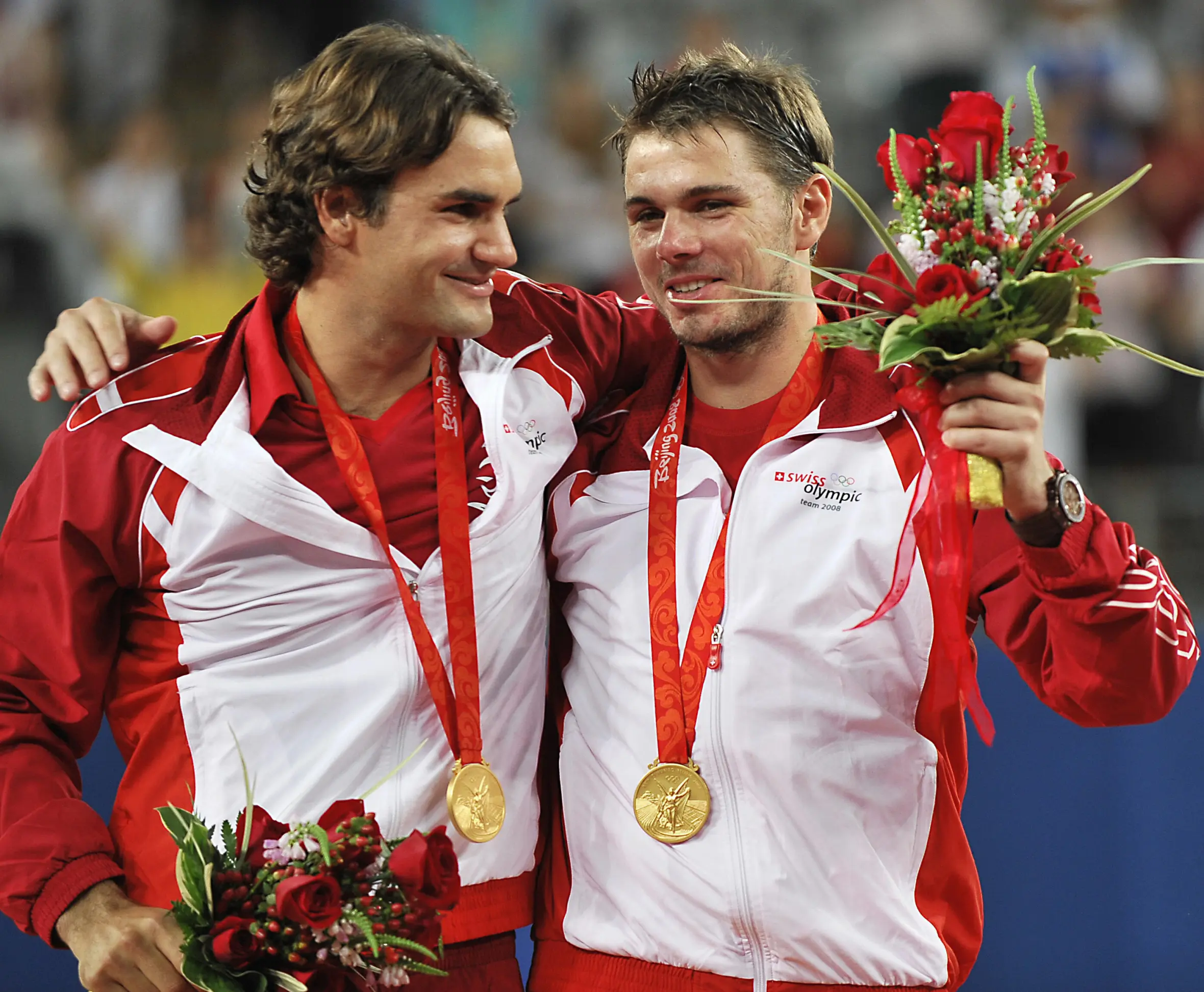 Federer and Wawrinka after winning doubles gold for Switzerland at the Beijing OlympicsPHILIPPE HUGUEN/AFP
“As a Swiss kid arriving on the tour, trying to be a professional tennis player and be in the top 100, to have the chance to have someone like Roger, who was already at the top of the game, and play with him in the Davis Cup, at the Olympics, to practise constantly in almost every tournament, you can only appreciate that,” Wawrinka says. “The comparison was not there. You cannot compare a player like to me to someone like Roger, who is a legend of the sport.”
Wawrinka “never dreamt about winning a grand-slam” and there were periods afterwards when he lacked motivation. “You reach a point that’s so high that you’re going to have the down sooner or later, and it happened a few times, but never to the point that I questioned what I was doing,” he says.
“It can be so difficult. It’s a rollercoaster of emotion and you cannot just be at the top unless you are Jannik [Sinner] now and those champions we named. I had a lot of losses. I had a lot of struggles mentally. But I’ve always been passionate about the sport. Being a tennis player was my dream. I know how lucky I am to be able to have done that. It’s an amazing life, not easy, but when you have the chance to make it, there’s nothing to complain about.”
A serious knee injury in 2017 knocked Wawrinka off the mountaintop, and the near-decade since has been a constant battle with his body to end his career on his own terms.
“The way of playing is different because the conditions [of courts] and the ball, especially, make it harder to have different surface speeds, so it’s tougher to really mix the game when you play. Now they are stronger, they play faster from both sides, and it became more physical,” he says. Wawrinka first played Sinner in the 2019 US Open and won in four sets. “I knew that he would be really good. That he will be this good [Sinner comes into the French Open on a 29-match winning streak]? No. Now we’re not talking about really good. We’re talking about being a legend.”
What of the boycott Sinner and fellow world No1 Aryna Sabalenka mooted in response to the prize money on offer at the French Open? “They can all boycott and I can play it alone,” Wawrinka says, jokingly. “It’s difficult for people when they see top players complaining about money. It can be right or wrong. That’s not the question. It’s just the message is probably not the right message.
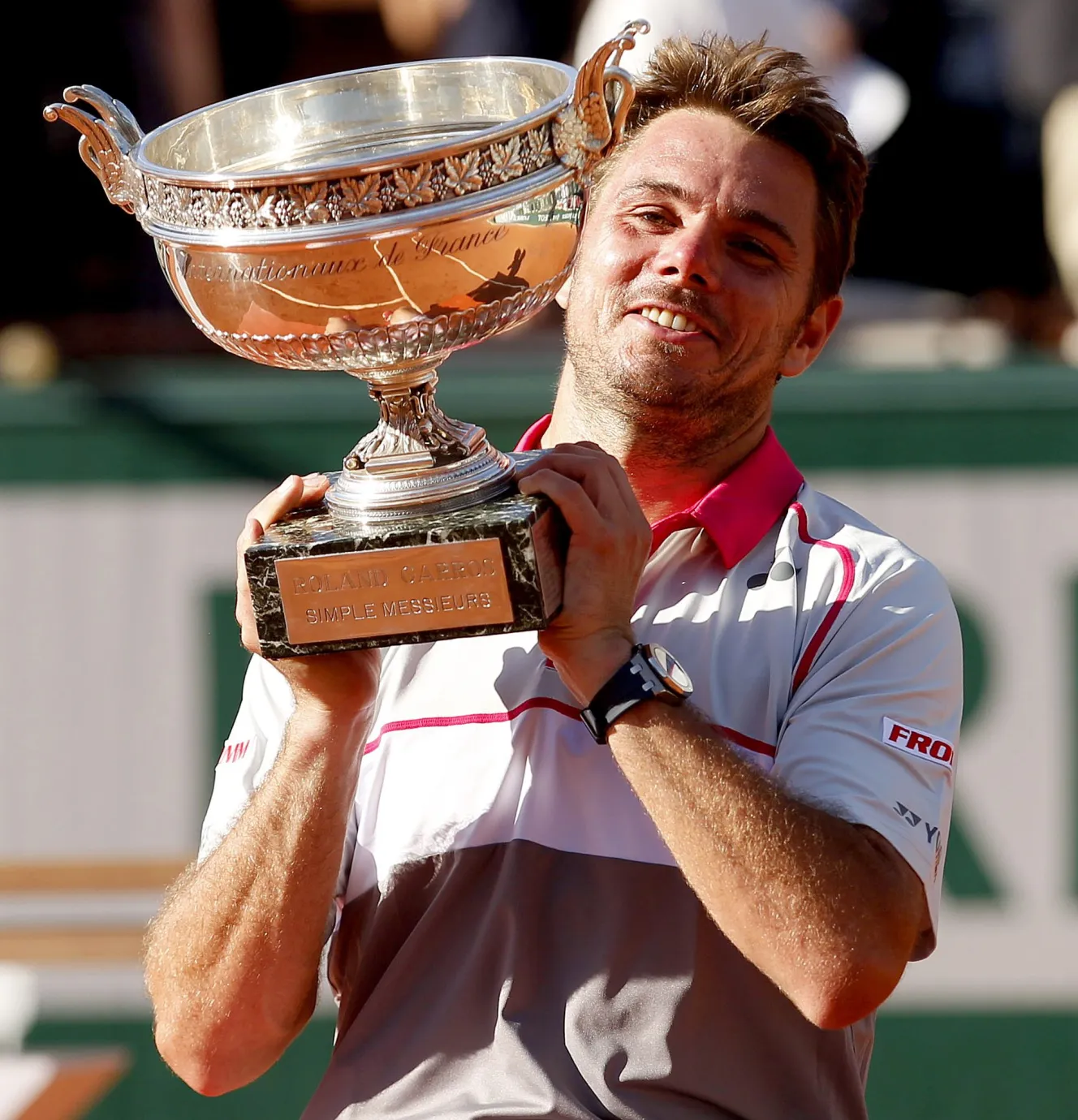 Wawrinka is about to bid adieu to Roland Garros, where he lifted the Coupe des Mousquetaires in 2015 Ella Ling/BPI/REX/Shutterstock/Rex Features
“The way I’ve seen in from the outside, I think it is not the right way to do it. I understand the frustration — not everything is perfect from the grand-slams and from the ATP, and the biggest problem in tennis is that everybody wants something different. The No1 player will want something that is not good for the No100, so it’s always been super-difficult to make everybody happy. But this topic right now, I don’t think it’s great to read it in the press. It should be a discussion that has to be behind [the scenes], but it’s a complicated sport.”
That is the next generation’s fight. Rarely do athletes get to leave their sport behind without real regrets. Wawrinka is one of the lucky few, but even fewer would begrudge him that.
“I will miss the emotion that I get from tennis, but I also believe that I really squeezed the last drop of the lemon. That’s going to help me to appreciate everything I’ve done and not miss it so much,” he says. “I pushed it until the limit. I’m 41 years old. I have done everything I could. As much as I’m enjoying this year, I’m also really looking forward to the end. I feel at peace with my decision.”