
Microscopic fossils extracted from 1.7-billion-year-old rock cores stored in Darwin, Australia, are offering new evidence that the earliest complex cells on Earth depended on oxygen, a finding that challenges recent assumptions about the environmental conditions in which complex life first emerged.
The study, published in Nature, draws on more than 12,000 fossils recovered from sedimentary mudstone cores originally drilled by mineral exploration companies decades ago. Researchers from McGill University and the University of California Santa Barbara analyzed these specimens alongside the geochemistry of the surrounding rock to reconstruct the environments in which the organisms lived.
The Fossils and What They Reveal
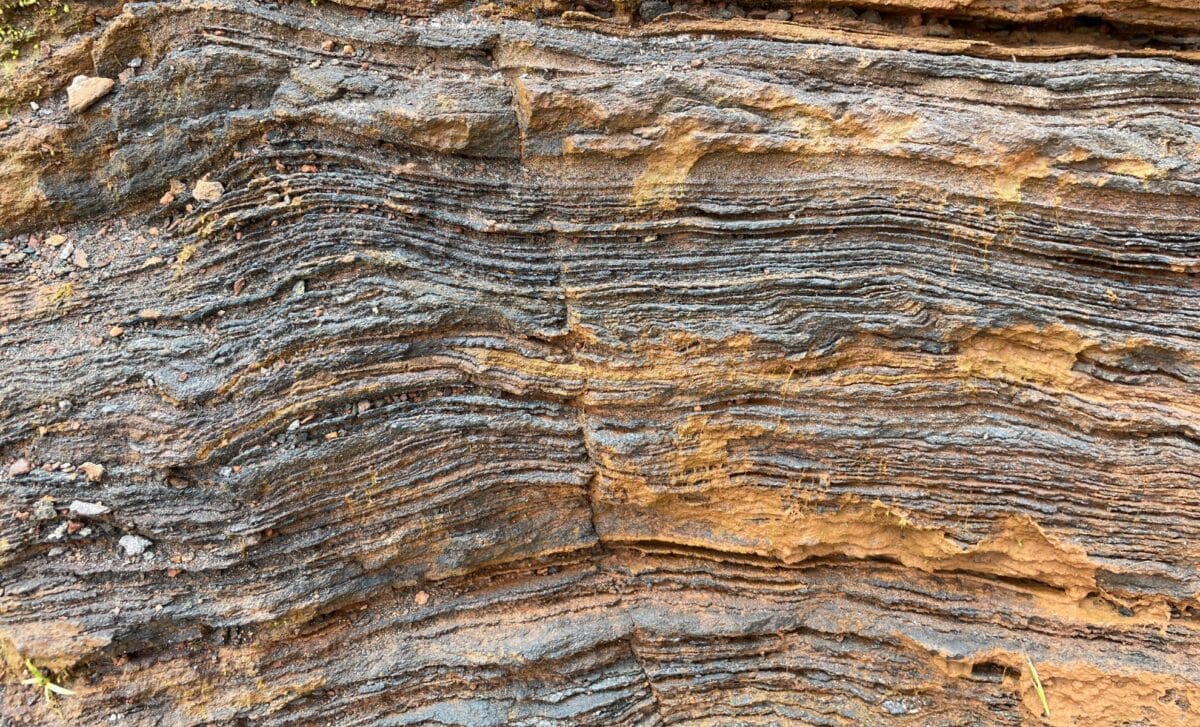
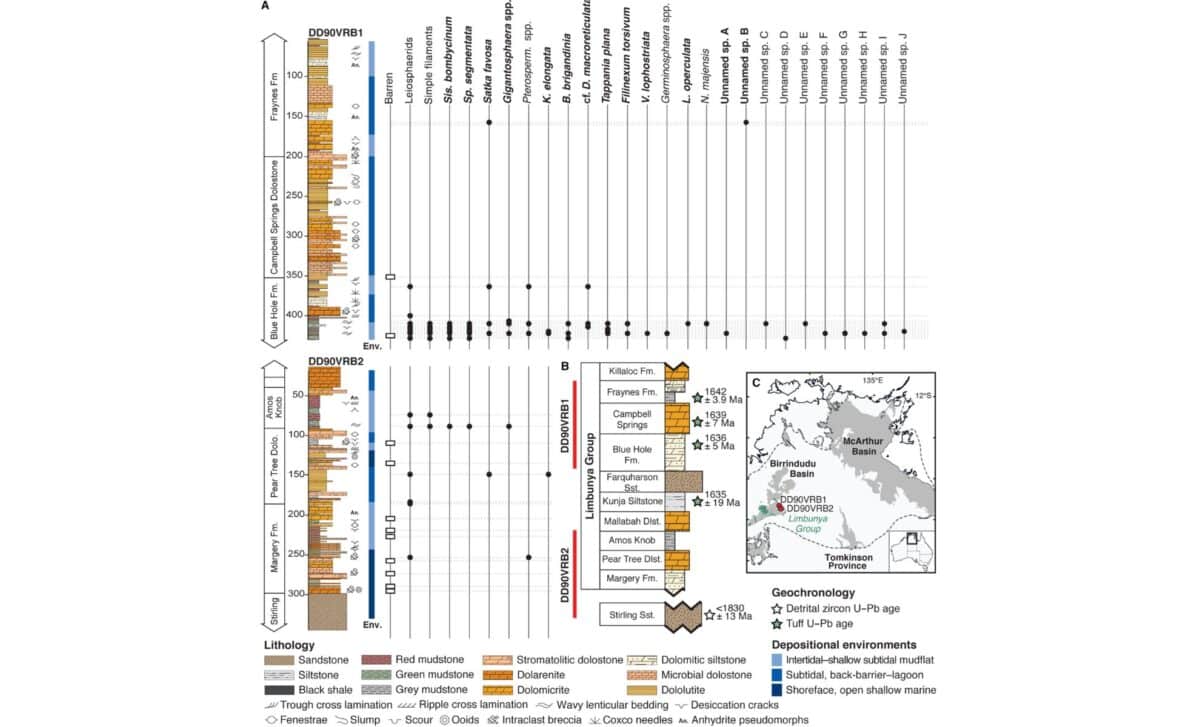
The cores, held at the Northern Territory Geological Survey, contain mudstone formed from ancient seafloor sediment deposited when much of northern Australia was covered by an inland sea. According to the study’s authors, the fossils (belonging to eukaryotes, the domain of life that includes all animals, plants, fungi, and algae) range in age from approximately 1.75 to 1.4 billion years, making them the oldest known eukaryote fossils currently identified anywhere on Earth.
Eukaryotic cells are fundamentally more complex than prokaryotic ones. Unlike bacteria and archaea, eukaryotes possess a nucleus and specialized internal structures called organelles, including mitochondria, which are responsible for aerobic energy production. The transition from prokaryotic to eukaryotic life is considered one of the most significant events in the history of life on the planet.
To recover the fossils, the research team crushed and dissolved mudstone samples, then examined the organic residue under microscopes. They also analyzed the chemical composition of the rock itself to determine whether oxygen was present in the ancient seawater at the time of deposition.
Oxygen’s Role in Early Eukaryote Habitats
The results were consistent across a range of depositional settings, from coastal mudflats to offshore marine environments. According to the researchers, eukaryote fossils appeared almost exclusively in samples from oxygenated bottom waters. Samples taken from oxygen-depleted, or anoxic, settings contained only simpler, prokaryotic microbial forms.
This distribution carries additional implications beyond confirming that early eukaryotes required oxygen. Because the fossils were largely absent from anoxic samples (even those that were otherwise rich in prokaryotic organisms) the authors argue this points to a benthic, or seafloor-dwelling, lifestyle.
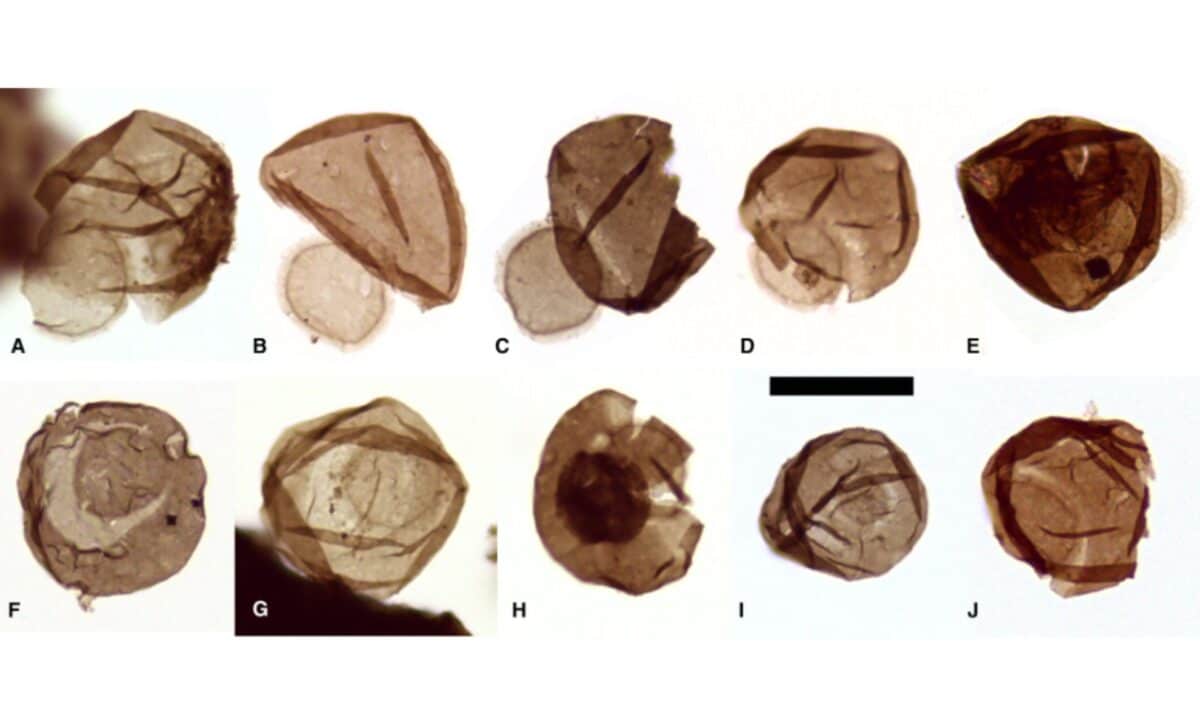 Limyasphaera operculata gen. et sp. nov. Pylome, Operculum, and Internal Body Variations, DD90VRB1, 413.7 m Depth (Scale Bar: 20 μm) ©onlinelibrary
Had these early eukaryotes been planktonic, drifting in open water, their remains would be expected to appear in both oxygenated and oxygen-free sediments, since dead cells sinking through the water column would settle indiscriminately. Their near-total absence from anoxic layers instead suggests the organisms lived and died on or near the seafloor, in zones where oxygen was available.
The findings support what the study describes as a long-standing hypothesis: that oxygen was not merely coincidentally present during early eukaryote evolution, but was functionally necessary for it. This is partly because aerobic respiration generates far more energy than anaerobic alternatives, a requirement consistent with the metabolic demands of cellular complexity.
The research also proposes that eukaryotes remained largely confined to oxic, benthic habitats for much of the Proterozoic eon, only expanding into planktonic, open-water environments during the Neoproterozoic era, between approximately one billion and 540 million years ago. According to the study’s authors, this delayed ecological expansion may help explain a persistent gap in the fossil record: the mismatch between when eukaryotic body fossils first appear and when molecular biomarkers associated with eukaryotes begin to show up more broadly in the geological record.
The question of when and how eukaryotes first evolved has attracted renewed attention in recent years, partly because of discoveries of eukaryotic organisms capable of surviving in oxygen-free environments. Those findings had prompted some researchers to question whether early eukaryotes were necessarily aerobic. The new fossil evidence from Australia lends weight to the position that oxygen dependence was a feature of eukaryotic life from its earliest identifiable stages, even if later lineages adapted to anoxic conditions. Further study of the Northern Territory cores, the authors suggest, may continue to refine understanding of one of the most consequential transitions in the history of life.