
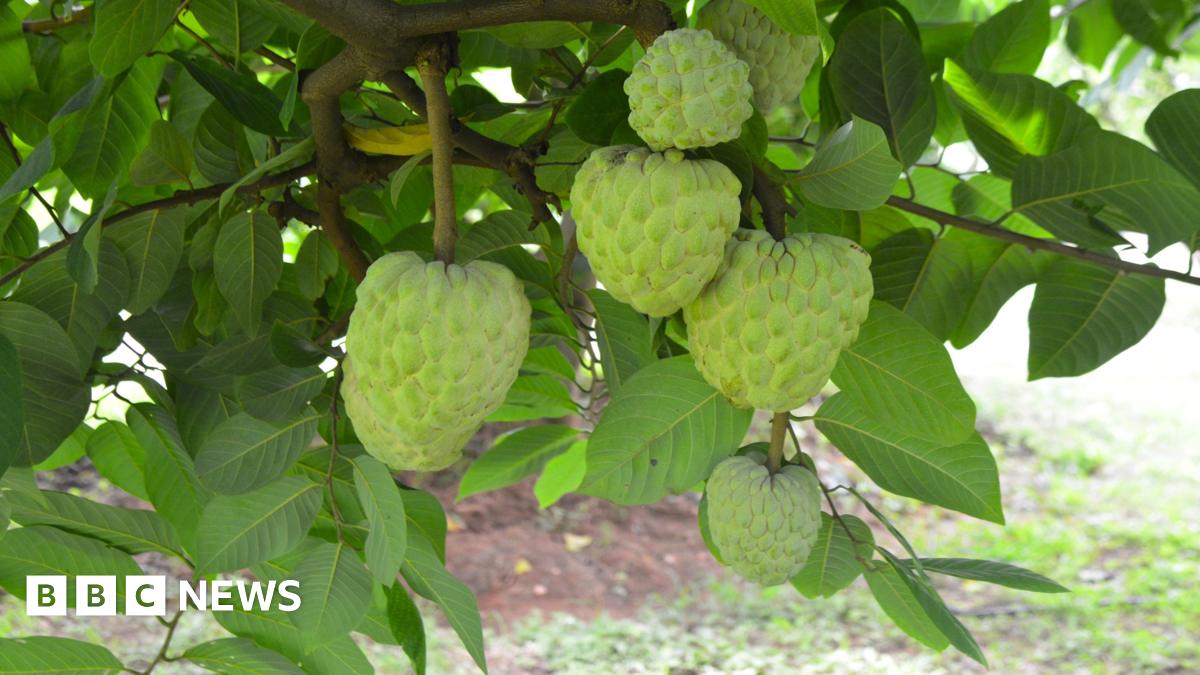
Manoj Kumar Barai exports the NMK-01 variety to the US, UAE, Saudi Arabia and Europe.
“For exports we prefer the NMK-01 variety because it has better shelf life, thicker skin, more pulp, and a sweeter taste compared to others,” he says.
Nevertheless, exporting such a delicate fruit requires an intricate process.
“We have to plan everything precisely – harvesting time, transport to pack houses, airport transfer, flights, customs clearance – every hour matters.”
Temperature control is critical.
“Custard apple is highly sensitive to heat, and even short exposure can reduce its shelf life,” he says.
Road journeys are often done overnight to avoid the worst of the heat.
“In regions like Maharashtra, temperatures can go up to 40 degrees, and even during transit it can reach 30–35 degrees, which is not ideal for this fruit.”
The fruit is pre-cooled for five hours before being packed and transported in refrigerated vans and then stored in cold rooms before being air freighted.
Special corrugated boxes have been developed to protect the fruit and help keep them cool.
More fruit is being exported as pulp or in a powder form, which is a “revolution” for the export industry says Barai.
Pulp is used by overseas ice cream makers, bakeries and at “pulp-shot” cafes.
It’s still not simple, as the pulp has to be stored and transported at -18C.
But it’s still cheaper than air freight and allows large volumes to be transported over weeks without any fruit going to waste.