
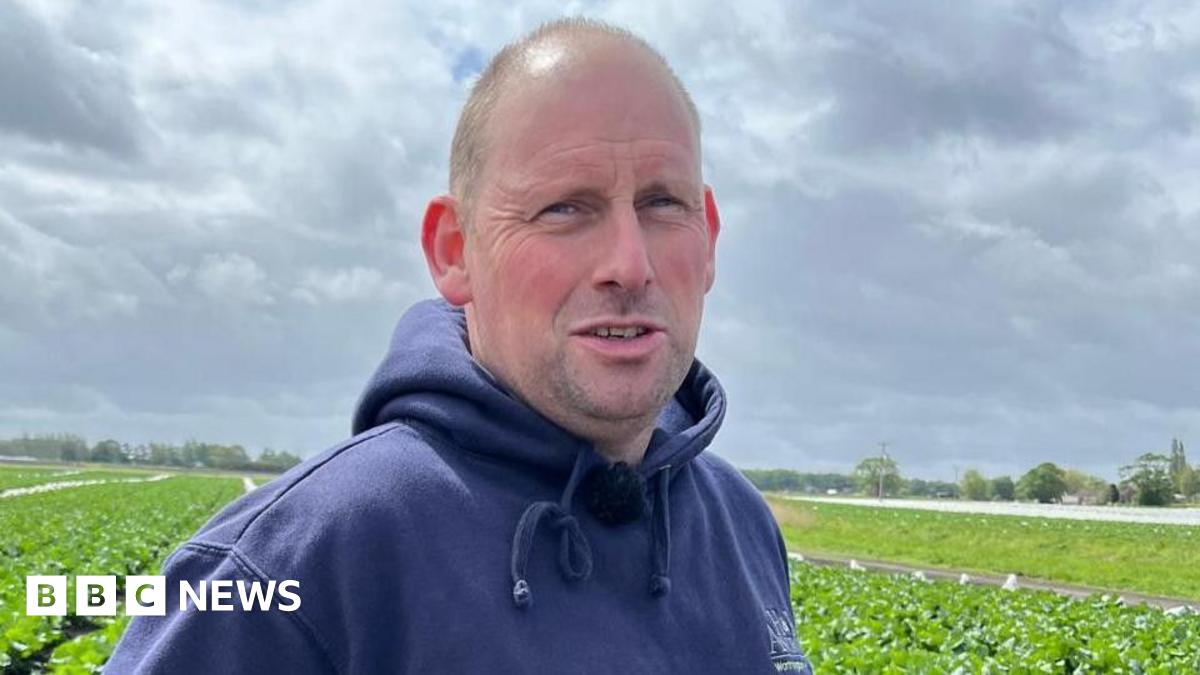
Farmers always plan months in advance, so critical decisions are being made now about next season’s planting.
“We are going to cut back, we’re going to have to because costs are just too high.” he says.
“There has definitely got to be a price increase or there’s going to have to be a lot of thought whether a lot of British growers carry on growing different types of crops.”
Over in Prescot, Merseyside, arable farmer Olly Harrison is also feeling the strain after a hike in input prices.
After a wet spring, his field of barley is turning a corner and looking good.
It was a different story last year.
In fact, the weather was so poor in 2025 that Olly did not bother using up his fertiliser on crops that would not flourish.
As a result, he had bags of fertiliser left over to use this year.
While that is paying dividends this year, Olly reveals: “I’ve been stung for next year -these bags have been kept over, that’s why they’re so dusty.
“I paid £315 a tonne for it. I’ve just ordered some now for 2027 and it’s cost me £615 a tonne.
“And when you think we probably use around 150 tonnes a year, it’s a massive increase in costs.”
He says this is not sustainable unless wheat prices increase.
“Brazil has got some dry weather, so their corn isn’t growing,” he explains.
“America and Australia couldn’t get fertiliser or fuel so their planting is down, so fingers crossed the wheat market is going to rise and that should mitigate some of the cost.
“But we still need a good season next year.
“Let’s hope we don’t get a drought next spring otherwise we’ve completely lost out.”