
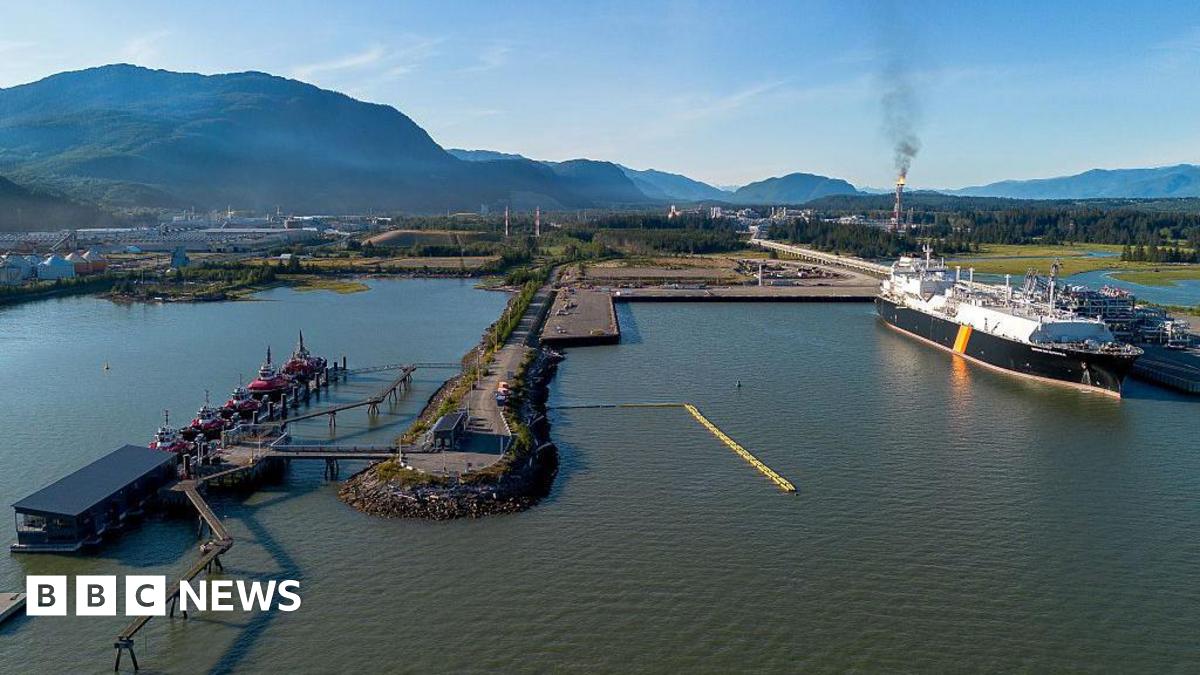
While the agreement with Germany has been hailed as a win by government, the development of Ksi Lisims still faces many hurdles.
More than a dozen indigenous and environmental groups have vowed to fight it, arguing it is both legally contested and environmentally risky.
“Ksi Lisims is not a Canadian export success story waiting to happen,” said Alex Walker with Environmental Defence, one of the groups opposing the project.
“It is a high-risk, legally contested fossil fuel project that has failed for decades to attract capital.”
Some First Nations have also launched legal challenges against the project.
Not all are in disagreement, however. One of the project’s proponents is the Nisga’a Nation, whose territory would house the Ksi Lisims LNG facility.
Carney is also facing pressure on climate from within his own Liberal Party caucus as he seeks to increase energy development in Canada.
Fourteen Liberal MPs signed a letter to the prime minister last week saying they are “deeply concerned” about what they say is a backslide of the government’s environmental commitments.
And on Wednesday, former environment minister Steven Guilbeault said he will resign from caucus this summer.
Guilbeault was a prominent environmental activist with Greenpeace before entering politics. In a post on X announcing his resignation, he said he wanted to pursue the fight against climate change “in a different way”.
Reacting to Guilbeault’s departure, Hodgson said Carney’s Liberals are a “big tent party” with an array of views.
“At the end of the day we come together, form a collective view and execute on that,” he said.
Separately on Wednesday, Carney announced that Canada will be purchasing early warning aircraft technology from a Swedish manufacturer instead of US contenders.
Carney has said Canada will reduce spending on US-made military gear, saying last April that “the days of our military sending 70 cents of every dollar to the United States are over”.