
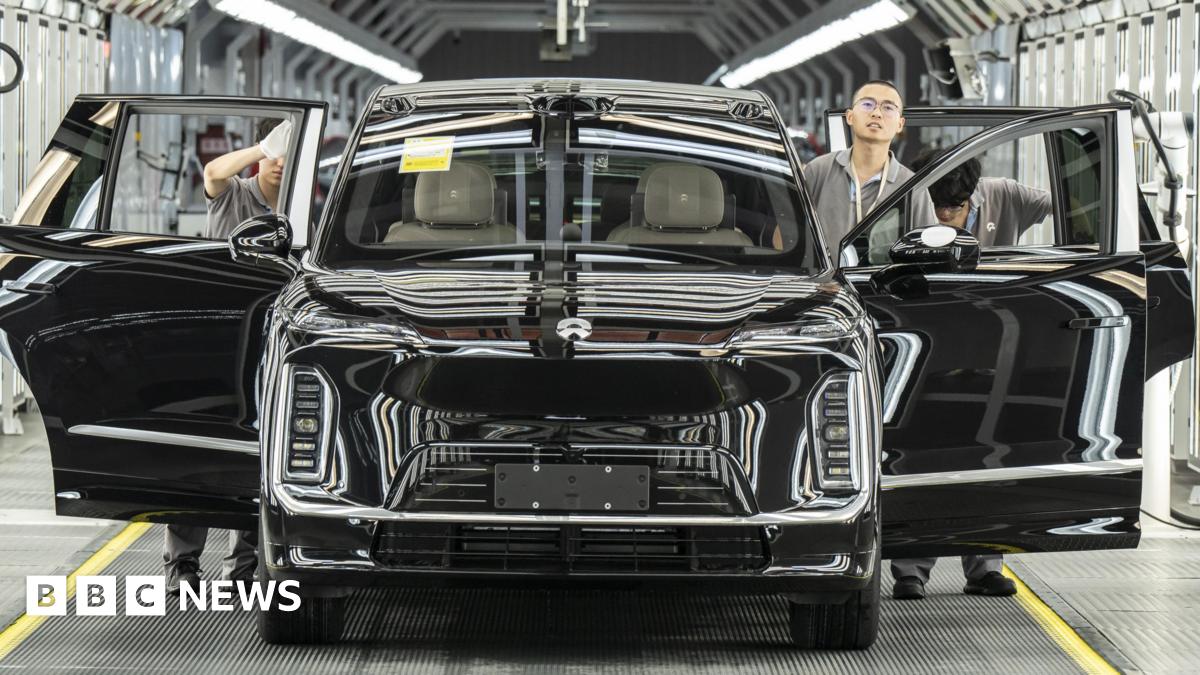
For decades, foreign carmakers brought technology and branding while local partners provided factories and a market.
Now that relationship is changing.
Stellantis has just signed a €1bn ($1.16bn; £863m) deal with state-backed Dongfeng to produce Peugeot and Jeep models in China to sell at home and abroad.
Stellantis will also bring Dongfeng’s Voyah electric brand into Europe, and has said it is exploring producing Chinese-designed vehicles at a plant in France.
Volkswagen is paying $700m for access to XPeng’s software architecture and autonomous driving systems to develop its next generation of EVs – technology it has acknowledged it could not develop fast enough at home.
XPeng’s He says the relationship is two-way: “We study each other, so we trust each other, so we help each other.”
Toyota, Hyundai, Ford and Nissan are also expanding research operations in China or exploring production of Chinese-designed vehicles in overseas factories – using local talent and knowledge for development rather than simply manufacturing.
Not every strategy is working though.
Audi has had to offer heavy discounts on its E5 model, which it had specifically made for China, after weaker-than-expected demand.
GM has written down billions of dollars from its China operations and reported a more than 21% decline in sales in the first three months of this year.
Japanese manufacturers have been slower to shift towards fully electric vehicles, leaving them vulnerable in China and, increasingly, in South East Asia, where Chinese brands are rapidly gaining market share.
In early 2026, Volkswagen briefly regained the position of the top-selling car brand in China, but that may have been because of the end of Beijing’s EV subsidies, which, in turn, weakened domestic rivals.