
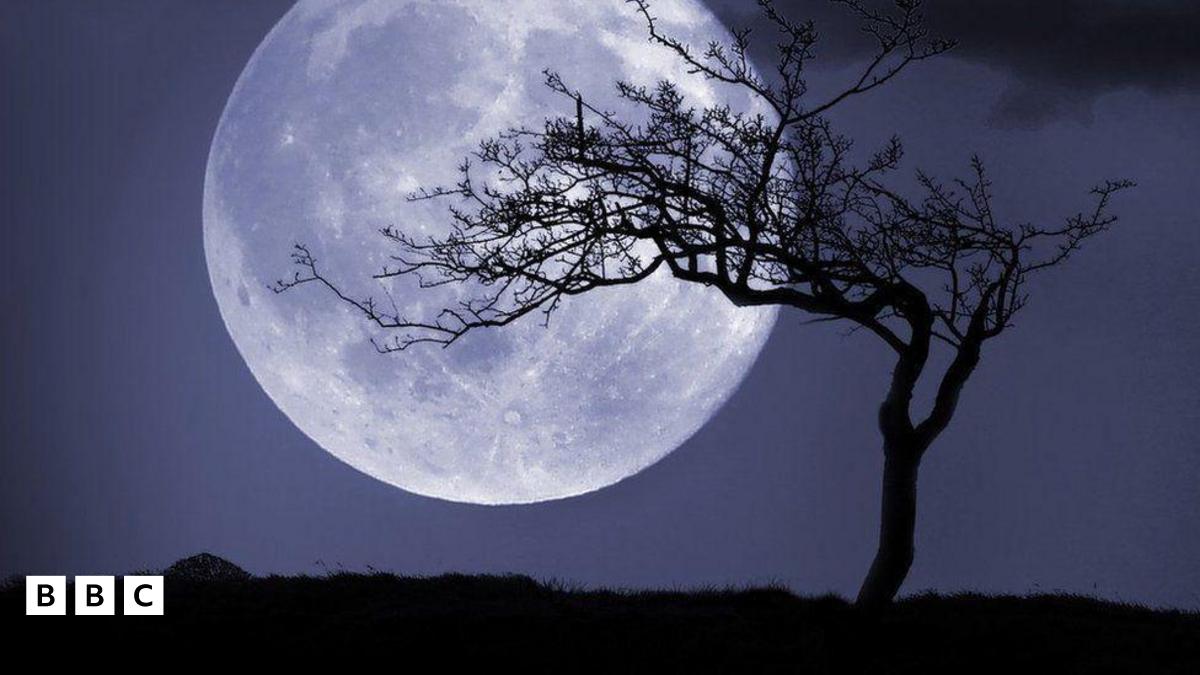
You may have heard of the phrase “Once in a Blue Moon” before.
People use this phrase when they are talking about something rare, that doesn’t happen very often.
But did you know it has a link to astronomy?
There are in fact two definitions of a Blue Moon – and neither of them have anything to do with the colour of our satellite.
The first one describes the third full moon in a season which has four full moons in total.
However, the term is also used to describe a rare event that happens every two to three years.
It takes a year for the Earth to orbit the Sun once and the Moon takes 29.5 days to complete one cycle around the Earth.
This means that 12 full cycles of the Moon around the Earth takes 354 days. That’s less than the 365 days (or 366 days during a leap year) in our calendar year.
As the time frames don’t quite match up, every two to three years we end up getting a 13th full moon, with two full months seen in a single month.